
Introduction
On September 21, 2010, I attended the Canadian Study of Parliament Group’s Fall Seminar on Question Period Reform. The event included two panels and Speaker Milliken, Michael Chong, and C.E.S. Franks as guest speakers. The Public Policy Forum held an event on the same subject the week before but doesn’t seem to have produced anything substantial.
Michael Chong first introduced a motion in the 40th Parliament aimed at changing the format of the daily Oral Questions, or Question Period (QP). The motion died upon dissolution, and the papers reported earlier this week that Chong will re-introduce the motion in the current 41st Parliament. Even though this conference took place last year, I still insist on blogging about it, a) because I didn’t create Parliamentum until this past summer but would have blogged about the event at the time, and b) because the topic is still pertinent to the 41st Parliament and the general discussion. I will summarize the salient points of each presentation. As I mentioned in “The Myth of Civility and Decorum in the British House of Commons”, I consider the issues of civility in parliament and the effectiveness of Question Period separate.
Speaker Milliken
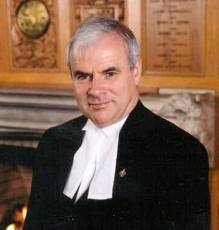 Speaker Milliken tried to assure that debate in Question Period remains civil and takes place at a normal volume. However, he explained, participation in QP is determined by the caucuses and their whips. During the 1970s, the Speaker began using a list in an attempt to bring order to the House, based on a pre-arranged agreement between the whips and house leaders; these negotiations do not involve the Speaker of the House. Milliken claimed that he “follow the list vigorously” during his tenure as Speaker. I would argue that herein lies the problem: the whips and front benches control QP for the purpose of party as opposed to backbenchers as advocates of their constituents’ concerns and legitimate questions posed to ministers that support parliament’s core function: holding cabinet to account on expenditures. Milliken explained that in 1997, the House decided to limit the questions and answers to 35 seconds each; however, this convention and inter-party agreement does not appear in the Standing Orders. Theoretically, the PM could answer every single question in QP, so the Speaker has no authority to compel a particular minister to reply to a given question. Milliken insists that while the Speaker is responsible for overall decorum, he cannot be held accountable to a non-answer given in response to an Opposition question.
Michael Chong’s Motion (M-517)
 Conservative backbencher Michael Chong put forward a motion on the reform of QP. He points out that 40% of Canadians refuse to vote in the 2008 election, which in his view undermines the role of Parliament as the primary formulator of all public policies. Frankly, Chong’s assertion that parliament creates public policy shows that he doesn’t understand parliament’s core function: cabinet – the government – formulates public policy, and parliament holds it to account and scrutinizes its expenditures. Chong continued in his reasoning that since most Canadians (rightly or wrongly) equate parliament with QP, and since MPs need to reconnect with the public, the first logical parliamentary reform depends on QP because the media and public fixate on this aspect of the parliamentary routine. Much to my chagrin, Chong then invoked a hockey analogy; I loathe when Canadian politicians and media personalities do this in an attempt to make themselves the every-man. He argued that MPs – especially backbenchers – have become spectators in the QP, and thus they act like spectators by jeering and cheering. Chong agrees with Franks that civility in Parliament never really existed – but he intends to move beyond this point and set a new precedent. In addition, Chong believes that the televised debates – which started in 1977 – did not cause this problem because Westminster and Congress televise their proceedings without the same acrimony of the Parliament of Canada.
While Chong never characterized his motion as such, it essentially amounts to the adoption of the British system. M-517 contains the following components.
M-517 — April 14, 2010 — Mr. Chong (Wellington—Halton Hills) — That the Standing Committee on Procedure and House Affairs be instructed to recommend changes to the Standing Orders and other conventions governing Oral Questions, and to consider, among other things,
(i) elevating decorum and fortifying the use of discipline by the Speaker, to strengthen the dignity and authority of the House,
(ii) lengthening the amount of time given for each question and each answer,
(iii) examining the convention that the Minister questioned need not respond,
(iv) allocating half the questions each day for Members, whose names and order of recognition would be randomly selected,
(v) dedicating Wednesday exclusively for questions to the Prime Minister,
(vi) dedicating Monday, Tuesday, Thursday and Friday for questions to Ministers other than the Prime Minister in a way that would require Ministers be present two of the four days to answer questions concerning their portfolio, based on a published schedule that would rotate and that would ensure an equitable distribution of Ministers across the four days; and that the Committee report its findings to the House, with proposed changes to the Standing Orders and other conventions, within six months of the adoption of this order.
Shelia Copps’s Idea To Eliminate Crown Prerogative and Responsible Government
I reported on the intelligent portion of Shelia Copps’s comment in the previous entry. She also made some misleading statements and, perhaps unknowingly, suggested the destruction of the principle of responsible government, namely the part that the government is responsible to the lower house for all spending.
 Copps disagrees with Chong’s proposed reforms, especially the idea of the British rotating schedule, because, as she stated dismissively (and misleadingly): “ministers would love to only show up to work one day per week.” This is a deliberate over-simplification and mendacious misrepresentation because Ministers do most of their work outside the House in cabinet and cabinet committees, and running their departments and their constituency offices.
Copps believes that Chong’s motion should become broader, which would of render it meaningless and useless. Copps advocates the destruction of responsible government and its replacement with a congressional system: she believes that parliamentary committees be able to propose and introduce legislation. I found this statement so patently ridiculous that I asked her to explain this comment during the question and answer session. I asked her something to the effect, “Why do you want parliamentary committees to gain the power to propose legislation, particular legislation that involves spending? Your proposal would violate crown prerogative.” Murmurs of agreement erupted throughout the audience. Shelia Copps responded craftily to my question by giving a politician’s non-answer for about three minutes! Franks also declined to comment.
C.E.S. Franks on the British Method
The British parliament runs on the timetable that cycles through every two to three weeks and covers the ministries separately, for instance: Monday, Home Office; Tuesday, Health; Wednesday, Wales, and Prime Minister’s Questions; Thursday, Environment, Food and Rural Affairs, etc. The Minister knows months in advance when he or she will have to answer questions in the House, and the Opposition knows when to submit questions. This informed dynamic produces a QT vastly different from our QP.
The clerks at the table review the MPs’ questions first and screen out those unacceptable due to content or tone. Questions must be clear and concise and respect parliamentary language; the clerks offer advice to the MP on clarity and format, and the MP can petition the Speaker if unsatisfied with the clerks’ assessment. The content of the questions is restricted by several rules that Franks enumerated, such as bans on expressing opinions, asking about opposition policy, and hypotheticals. If the Speaker determines that a question is not in line with the national interest, then the question cannot be asked again during the same session. He can also rule both questions and supplementaries out of order. All these rules create a system in which the Opposition asks relevant questions and the Government gives pertinent answers – a concept completely foreign to Canadian QP!
Franks estimates that if the British rules were applied to the Parliament of Canada, about three-quarters of the questions would be rejected and ruled out of order for violating the various rules on clarity and precision and the prohibition on hypotheticals and complex or loaded questions. Many questions asked in Canadian QP currently take the form of the fallacy of complex question: “When are you going to stop beating your wife?” To which the government replies, “when you stop beating yours.”
British Question Time focuses primarily on backbenchers, and the weekly Prime Minister’s Question Time focuses on the party leaders. The Speaker decides when the supplementaries on a question will end, which contrasts to the rigidity of the Canadian system. Canadian Question Period, in contrast, serves the front benches, and our questions are not vetted for clarity or parliamentary language; Peter Milliken’s remarks at the beginning confirm this dominance by the front bench.
The website of the British Parliament lists the rotational schedule for Minister’s Question Time, which cycles through every four or five weeks. Prime Minister’s Questions occur every Wednesday. Their website also explains the various types of questions in the House of Commons, as well as the “written answers.”
Notice of questions in the Commons
“Commons oral questions are tabled by MPs at least three days in advance of Question Time. The questions are then printed in the Commons Questions Book. The order in which the questions are asked is determined randomly by a computer.
MPs who are called by the Speaker to ask their question do not read it out, but simply call out its number. When the government minister has replied, the MP can ask another question (known as a supplementary) and other MPs may also be called to ask supplementary questions. The Minister must reply to each in turn. Supplementary questions must be on the same subject as the original question.
The last 15 minutes (for those departments with a 60 minute question time) or 10 minutes (for those departments with a 40 minute question time) of question time is reserved for ‘topical questions’.
During the ‘topical questions’ slot, MPs can ask supplementary questions on any subject relating to the department’s responsibilities.”
Written Answers
“In addition to oral questions, MPs and Peers can ask government ministers questions for written answer. These are often used to obtain detailed information about policies and statistics on the activities of government departments.
‘Ordinary’ questions
In the House of Commons ‘ordinary’ questions do not have to be answered on a specific date. An MP will date a written question for two days after they have tabled it (ie, submitted it for answer via the Table Office). The convention is that the MP can expect it to be answered within seven days of the question being tabled. However, there is no parliamentary rule that states ordinary written questions have to be answered by a certain date.
Read Commons questions for written answerHouse of Lords written questions
All House of Lords written questions follow a similar procedure. Lords enter questions on the Order Paper via the Table Office. Lords may table up to six questions each day and can expect an answer within 14 days.
Read Lords questions for written answer‘Named day’ questions
‘Named day’ questions only occur in the House of Commons. The MP tabling the question specifies the date on which they should receive an answer. The MP must give a minimum of two days’ notice for these types of question. MPs may not table more than five named day questions on a single day.
Questions originally tabled for oral answer that do not get answered at oral question time are submitted to the government department as named day questions.
Answers
Answers are sent directly to the MP or Lord and printed in Hansard along with the original question.
Read written answers in Hansard‘Will write’ answers
Occasionally Commons questions are answered in Hansard with ‘I will write to the Hon Member …’ The subsequent letters are not published in Commons Hansard but placed in the House of Commons Library for MPs’ use (but the House of Commons Information Office can supply copies of these).
Contact the House of Commons Information OfficeWritten Ministerial Statements
Until 2002 the government often used written answers to make statements but these are now published separately.”
Conclusion
The current Canadian format of Question Period eats up a significant portion of all the Minister’s schedules, as Michael Chong pointed out, which frankly wastes their time and detracts from their running their departments and tending to the other cabinet duties. Our ineffectual system also fails parliament in its core function of holding the government to account. I can only conclude that if we want to reform our Question Period, rather than devising a new system, we should simply adopt the British system, which has proven far more effective, in full. The British method works and better complements parliament’s core function of holding the government to account, particularly through its emphasis on written questions and answers; in contrast, the current Canadian format rewards theatre and focuses on style over substance.
Related Posts:

