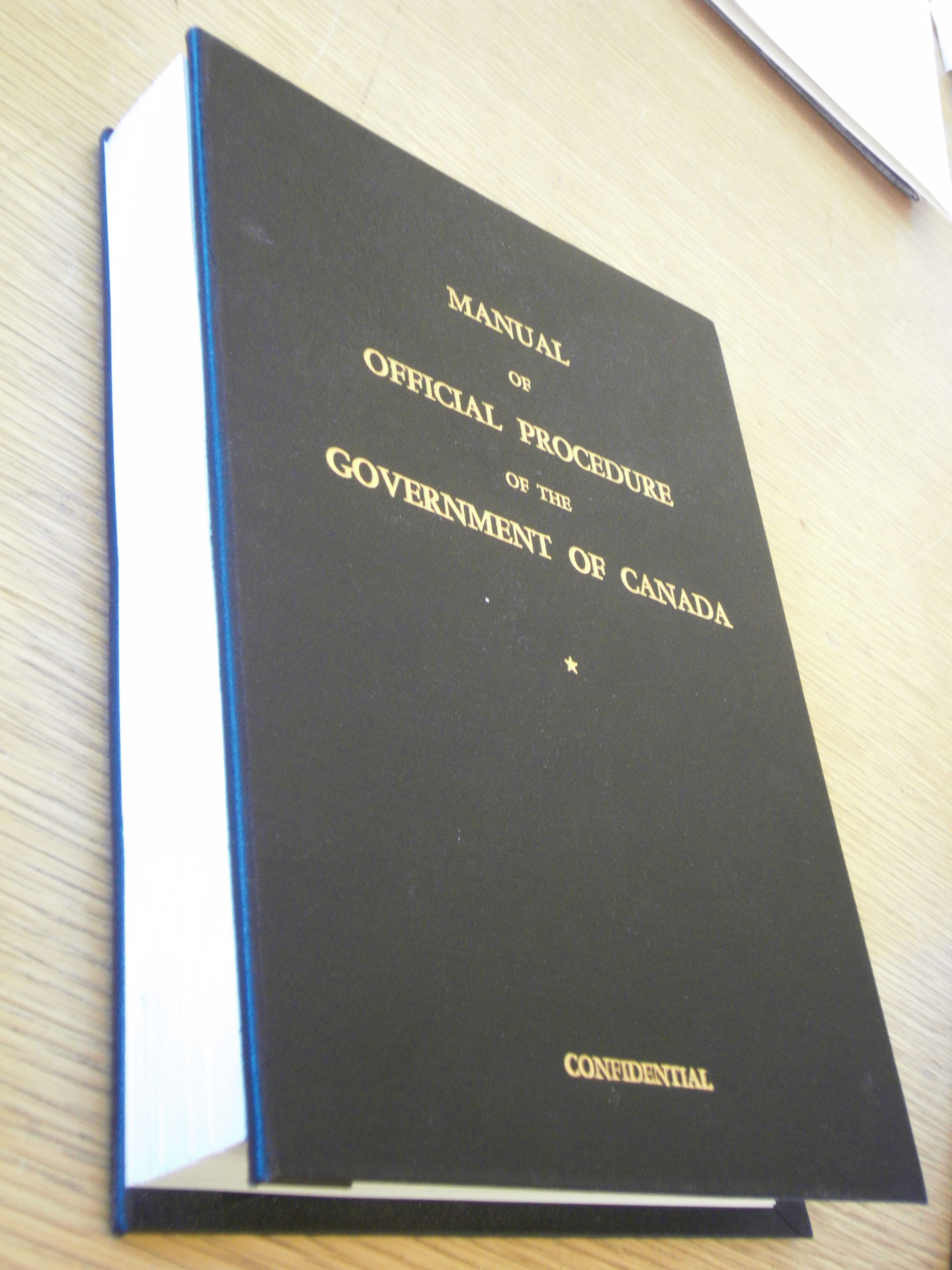
Introduction
Most Canadians are probably unaware that for a brief period in our history, the upper house in the United Province of Canada (called a Legislative Council) was making the transition from an appointive chamber to an elective one, between 1856 and 1867. Even though this elective innovation first started several years after the entrenchment of responsible government, the Fathers of Confederation abandoned the elective principle and reverted to the appointive upper house in the Senate of Canada. Canada thus became the first English-speaking country to entrench an elective upper chamber – long before the Australian colonies federated in 1901, and long before the Americans converted their Senate into an elective chamber in 1913. Where once Canada led, it now lags behind. I will explore the political philosophy and debates surrounding the upper chamber in our Confederation Debates and identify the various political groupings and their positions on the subject and conclude with some plans for reforming the Senate of Canada.
The “Balanced Constitution” of Pluralist Liberal Constitutionalism
Contrary to popular belief in Canada, our Framers were no mere political operators devoid of political philosophy and principle.[i] Our Framers derived their political philosophy from the Enlightenment, the American Framers, various British thinkers like J.S. Mill, and British political history. The British devised in the 1790s a colonial replica of the tripartite Crown-in-Parliament in a new form of representative government: the House of Assembly, Legislative Council, and the Governor-in-Council, the Crown’s representative.[ii] The British implemented this model in the Constitutional Act, 1791 that repealed parts of the Quebec Act, 1774 by splitting Quebec into Upper Canada (Ontario) and Lower Canada (Quebec). Like Ajzenstat, Smith also attributes this tripartite arrangement of the Crown-in-Parliament to the “theory of a balanced constitution.”[iii]
The Canadians Framers founded a system of liberal constitutionalism premised on the Whiggish idea of a “balanced constitution”; they also reconciled constitutional monarchy and federalism for the first time, which the Australians later replicated (though in a different form) thirty years later.[iv] Ajzenstat defends the Framer’s decision on an appointive Senate along largely the same lines as Smith: “a majority vote in both houses detracts from responsible government. It muddles the accountability of government to the peoples’ representatives in the executive branch.”[v] Parliamentarism in the 19th existed in a state of flux, and Ajzenstat demonstrates that the Framers favoured a balanced constitution in which the Crown, Senate, and House all acted as checks and balances on each other.[vi] We often think of this concept of government as “checks and balances” as inherently American; while the American separation of powers best exemplifies this idea today, we should remember that the American Framers drew upon a wealth of British parliamentary precedent in the era of representative era (before responsible government) and Enlightenment philosophy. One delegate at the Charlottetown Conference, James Ross, spoke of the “three branches of the legislature”: the Crown (the monarchical branch), Senate (the aristocratic house), and House (the democratic house).[vii] John George Bourinot, who wrote the first manual on the procedure and practice of the Canadian House of Commons in 1884 Parliamentary Procedure and Practice, also sometimes referred to the Crown-in-Parliament as “branches.” The Framers intended that the Senate would act as a check on the Crown (the cabinet) and the House of Commons if the cabinet tried to “silence dissent and suppress minorities” through its majority in the House of Commons.[viii] This refers to political minorities, as in the institutionalized parliamentary opposition, which represents the electorate who voted against the party in power. Ajzenstat concludes that “bicameralism protects liberal democracy and that bicameralism is therefore more democratic than unicameralism.”[ix]
The Elective Legislative Council
John A. Macdonald
While the Senate would function as an aristocratic check on the popular lower house, by the mid-19th century, all the British North Americans accepted the relative egalitarianism of the colonies and rejected the notion that the Senate would turn into a hereditary chamber like the House of Lords. Macdonald himself argued that the Senators would be like the elected Members of Parliament, “men of the people, and from the people.”[x] The property qualification has become almost irrelevant today, but even at the time, Ajzenstat explains that the “property qualification and […] appointment for life were meant to render the Upper House independent of the Crown” and of the lower house.[xi] The Senate figured prominently in the Confederation Debates. The Legislative Council of the United Province of Canada started the transition toward an elective chamber in 1856, though by 1867 it still had not completed its transformation; Prince Edward Island had also adopted an elective Legislative Council in 1862. Where once Canada led, Canada lagged behind the rest of the core Commonwealth after Confederation and ceded the pioneering elective principle to Australia. Despite having overlapped with responsible government for a decade, the moderate Liberals and Tories, led by George Brown and John A. Macdonald, respectively, supported an appointive upper house in order to avoid competing democratic mandates and the threat that deadlock between the two houses would pose to responsible government in the new federal system.[xii] The Clear Grits supported an elective upper house on democratic principle; curiously, the ultra-Tories also supported an elective upper house – precisely because they agreed with the moderate Liberals that it would create a powerful rival to responsible government.[xiii]
Macdonald originally favoured the elected Legislative Council, which consisted of 24 constituencies in Upper and Lower Canada. Similar to the staggered nominations in the American Senate of the day, “Each constituency elected one member every eight years and elections occurred in one-quarter of the constituencies every two years.”[xiv] Macdonald, however, saw the necessity of compromise, and the Lower Canadian Bleus and the Upper Canadian moderate Reformers opposed continuing the elective chamber. Macdonald thus damned the elective legislative council with faint praise in order to save face:
“The arguments for an elective council are numerous and strong; and I ought to say, as one of the administration responsible for introducing the elective principle into Canada. I hold that this principle has not been a failure in Canada; but there were causes – which we did not take into consideration at the time – why it did not so fully succeed in Canada as we had expected.”[xv]
George Brown argued against the elective Legislative Council because he feared that it would rival the lower house and attempt to block supply:
“Who will venture to affirm that the council would not cliam that power over money bills which this house claims of right belong to itself? Could they not just say that they represent the people as well as we do, and that the control of the purse strings ought, therefore, to belong to them as much as to us? […] What is to prevent a deadlock of the chambers? […] They might amend our money bills, they might throw out all our bills if they liked, and bring to a stop the whole machinery of government. And what would be done to prevent them?”[xvi]

George Brown
Brown attributes the failure of the elective Legislative Council to the difficulty in fielding candidates for election, and in the sheer size of its constituencies; the Legislative Councillors had to travel over vast distances at great personal expense. [xvii] But Brown’s next statement still leaves the fundamental question that I pose later unanswered and even more unclear: why, if the elective Legislative Council would have acted as a check against the Crown before the establishment of responsible government in 1848 did the Canadians not implemented the elective Legislative Council until six years after the achievement of responsible government? The chronology of the implement of the elective upper house simply does not support the position of the moderate Liberals and Tories that an elective chamber inherently threatened responsible government. Brown continues:
“When the change [toward an elective upper house] was made in 1855, there was not a single petition from the people asking for it. The real reason for the change was that before responsible government was introduced into this country, […] the upper house continuously and systematically was at war with the popular branch and threw out every measure of liberal tendency.”[xviii]
Curiously, both Macdonald and Brown supported an appointive Senate precisely because they thought that the presence of only one elective house would prevent legislative deadlock between the houses. Yet the Framers conferred equal legislative powers upon the Senate (apart from the introduction of money bills, as per ancient British custom). I can only conclude that the Frames intended that by convention, the Senate would restraint its legal powers and exercise them only in exceptional circumstances.
Canadian scholars place 1848 as the year in which the United Province of Canada achieved responsible government, yet the Canadian government did not introduce direct popular election to the Legislative Council until 1856, six years after the entrenchment of responsible government. So if the moderate Liberals and Tories both feared an elective upper chamber’s potential to interfere with the practice of responsible government, why did they introduce direct popular election to the Legislative Council after attaining responsible government? Logically, if they feared the consequences of strong bicameralism and two co-equal houses on responsible government, would that not imply that the Legislative Council became elective before the entrenchment of responsible government? Given that the radical republican reforms like Papineau and Mackenzie advocated an elective upper chamber in the 1830s, the moderate Liberals and Tories surely could have anticipated this criticism in the 1840s and 1850s. In any case, Smith states that the gradual phrasing in of election to the Legislative Council (as the appointed members died or resigned) started in 1856 but had not been completed by 1867.[xix] These questions require further research on my part.
Considerations With Respect To Reform
Bicameralism presents a democratic conundrum in the Westminster system. On the one hand, an elective upper house threatens to challenge the lower house for democratic supremacy, and on the other, an appointive chamber lacks democratic legitimacy altogether. Further still, if the Senate of Canada were elective but its powers substantially limited to, say, the powers of the House of Lords as per the Parliament Acts, 1911 and 1949, then some would call the very existence of the chamber into question. Having taken into account the legitimate arguments and concerns of those academics in favour of an appointive Senate, I no longer subscribe to the unalloyed “Triple-E Senate” of the Reform Party: the direct election of an equal number of Senators from each province, who provide an effective check on the House of Commons. First, the American Senate is no longer and the Australian Senate never was a “States’ House” within a federal system, so the idea that Canadian Senators would function as provincial ambassadors in the Senate of Canada simply because of their election and their equal numbers does not hold up the scrutiny. Second, federal Senators should not function as provincial representatives in any case, because the provincial governments and the federalized cabinet fulfill this function.
In addition, equal provincial representation is not practical in Canada, given its disparity in population and because Canada is, as Smith repeats in all his books, a “double federation” of provinces and two founding nations. The province of Quebec in particular will never accept equal representation of the provinces. Rejean Pelletier, a constitutional scholar at L’Universite Laval, rejects the Albertan-Reform proposal of equality of representation for all the provinces and that the notion that “Quebec is a province like any other” because they “do not take into account the very pronounced numerical imbalance between the Canadian provinces.[xx] In addition, Pelletier argues that “it does not take into account the significance of the relative weight of the most populous federated entity in the country as a whole. Ontario represents about 40% of the Canadian population; California, 12% of the American population; and North Rhineland-Westphalia, about 22% of the German population.”[xxi] Finally, Pelletier invokes the nationalist argument to which the Government of Canada lent credence in 2006 in recognising that “Quebeckers form a nation within a united Canada”. He contends that “since Quebeckers form a nation within Canada”, “it is unacceptable that Quebec would only have a right to 10% of the Senators.”[xxii] Aaron Hynes devised a “rational redistribution” of the seats in the Senate on a model that accepts provincial inequality as well.[xxiii]
Conclusion
Ultimately, I would prefer an elective Senate possessing powers similar to those of the current House of Lords so that it would act primarily as a house of review, but not as an obstruction and constitutional threat to responsible government, and certainly not as a house of the provinces. The proponents of the current appointive Senate, and George Brown before them, raise valid concerns about the threat of deadlock between two elective chambers. That is why I support an elective senate limited, like the House of Lords, to a suspensive veto over money bills. The Australian Senate precipitated a significant constitutional crisis in 1975 precisely because it wields too much power over supply bills. The combination of an election, like the Australian Senate with powers limited to a suspensive veto and delay, like the British House of Lords, would result in a true house of review that could provide a healthy check on governments (which necessarily derive from the lower house) without becoming a de facto confidence chamber. I agree with George Brown that the use of single-member plurality as the method of election in the upper chamber poses its own set of challenges and redundancies in the larger size of the constituencies. The Australians addressed this problematic redundancy by changing the electoral system of their Senate to proportional representation within each state, which ensures that the partisan composition in the Senate differs from that in the House of Commons, thus strengthening its capacity as a house of review. This elective upper chamber would become a respected, measured, democratically legitimate addition to the Crown-in-Parliament.
Related Posts:
[i] Janet Ajzenstat, “Confederation and Individual Liberty,” Macdonald-Laurier Institute: Canada’s Founding Ideas (November 2010): 1-20.
[ii] Smith, The Canadian Senate in Bicameral Perspective, 16.
[iii] Smith, The Canadian Senate in Bicameral Perspective, 16.
[iv] Ibid; See Janet Ajzenstat and Peter J. Smith, Canada’s Origins: Liberal, Tory, or Republican? (Ottawa: Carleton University Press, 1995).
[v] Janet Ajzenstat, “Bicameralism and Canada’s Founders: The Origins of the Canadian Senate,” in Protecting Canadian Democracy: The Senate You Never Knew, ed. Serge Joyal (Toronto: University of Toronto Press, 2003): 3.
[vi] Ajzenstat, “Bicameralism and Canada’s Founders: The Origins of the Canadian Senate,” 4-6.
[vii] Ajzenstat, “Bicameralism and Canada’s Founders: The Origins of the Canadian Senate,” 5.
[viii] Ajzenstat, “Bicameralism and Canada’s Founders: The Origins of the Canadian Senate,” 4-6.
[ix] Ajzenstat, “Bicameralism and Canada’s Founders: The Origins of the Canadian Senate,” 4.
[x] Ajzenstat, “Bicameralism and Canada’s Founders: The Origins of the Canadian Senate,” 10.
[xi] Ajzenstat, “Bicameralism and Canada’s Founders: The Origins of the Canadian Senate,” 11.
[xii] Ajzenstat, “Bicameralism and Canada’s Founders: The Origins of the Canadian Senate,” 12; Christopher Moore, 1867: How the Fathers Made A Deal, 107-113.
[xiii] Ibid.
[xiv] Janet Ajzenstat, Canada’s Founding Debates (Toronto: Toronto University Press, 1999): 78-79.
[xv] Janet Ajzenstat, Canada’s Founding Debates (Toronto: Toronto University Press, 1999): 78-79.
[xvi] Janet Ajzenstat, Canada’s Founding Debates (Toronto: Toronto University Press, 1999): 84-85.
[xvii] Janet Ajzenstat, Canada’s Founding Debates (Toronto: Toronto University Press, 1999): 85.
[xviii] Janet Ajzenstat, Canada’s Founding Debates (Toronto: Toronto University Press, 1999): 86.
[xix] Smith, The Canadian Senate in Bicameral Perspective, 17.
[xx] Réjean Pelletier, Le Québec et le fédéralisme canadien : un regard critique. (Québec : Les presses de l’Université Laval, 2008) : 190.
[xxi] Ibid
[xxii] Ibid
[xxiii] Aaron Hynes, “Toward a Rational Redistribtution of Seats in Canada’s Senate,” Canadian Parliamentary Review 33, no. 4 (Winter 2010): 27-31.