Which Are Better: Endnotes or Footnotes?


First, I’m sure that we can agree that Chicago-style notes are vastly superior to the stupid in-text citations of APA. Incidentally, since Cambridge University Press journals use Chicago while the Oxford University Press journals mandate some ghastly in-text citations, we can conclude that Cambridge is the better half of Oxbridge.

But within the note formats, I prefer endnotes over footnotes: ultimately, each format takes up the same amount of space on a manuscript, but endnotes keep it tidy and neat and therefore make it easier to read, especially if you need to include non-citation, explanatory notes. Only an academic would say that turning pages is labour-intensive and difficult work!

I inadvertently kicked off an academic nerdfight on social media earlier with an off-hand comment stating what I regard as self-evident, that endnotes are better that footnotes because they keep the paper tidy. Passions run so high in the endnote-footnote controversy precisely because the stakes are so low.

I’m curious to see what some of my readers think in this poll! I seem to be in the minority.

Posted in Random Thoughts | 4 Comments

Tony Blair’s Canadian Style of Prime Ministerial Government


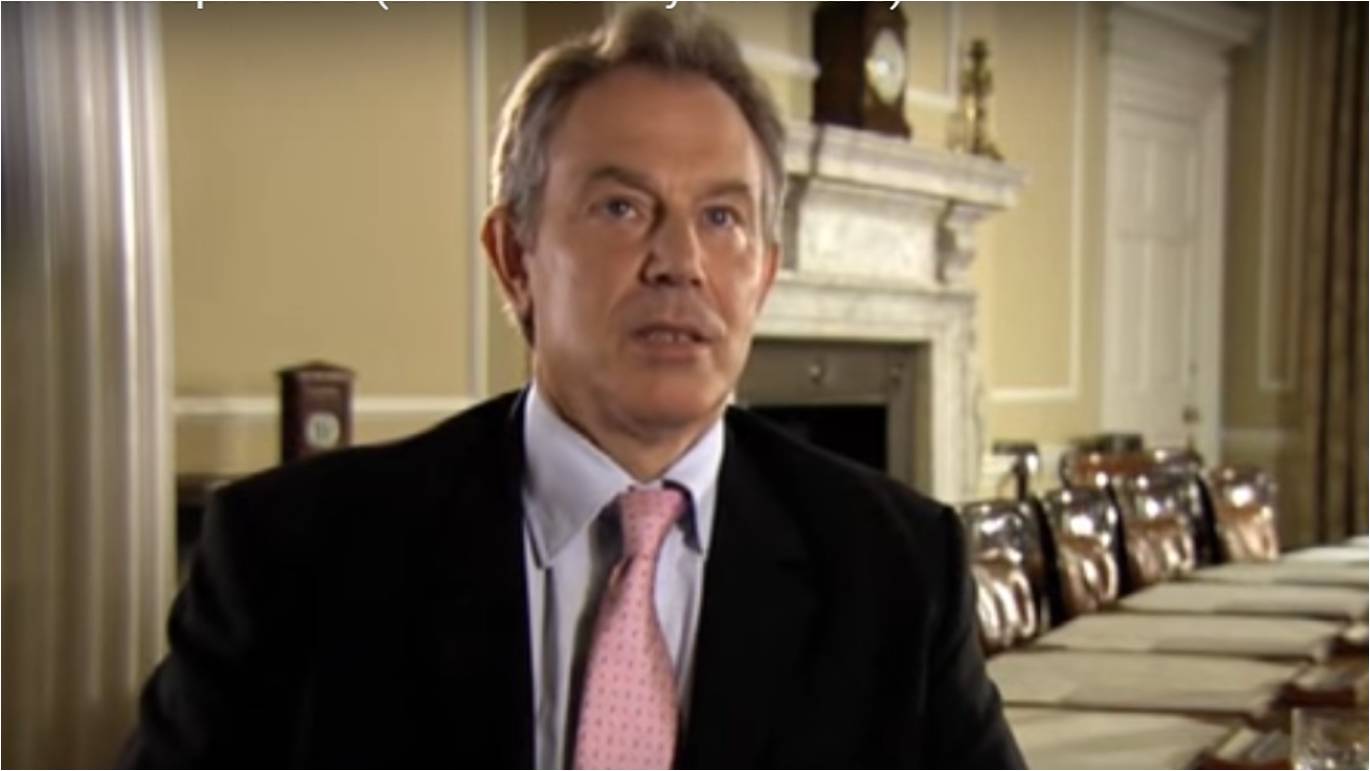
Tony Blair rolls his eyes at Whitehall.

The British would certainly not say outright that Tony Blair governed like a Canadian prime minister, because it would be beneath the Mother Country to acknowledge one of her former Crown colonies as having provided an example in government. But that is the best conclusion that one could draw from this BBC documentary on Blair’s premiership, which aired in 2007 shortly after his departure from Number 10.

The relevant portion runs from 19:00 to 22:45

Blair operated like a Canadian Prime Minister — like Trudeau I, Chretien, or  Harper, in particular — and exercised his authority to “call consensus,” i.e., to make a decision against a majority of his colleagues, if necessary. The documentary cites his decision to allocate $800 million pounds to the Millennium Dome as one such example. Tony Blair and Gordon Brown alone also decided to transfer the authority to set interest rates from the Treasury to the Bank of England bilaterally, without consulting their cabinet colleagues.

Critics derided Blair’s style as “sofa government,” because he would often make decisions with small groups of ministers, or bilaterally with one minister, or unilaterally while sitting on a sofa in a small office. His Chief of Staff, Jonathan Powell, and his Press Secretary, Alaister Campbell, would often take part in such meetings as well. Powell’s and Campbell’s attendance of full cabinet meetings also caused a row. So, too, did the order-in-council empowering Powell and Campbell to issue instructions to other ministers. Nevertheless, most of these criticisms of Tony Blair’s “sofa government” and Blair’s use of cabinet as  “rubber stamp,” and Blair’s use smaller groups with cabinet (i.e., a cabinet committee) to do the real work, sound remarkably like how our system of government works in practice here in Canada.

Cabinet Secretary Robin Bulter (equivalent to the Clerk of the Privy Council here) clashed with Prime Minister Blair frequently in 1997 and 1998 and denounced Blair in this BBC documentary for never having understood the concept of cabinet government. In that mid-20th century RP accent (perfect for sounding condescending), Bulter intones, “I don’t really think that Tony Blair ever got cabinet government. What he wanted to do was lead the government in a particular direction. He was impatient to do it, and he didn’t see the value of those processes.”

Blair counters: “The fact is, you’re elected as prime minister to get the job done. You’ve got to assert your authority. If you don’t, then you just get absolutely submerged in endless debates and discussions, and nothing ever actually happens or is driven forward.”

The interviewer asks Blair: “Has it ever bothered you that the two key words in Whitehall are ‘Tony wants?'”

Blair: “No, I think that ‘s great, if that’s what they’re saying about the prime minister. I mean, what do we expect them to be saying? You know, I used to say this occasionally when we had this discussion with the civil servants about it. I used to say them: ‘But I’m the prime minister. I was elected to get the job done, and that’s what I want to happen.’ So (laughs incredulously), what’s the problem?”

Pierre Trudeau, Jean Chretien, or Stephen Harper could have said the same.


Posted in Crown (Powers and Office) | 1 Comment

Senator Pratte’s Doublespeak on the Two O Canadas


The French O Canada is an anachronism that must be interpreted metaphorically and remain intact. The English O Canada must be changed whenever fashions change because it is an evergreen document that must be taken literally.

This country has, in fact, two national anthems: the original French O Canada, which has remained unchanged since 1880, and Weir’s English version of O Canada. The two anthems say completely different things and bear no resemblance to one another, and therefore so perfectly represent the Two Solitudes for which Canada is so famous. The French O Canada recounts a glorious crusade, or civilizing mission, to Christianize North America; the English O Canada focuses on Canada’s being a northern landmass and a refuge for liberty.

This Bill C-210 proposes to change only the lyrics to the English O Canada, but it grants the privilege of leaving the original French O Canada intact. Senator Andre Pratte, part of the new Independent Senators’ Group, exemplifies Parliament’s hypocrisy and unequal treatment of the two O Canadas when he gave a speech on Third Reading on 6 April 2017.

First, Pratte made this interesting observation:

Usually Canadians respond when any attempt is made to tamper with tradition. Social media goes abuzz, our inboxes overflow and protests and petitions multiply. Yet this time there was relatively little reaction.

There has been so little reaction from Canadians for good reason: most of them are unaware that Bill C-210 even exists and is poised to become law. Frankly, that was deliberate. The Trudeau government is thankful for Belanger’s private members’ bill precisely because private members’ bills both attract less attention than government bills and provide the government plausible deniability. They learned the lesson from the Harper government, which announced in its Throne Speech in 2010 that they would “ask Parliament to examine the original gender-neutral English wording of the national anthem.” This public and prominent declaration generated a huge backlash, and the Harper government abandoned the proposal.

He also makes a series of contradictory statements on the English and French O Canadas but never explains why Parliament should not treat them equally and make them both subject to revision.

One the one hand, he claims to oppose both political correctness and “its cousin, historical correctness” — both of which he considers a form of thoughtmurder; on the other hand, he intends to vote for a bill that will begin sanitizing the English O Canada for the sake of both political correctness and historical correctness.

I am an adversary of political correctness. I consider it the murderer of thought, and its cousin, historical correctness. Barring a few exceptional cases, I am opposed, for instance, to the renaming of streets, parks and buildings that have been named after historical figures, simply because these individuals are now controversial or because it has come to light that they have made mistakes, even serious ones. History is rarely black and white, though we tend to look at it that way through our lens of certainty. These names of historical figures must not be obliterated; they can be reminders of a complex past, nuanced by shades of grey, and they can serve as lessons for the future.

In other words, Pratte opposes political correctness and historical correctness — except where he doesn’t.

One the one hand, Pratte acknowledges that parliamentarians have already discussed altering also the phrase “Our home and native land” to “Our home and cherished land”, as well as removing God from the English O Canada altogether; on the other hand, he completely dismisses the idea that Parliament would eventually consider making those changes in subsequent legislation. How could he know that? Did he moonlight as a Time Lord while he worked as a newspaper editor? What did Pratte say in 2002 when the Senate first seriously discussed altering the lyrics to “True patriot love in all of us command” in Senator Viennne Poy’s private members’ bills? Andre Pratte has already tumbled down that slippery slope and banged his head on the way down.

As several honourable senators have pointed out, like in “all thy sons command,” other “O Canada” lyrics are equally out of step with what Canadian society has become. Yet, I am certain that Canadians would flat-out refuse to rewrite “O Canada, Our home and native land,” or “God keep our land glorious and free,” unless we find an alternative which, like the one proposed in Bill C-210, goes unnoticed and does not change the general theme of the lyrics that are sung.

But what could easily replace “native land”? Harder still, “God”? In my opinion, the fact that the bill proposes a change that does not impact the tradition of our national anthem explains why the public has been relatively indifferent.

Some have said that we’re headed down a slippery slope, but I don’t think that’s the case. Replacing “thy sons” with “of us” does not mean we would be tossing away an important piece of our history and tradition all in the name of political correctness, as suggested by Senator Wells, for whom I must say I have the utmost respect.

On the one hand, Pratte admits that he would oppose changes to the French O Canada on principle; on the other hand, he has no qualms about altering the text of the English O Canada and dismisses any concerns that changing them once will set the precedent for Parliament to change them again.

So if you ask me whether the lyrics of our national anthem should remain unchanged, spontaneously, I would say yes. That is certainly the case for the French lyrics, even though they no longer reflect the secular and pacifist nature of most of today’s francophone Canadians.   

On the one hand, the English lyrics to O Canada have turned “out of step with what Canada has become,” so Parliament must change them; on the other hand, the French lyrics to O Canada “no longer reflect the secular and pacifist nature” of French-Canadian culture, but Parliament should leave them intact. Don’t you see the difference?

One the one hand, Pratte takes “thy sons” and the English O Canada literally; on the other hand, he takes the civilizing mission — “For your arm knows how to wield the sword; it knows to how carry the cross” — of the French O Canada metaphorically.

Has Pratte listened to himself prattle on about this? This incoherent, self-contradictory speech exemplifies hypocrisy and doublespeak. Only an intellectual could square this circle and then claim that they were the same shape all along. The Hampster Wheel of Rationalization in his head must have spun off its axis and taken flight. He contributed to the Pour un Quebec lucide manifesto of 2005. Would it be too much to ask for Pratte to give un discours luicide sur les deux versions de l’Ô Canada? Sadly, I vote yes.

This evening, at 7:00 p.m., the Canadian Armed Forces are holding a ceremony at the national cenotaph to commemorate the centenary of the Battle of Vimy Ridge. Even if these Senators, who have, with no sense of irony, debated vandalizing and expunging “thy sons” from the English anthem underneath the paintings honouring the sacrifice of those who fought and died in the First World War, we shall remember thy sons, O Canada, who stood on guard for thee, who bled for thee, and who died for thee.

Similar Posts:

Posted in Dorchester Review, O Canada | 3 Comments

Justin Trudeau Will Make Prorogation Great Again


I don’t want to pre-empt my upcoming longer article on this subject, so I will boil down this subject to its essence.

The Liberals pledged in their election platform from 2015 that they would never use prorogation for purely political purposes or tactical considerations if they formed government: “Harper has used prorogation to avoid difficult political circumstances. We will not.”[i]

In a recent discussion paper, the Trudeau government did not delve into great detail on how it proposes to amend the Standing Orders so that they “discourage governments from abusing prorogation.”

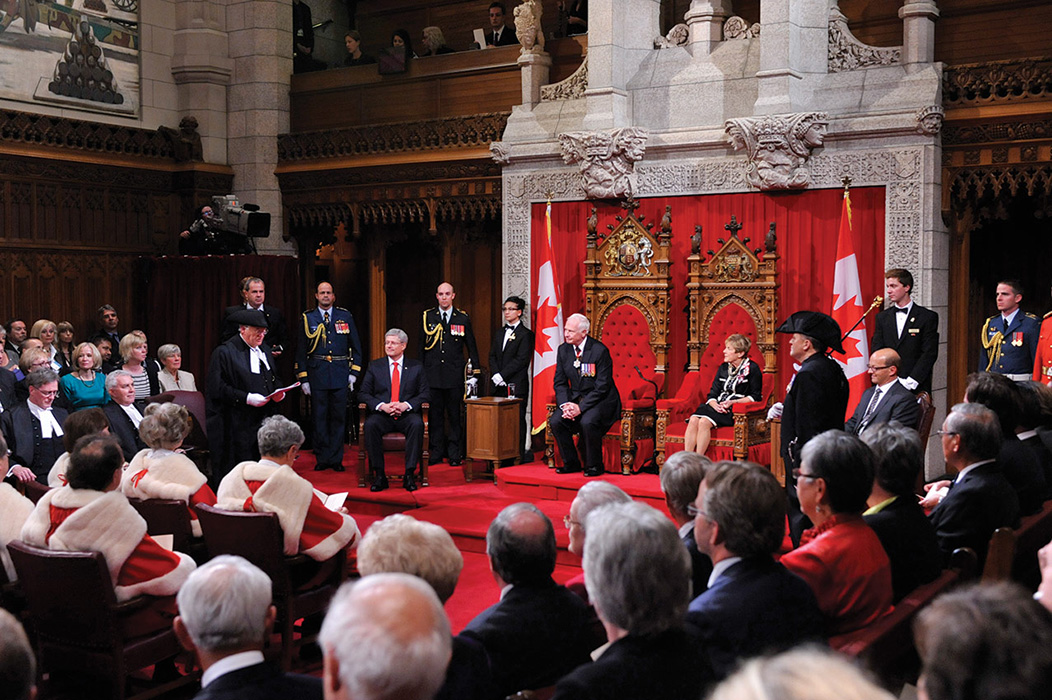
Prorogation signifies the end of a session within a Parliament. At the beginning of a session, the Governor General sets out the Government’s agenda for the session in the Speech from the Throne. When the Government has delivered on its commitments in the Speech, the Prime Minister recommends to the Governor General to end the session through prorogation.

There have been instances where Governments have prorogued early in the session to avoid politically difficult situations. The Government committed to Canadians to not abuse prorogation in such a manner. 

One option would be to require that the Government table a document early in the following session that sets out the reasons for proroguing Parliament. The report could be automatically referred to committee for study and could be the subject of debates on Supply Days. Another approach could be to reinstate the prorogation ceremony that would resemble the approach used in the Speech from the Throne but would occur at the end of the session.[ii] 

Depending on precisely how the Trudeau government words its proposed amendments to the Standing Orders, they would either be ineffectual or unconstitutional as a means of regulating how the prime minister exercises his authority over prorogation. Relating the exercise of prorogation is simply beyond the authority of the House of Commons. Prorogation is an executive authority exercised on and in accordance with the Prime Minister’s advice, and neither the House of Commons nor the Senate alone could regulate how it is exercised.

In 2013, NDP MPP Catherine Fife introduced a private members’ bill in Queen’s Park that would have similarly been unconstitutional. Some of my arguments against that bill would apply here, too.

The House of Commons alone lacks the authority to regulate the exercise of prorogation, and the Standing Orders certainly cannot force or prevent the prime minister from making the decision to prorogue a session of parliament. The Standing Orders currently contain a few provisions that describe how a prorogation of a session of parliament affects the business of the House of Commons, but they do not in any way attempt to regulate how the prime minister exercises his authority over prorogation.

The Standing Orders of the House of Commons probably could mandate that the government table a document explaining the previous prorogation. But what would that accomplish? The prorogation would have already happened, and it would be as irreversible as ever. This would be nothing more than a hollow platitude and would resonate only with an outraged opposition in a minority parliament.

Furthermore, the Standing Orders of the House of Commons have nothing to do with the old prorogation ceremony and closing speech from the throne, which takes place in the Senate and last occurred in 1983. If Prime Minister Trudeau wants to arrange Governor General Johnston to prorogue the 1st session of the 42nd Parliament by a speech from the throne in the Senate, instead of by proclamation, then he already has the authority to do so. The Prime Minister and His Excellency, or rather their respective staffs, can sort out the logistics of a closing speech from the throne and prorogation. The Standing Orders have nothing to do with that.

Similar Posts:

[i] Liberal Party of Canada, “Real Change: A New Plan for a Strong Middle Class,” October 2015, page 30.
[ii] Canada, Government House Leader, “Reforming the Standing Orders of the House of Commons,” 10 March 2017 [accessed 19 March 2017].

Posted in Crown (Powers and Office), Dorchester Review, Prorogation | 2 Comments

The O Canada Bill: Third Reading Purgatory & Grammatical Pedantry


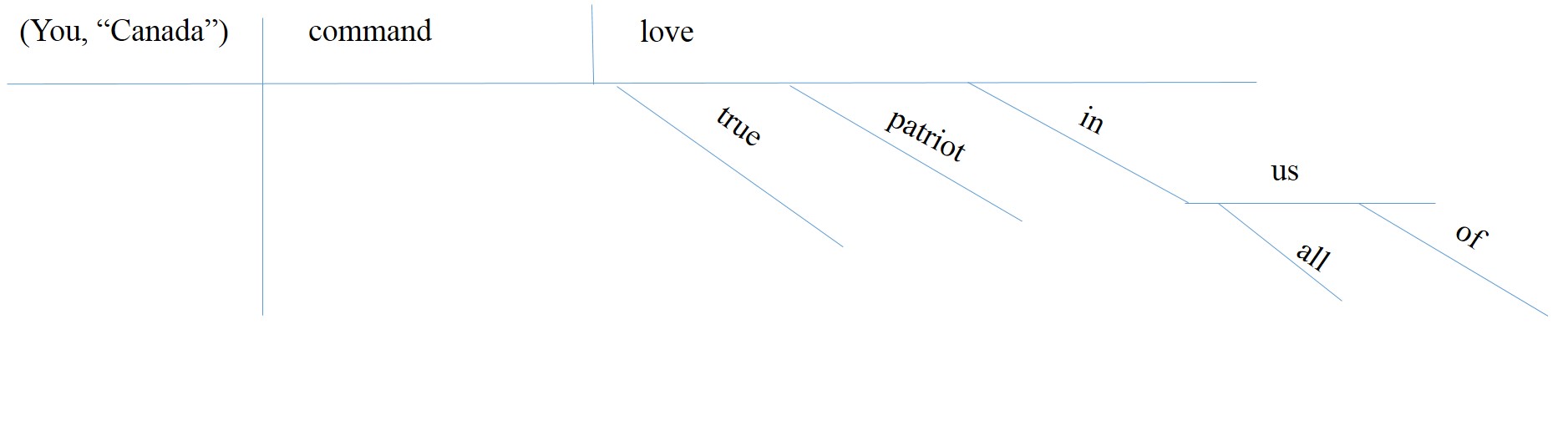
In my AP English class in 2004, I recall that several of my classmates protested against diagramming sentences on the erroneous and misplaced grounds that “Our boss will never ask us to diagram a sentence!” (Incidentally, the fact that we were using a 6th-grade textbook from the 1950s in a junior year of high school for what was, ostensibly, the equivalent of a first-year university course, also exposes the horrors and absurdities of the New Pedagogy, which has left students bereft of basic knowledge). Of course, the point of diagramming sentences is not to engage in some sort of didactic job-training per se, but instead, to gain a better understanding of the syntax and grammar of the English language so that you can engage in more logical, disciplined thinking and become a better writer in your job.

But I shall put those Reed-Kellogg Diagrams to good use nevertheless in order to combine my interest in political institutions and my occasional dabbling in linguistic pedantry.

In general, I agree with Senators Fraser and MacDonald and share their opposition to this stupid and pointless O Canada Bill, because, in my view, it conforms to the Liberal Party of Canada’s pattern of sneaking through legislation that derogates from Canadian history, identity, and symbols via Private Members’ Bills. But some of their grammatical critiques of the prosaic phrase, “True patriot love in all of us command” don’t add up.

Sir Robert Stanley Weir’s original English version of O Canada dates from 1908; its first verse said:

O Canada!
Our home, our native land.
True patriot love thou dost in us command.
We see thee rising fair, dear land,
The True North strong and free;
And Stand on guard,
O Canada,
We stand on guard for thee.

In 1914, Weir endorsed an alteration that had first appeared the previous year and changed the line “True patriot love thou dost in us command” to “True patriot love in all thy sons command.”

“True patriot love thou dost in us command” is a second-person declarative sentence in the indicative mood. In this poetic style, the object comes before the subject and verb. “Thou”, the second-person singular subject pronoun, refers to Canada. In standard English syntax, the sentence would say, “Canada, thou dost command true patriot love in us.” Those who sing O Canada are thus engaging in a dialogue with Canada as a country, anthropomorphizing Canada, and talking to it as if it were a person.


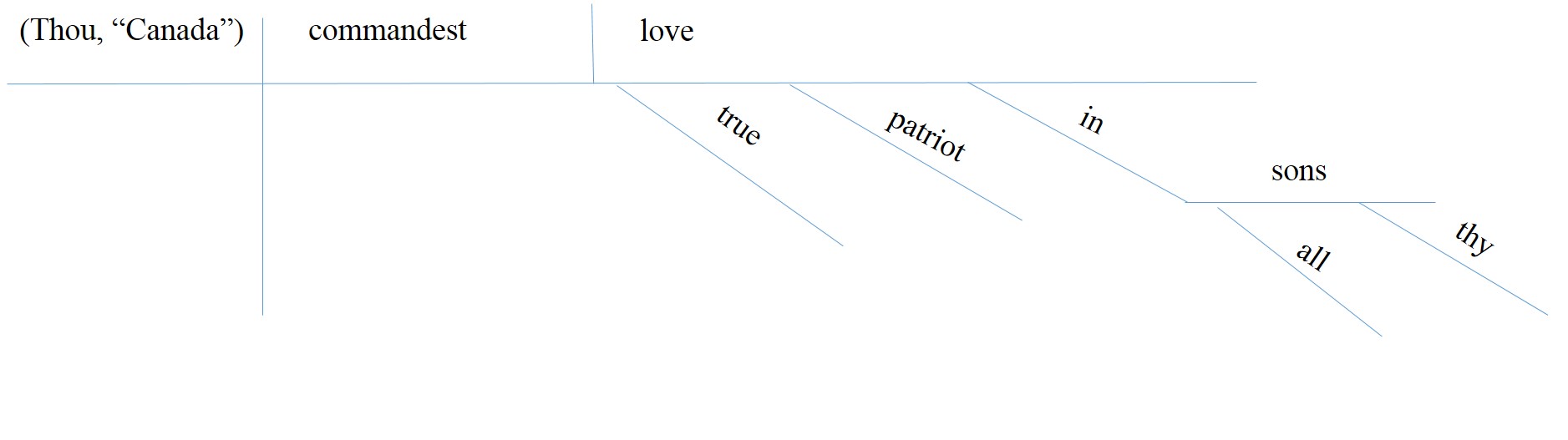
The lyrics “True patriot love in all thy sons command” retains the poetic word order, where the object comes before the subject and verb, but this second-person imperative sentence in the indicative mood contains only an implied subject, which would still be “Thou, Canada.” In languages whose nouns fall under cases and declensions, like classical Latin, this would be the vocative case. This vocative case exists in languages without declensions, but we wouldn’t think of it as such. In “Hey, you, reader!” the “you” is vocative in function but undifferentiated in form, in the English language. Therefore, as a declarative sentence written in non-poetic syntax, the current lyrics are the direct equivalent of, “Canada, thou commandest true patriot love in all thy sons.”


The phrase “True patriot love in all of us command” follows the same general grammatical structure as the line that it would replace. However, the last prepositional phrase shifts from the second person (“in all thy sons”), which sounds reverential, to the first person plural (“in all of us”), which sounds wilful. Its declarative form betrays its prosaic and bland character: “Canada, you command true patriot love in all of us.” And it certainly also sounds worse and less poetic. So I agree with Senator Fraser and Senator MacDonald on that point.


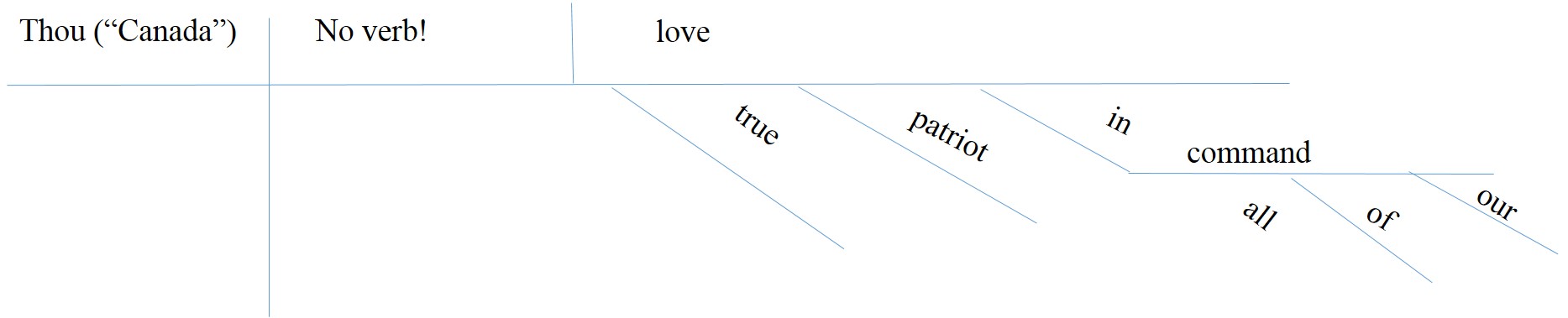
Senator MacDonald rightly mocks the political correctness of “in all of us command,” but he goes wonky in his ebullient denunciation of its grammatical correctness. The CBC article quoted him as suggesting, “The proper and only acceptable pronoun substitution for the phrase ‘All thy sons command’ is ‘All of our command.’ This is not opinion. This is fact.”

This is not a fact. What he said is demonstrably false, and such phrasing would not conform to the current phrasing. First “thy” is not a pronoun; it’s a possessive adjective equivalent to “your.” As such, “thy sons” means “Canada’s sons.” Second, in the phrase “all thy sons command,” “command” is a verb. But in Senator MacDonald’s bizarre claim, the “command” in “All of our command” would have to be a noun, not a verb — or else it would be complete gibberish. Therefore, Senator MacDonald’s suggestion is what makes no grammatical sense. If Senator MacDonald had taken the time to diagram his sentence, he could have avoided this grammatically incorrect outburst.

This is not a sentence. It is gibberish. I can’t even diagram it properly.

Senator Fraser and Senator MacDonald have taken their last stand against the O Canada Bill, but their war of attrition could fail. Essentially, they propose to keep adjourning the debate on Third Reading before the bill can come to a vote on Third Reading, which it would surely pass. They could lose their war of attrition if the Senate puts the bill to a final vote during their absence. Fraser’s Last Stand could fail as spectacularly as did X3: The Last Stand, and we won’t be able to erase this timeline.

Furthermore, if the Senate passes the O Canada Bill before the House of Commons adjourns for the summer, then the Trudeau government will arrange for Governor General Johnston to give Bill C-210 Royal Assent by Written Declaration in late June, since Royal Assent in Parliament Assembled would draw too much attention to it too early. Then Prime Minister Trudeau will announce in his Canada Day Speech on Parliament Hill that the bill has become law. He will reaffirm his being a feminist, reiterate that he has been working hard for “the middle class,” and close by noting that Parliament had to make the English lyrics to O Canada gender neutral because it’s the current year.

Similar Posts:


Posted in Dorchester Review, History of British North America, O Canada | 1 Comment