Jacob Rees-Mogg and Jeremy Corbyn Expose the Futility of the Fixed-Term Parliaments Act


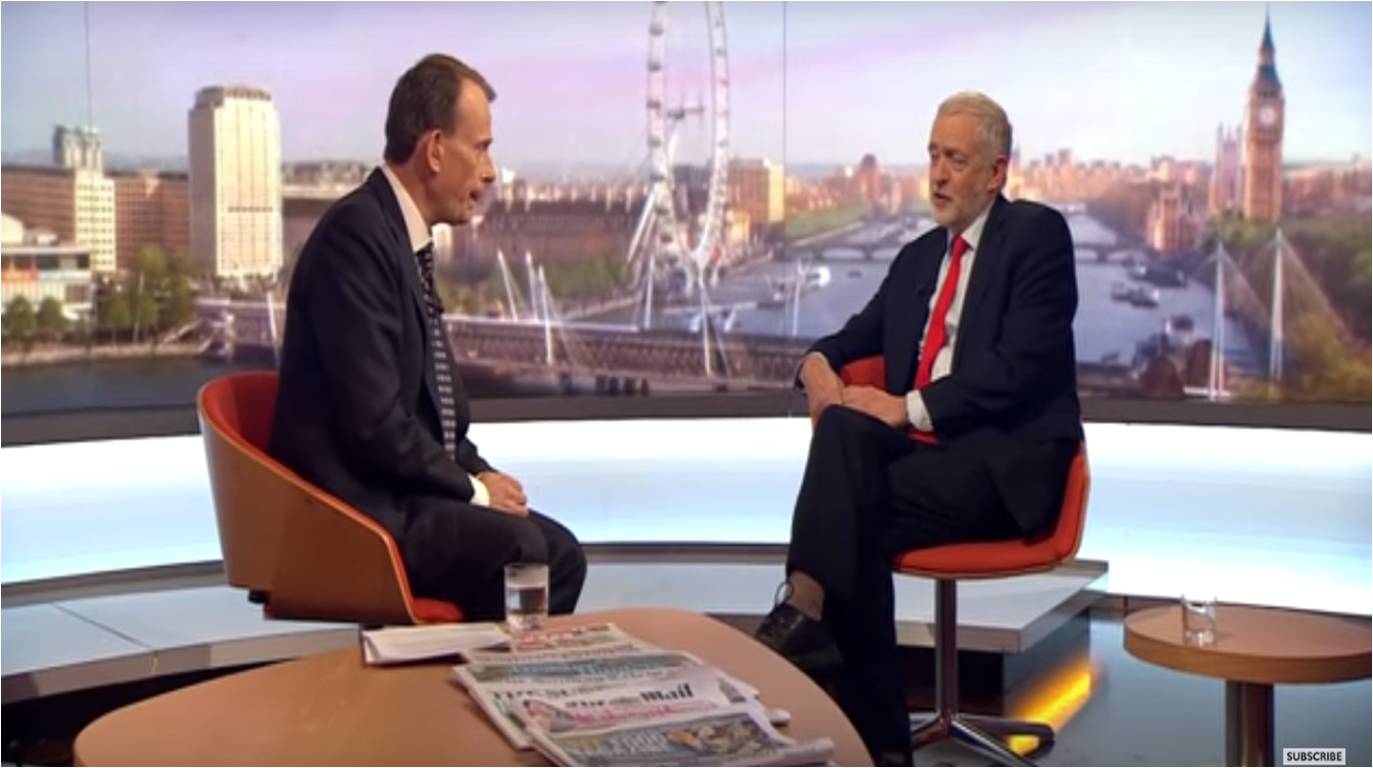
Andrew Marr Interviews Jeremy Corbyn

Sometimes nerdy political historians and political scientists could be accused of enjoying political shenanigans or borderline constitutional crises, like the Prorogation-Coalition Controversy of 2008, because they’re “interesting.” They are indeed interesting. But they are, more importantly, instructive and revealing.

Continue reading →

Posted in Dissolution, Fixed-Date Elections | 1 Comment

Historical Resources on the Proceedings of the House of Commons and Senate


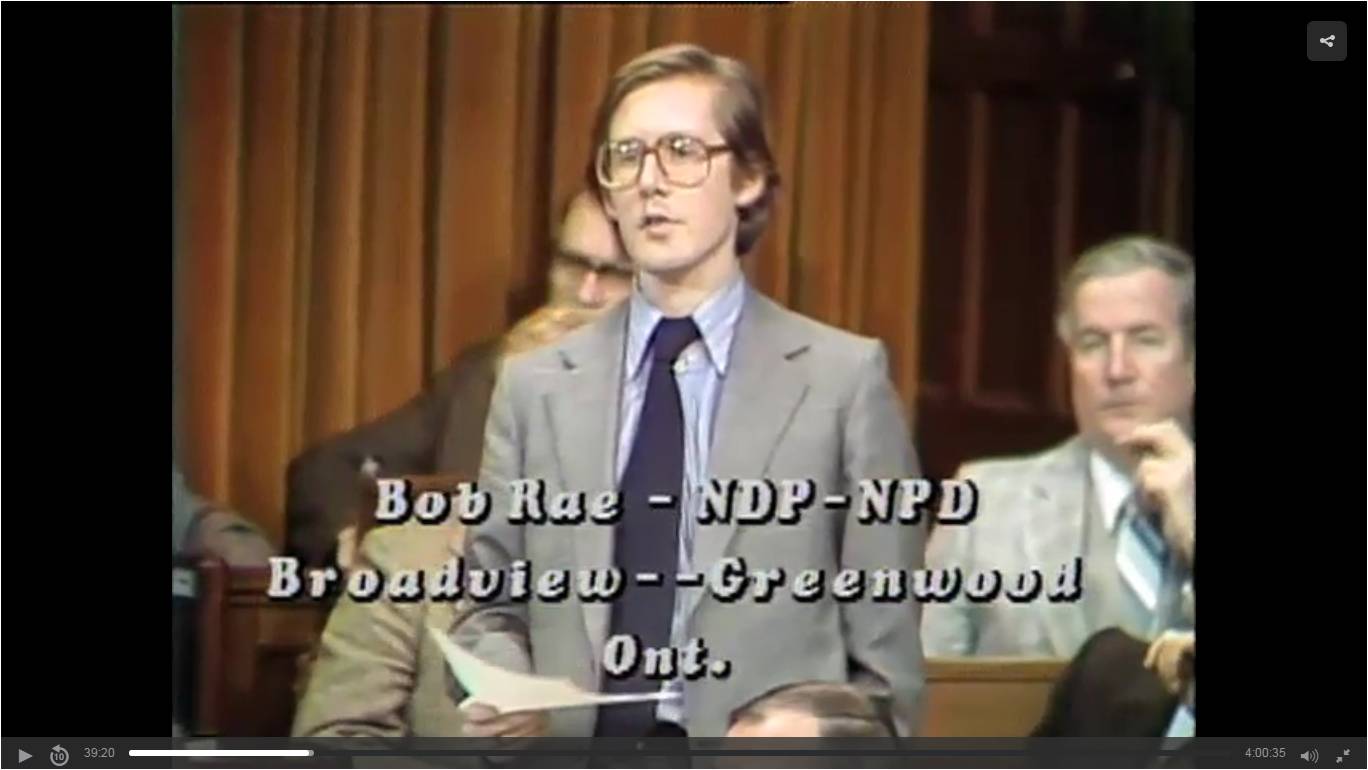
Bob Rae on 12 December 1979

Recently, two excellent historical resources on the proceedings of the Parliament of Canada have become readily available online. Many of you would join me in finding them useful and interesting.

Continue reading →

Posted in Parliament, Traditions and History | Leave a comment

How the General Election of 2017 Will Occur in Practice


Time’s up.

Introduction 

Earlier today, I was very confused to see that the Westminster Parliament is still sitting and conducting business. After all, MPs voted by a huge margin — well above even the two-thirds super-majority — to go to an early general election pursuant to the Fixed-Term Parliaments Act.

I committed the fallacy of mirror-imaging by presuming that the Mother of Parliaments would proceed with this matter in the same way that her wayward child the Parliament of Canada would. Here when the government loses a vote of confidence in the Commons, the House adjourns itself, and the Prime Minister typically advises the Governor General to dissolve parliament and issue the writs for a general federal election later that same day.

But this is not the case in the United Kingdom. First, I shall review the process of dissolution in the United Kingdom and then delve into the “Wash Up,” the week or two between a loss on a vote of confidence (or, in this unprecedented case, the successful passage of the motion to hold an early general election under the Fixed-Term Parliaments Act) that comes before dissolution and the general election.    

Continue reading →

Posted in Crown (Powers and Office), Dissolution, Fixed-Date Elections | 12 Comments

Presentation to the “Constitution at 150 Conference”


I’m pleased to report that I will present a paper at the upcoming “Constitution at 150 Conference” in Montreal, Quebec, on the morning of May 16th.

The conference runs from 16 to 18 May. I’d encourage those of you who are in a position to attend it to register for it; if you read this blog, then, chances are, you’d find this conference interesting. The conference features an impressive line up, including, but not limited to, Professors Adam Dodek and Peter Oliver of the University of Ottawa, Jonathan Shanks of the Department of Justice, David E. Smith (Professor emeritus of Political Science of the University of Saskatchewan), and Clerk of the Senate Charles Robert.

My paper, “Canada’s Legal-Constitutional Continuity, 1791-1867” demonstrates how the Dominion of Canada is the continuator, or successor polity, to the Province of Canada (1841-1867), which is, in turn, the continuator of Upper Canada and Lower Canada (1791-1841). In a way, I suppose that it could be construed as contradicting the premise of the conference’s name because constitutional government in British North America pre-dates the British North America Act, 1867 itself.

Posted in Conference Papers | Leave a comment

More on the Fixed-term Parliaments Act


Philip Norton, a Conservative life peer and a Professor of Government at the University of Hull, provides his synopsis of the Fixed-Term Parliaments Act and why the Prime Minister of the UK no longer “calls” a snap election.

Incidentally, if our Senators were all even half as qualified as Norton, our upper chamber would be in much better shape today.

Lord Norton's avatarThe Norton View

The Prime Minister has announced she will be asking the House of Commons tomorrow to vote for the motion ‘That there shall be an early parliamentary general election’.  She correctly stated the provisions of the Act.  She is thus ‘calling for’ an election, not ‘calling’ an election.  The decision now rests with the House of Commons.  A two-thirds majority of all MPs is required for the motion to be passed.  That majority is expected to be achieved, given that Jeremy Corbyn has said Labour will vote for it.  Indeed, he made it clear some time ago that he would support an early election, thus doubtless aiding the PM in her consideration of whether to seek an election under section 2(2) of the Act.

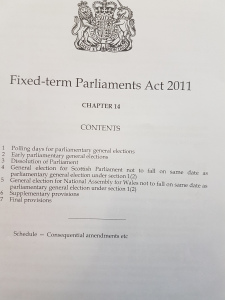
The Act has only seven sections and one schedule – it is no more than nine pages, including the contents page – and was enacted in September 2011. …

View original post 316 more words

Posted in Dissolution, Electoral Reform | 1 Comment