My Presentation on Fixed-Elections Laws at the Canadian Political Science Association


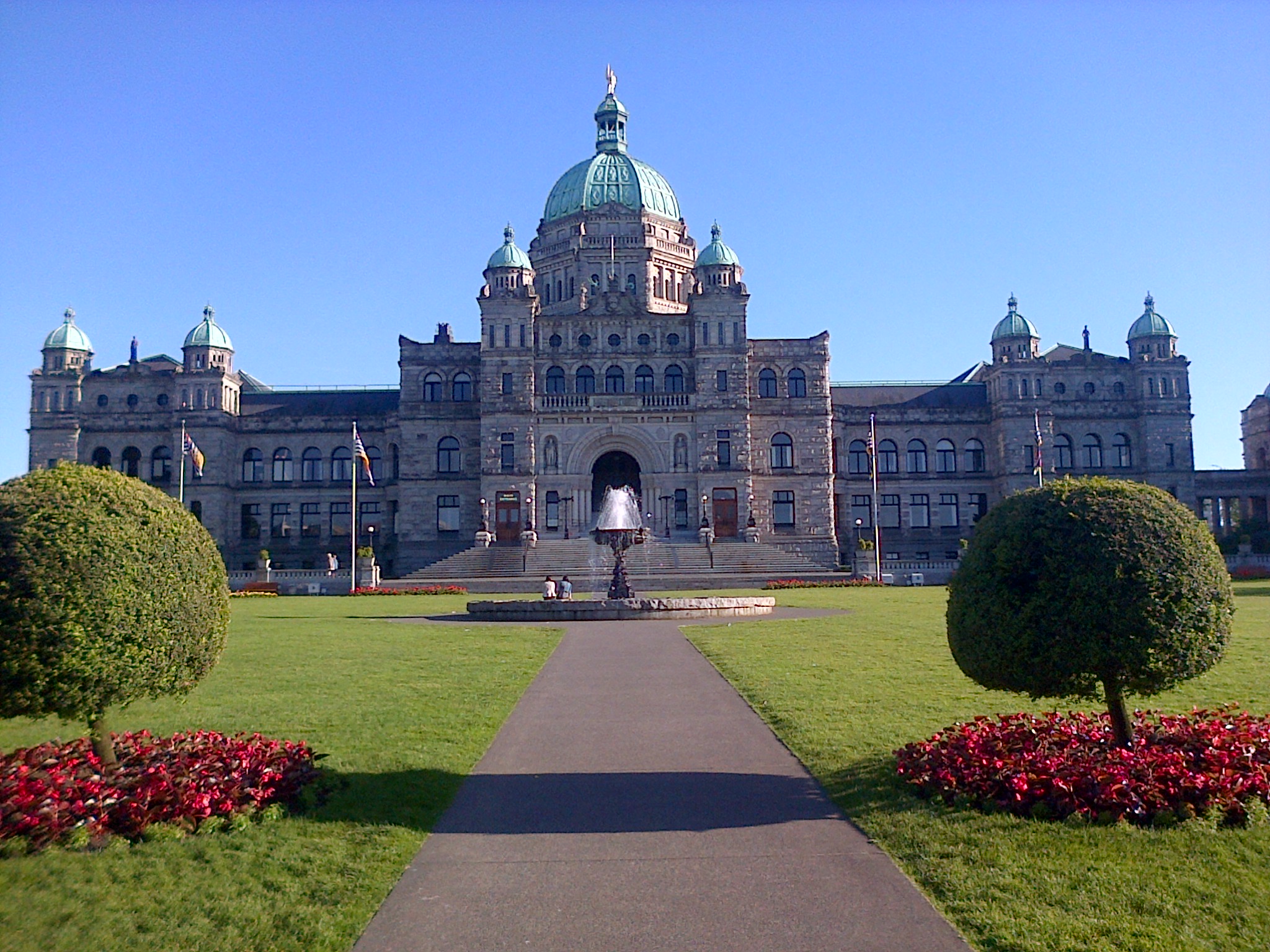
Legislative Assembly of British Columbia

Legislative Assembly of British Columbia

I am enjoying my stay in Victoria this week for the Canadian Political Science Association’s Annual Conference, though visiting British Columbia reminds me of how living in Alaska felt: like you’re permanently late and behind schedule, because everything important in North America occurs on Eastern Time! I would like to thank Michelle Hopkins and Francesca Scala for accepting my paper, Graham White for acting as the discussant for my panel, and my supervisor Phil Lagassé for supporting me immeasurably on my scholarly odyssey.

Abstract of My Paper on Fixed Elections

In Reining in the Crown’s Power on Dissolution: The Fixed-Term Parliaments Act of the United Kingdom versus the Fixed-Election Laws in Canada, I analyzed the key differences between the powers of the British Crown versus those of the Crown of Canada in order to compare and contrast the fixed-elections laws in Canada (at the federal and provincial levels) with the Fixed-Term Parliaments Act, 2011 of the United Kingdom.  The United Kingdom operates on parliamentary supremacy and an uncodified constitution, and the powers of the British Crown come either from statute or prerogative. The British Parliament can therefore invoke its sovereign right to limit or put into abeyance any prerogative power of the British Crown at will. In contrast, Canada has always operated on a system of constitutional supremacy. Currently, the powers of the Crown of Canada derive from three sources: the provisions of the Constitution Act. 1867, the constitutionalized powers entrenched under the Constitution Act, 1982, and statute. The first two types of powers enjoy the protection from statutory encroachment under the unanimity formula of the Constitution Act, 1982. This is precisely why the Canadian fixed-elections laws have deliberately preserved the Crown’s power of dissolution and the Prime Minister’s (or Premier’s) power to advise and receive early dissolution, in constrast to the Fixed-Term Parliaments Act, 2011, which put the prerogative of dissolution of the British Crown into abeyance, removed the Queen and Prime Minister from dissolution, and thus truly eliminates the possibility of “snap elections.” Finally, Canadian jurists and scholars have long misapplied the British concept of “prerogative” powers to the Constitution of Canada, that the power of dissolution is not a “prerogative” in Canada, if “prerogative” refers to a power that the common law has recognized as belonging to the Crown, and that only a proper constitutional amendment under section 41(a) of the Constitution Act, 1982 could eliminate the Crown’s power on dissolution (at either the federal level or in a province) as the Fixed-Term Parliaments Act, 2011 has put the prerogative of dissolution into abeyance in the United Kingdom.

Discussion

I presented alongside the distinguished Peter Russell, Professor Emeritus of Political Science at the University of Toronto, who wrote on cabinet manuals and constitutional conventions, and the criminologist Johannes Wheeldon, who studied scholarly views of the prorogation of 2008.

If anything, this panel highlighted the ongoing disagreement between scholars on the powers of the Crown and the constitutional positions of the Governor General and Prime Minister under Responsible Government – which will always remain and which always should remain. The discussion touched on two other topics about which I have written but on which I did not present: the Governor’s discretionary authority and the exceptional circumstances under which the Governor could reject a First Minister’s advice to dissolve the legislature and the Manual of Official Procedure of the Government of Canada.

The Manual of Official Procedure of the Government of Canada

Peter promoted the British Cabinet Manual and the New Zealand Cabinet Manual as ideal models for the officialization of constitutional conventions in Canada, though I think that he uses the term “consolidation” instead, based on his article in last August’s issue of the Journal of Parliamentary and Political Law. (Nick MacDonald and I also wrote an article on constitutional conventions and cabinet manuals that appeared in the same issue). I agree with Peter on the main issues: that cabinet manuals do not “codify” conventions – they create an official but politically enforceable interpretation of convention – and that the New Zealand Cabinet Manual and the British Cabinet Manual are generally good and helpful. Peter did not discuss it in his main presentation, though he did acknowledge it in the discussion after Phil inquired about it.

Peter has criticized the Manual of Official Procedure of the Government of Canada because of its length and bulk; he acknowledged that it contains useful information on constitutional conventions, prorogation, dissolution, and the formation of governments, but criticized it for also including procedural minutia relating to matters such as state funerals and ambassadors. I then interjected and asked the audience rhetorically, “Would you dismiss a dictionary as irrelevant and too bulky because it contained 1000 pages?” Of course, you wouldn’t. You’d treat the bulky dictionary as a reference and thus look up the definitions that you need at any given time and move on. You would never question the utility of the dictionary because of length! Peter then criticized the Manual as inaccessible – to which I replied that one can download it from this website. That said, I do agree with Peter’s point that it would have been preferable if the Privy Council Office had uploaded the Manual to its website. I suspect that PCO has not done so because some sections of the Manual are out of date.

I hope that PCO does update the Manual into a second edition. Perhaps PCO could make use of an enterprising young man to undertake such a project!

“The Glory of Responsible Government”

Phil Lagassé asked Johannes Wheeldon why he had not acknowledged the true nature of Responsible Government in his analysis of the constitutional positions of the Governor General and Prime Minister on prorogation. Curiously, Wheeldon seemed to dismiss the history of the scholarship on Responsible Government as irrelevant to the Prorogation-Coalition Controversy of 2008 and made clear that since none of the scholars whom he surveyed brought up this issue, he did not much care about it. Phil then pointed out that Wheeldon had never asked or alluded to the question in his survey and therefore should not have expected any of his respondents to mention it to him!

If I had the time to interject, I would have explained this concept properly. (I should have taken the time to explain it in my presentation, but let’s just say that I’m a far better writer than a public speaker!) As Sir John George Bourinot and Alpheus Todd made clear in the 19th century (but apparently they don’t matter, because any precedent that occurred before 1900 is irrelevant), Responsible Government means that Ministers of the Crown take responsibility for all acts of the Crown; the Sovereign or Governor no longer take responsibility for these executive decisions and thus promulgates these acts of the Crown on and, apart from exceptional circumstances, in accordance with ministerial advice. The Prime Minister and Cabinet govern and rule, while the Sovereign reigns. The Sovereign or Governor could only reject ministerial advice under exceptional circumstances precisely because of the exceptional consequences of such regal or gubernatorial intervention: the Prime Minister (and thus the Ministry) must resign so that the Sovereign or Governor could appoint a new Prime Minister and Ministry prepared to take responsibility for that act of the Crown. In other words, if Governor General Michaelle Jean had rejected Prime Minister Harper’s advice to prorogue on 4 December 2008, Harper would have been obliged to resign, and Jean would then have commissioned Stephane Dion to form a Liberal-New Democratic coalition government. One does not require a PhD to discern these undeniable facts of Responsible Government, which the scholars of the 19th century fully understood.

Graham White mentioned that he used to regard “the glory of Responsible Government as its flexibility” but now agrees with the arguments that Aucoin, Jarvis, and Turnbull put forward in Democratizing the Constitution: Reforming Responsible Government – which he referred to as “the Good Book.” However, as for myself, I think that Democratizing the Constitution falls short of the Bible, though the former has still succeeded in galvanizing its converts. I would argue that the true “glory of Responsible Government” lies in its historic achievement of having successfully preserved the medieval doctrine of royal infallibility within a modern system of democratic accountability. Since Ministers of the Crown take responsibility for all acts of the Crown, the Sovereign can still do no wrong – only Ministers responsible to Parliament and to the people can. Responsible Government thus constitutionalizes monarchy. And that’s why a Sovereign or Governor forces the resignation of, or dismisses, a Ministry by refusing to act on ministerial advice: the Ministers must then resign in order to preserve the dignity of the Crown. But since no one in Wheeldon’s survey explained this concept to him, it must be irrelevant…

White’s Reading of Democratizing the Constitution

 White then read out a quote from Democratizing the Constitution – or “the Good Book, as he calls it – because he replaced one of that book’s co-authors, Mark Jarvis, as the discussant on this panel and felt obliged to “channel” him and his work into the discussion. Coincidentally, he read out the very same quote from the book whose meaning Mark and I had once debated: “Experts disagree on what the Canadian constitution means and thus render themselves collectively of no political consequence whatsoever.”[1] White affirmed that he agreed with this statement, but he noted that constitutional scholars have long debated the King-Byng Affair, which suggests that they will never agree. Interestingly, the authors made a similar statement elsewhere in the book: “Unfortunately, there is little reason for optimism, given that we have seemed content to allow the confusion and disagreement over the King-Byng Affair to fester for more than 85 years.”[2]

If I had had enough time, I would also have asked two questions based on what the first citation necessarily implies. First, why should scholars seek to make themselves politically significant? Perhaps they should form their own political party – except of course that those scholars who disagree would have to form an alternative party. They can if they want to do so, but they don’t have to do so. In addition, scholars do not need to agree with one another and form a united front in order to render themselves of political significance! Governments and parliamentarians consult scholars frequently. For instance, Governor General Jean consulted Peter Hogg, Peter Russell, and Ned Franks in December 2008 – and these scholars did not agree with one another. Second, why is the scholarly disagreement over these issues somehow undesirable or bad? Mark insists that I have misinterpreted the citation from page 150 by asking these corollaries, but the second citation from page x makes clear that the authors do indeed regard the scholarly disagreement as undesirable – or else they would not have used a word laden with a bad connotation like “fester,” which describes a gangrenous wound that will not heal and may lead to amputation. (And if that’s not what they meant, then they should have chosen their words more precisely). Scholars disagree because there are legitimate areas of disagreement and debate over the nature of executive power and the relationship between the executive and the legislature. Even since Robert Macgregor Dawson and Eugene Forsey took opposite views on the King-Byng Affair, subsequent scholars and generations of scholars have done the same – because anytime the Governor invokes his discretionary authority to reject a First Minister’s advice, he exercises judgement. And scholars can always analyze, debate, and disagree on a decision based on a political or constitutional decision because we live in a liberal democratic system and may exercise liberties of expression.

In my next entry, I’ll review today’s panel on executive power in Canada (featuring Nomi Lazar, Dennis Baker, Phil Lagassé, and Peter Russell) and highlight other areas where scholars disagree on the powers of the Crown. Scholars can and should disagree where the evidence warrants. That’s why we hold annual conferences of the Canadian Political Science Association! My field would become rather boring if constitutional scholars agreed on everything.

Similar Posts:


[1] Peter Aucoin, Mark Javis, and Lori Turnbull, Democratizing the Constitution: Reforming Responsible Government (Toronto: Emond-Montgomery Publishing, 2011), 150.
[2] Peter Aucoin, Mark Javis, and Lori Turnbull, Democratizing the Constitution: Reforming Responsible Government (Toronto: Emond-Montgomery Publishing, 2011), x.
Posted in Constitutional Conventions, Fixed-Date Elections, Officialization of Convention, Reform | 6 Comments

The Confidence Convention in Ontario: How the Standing Orders Kept the Wynne Government in Power


I’d like to thank James Anderson for publishing a slightly abridged version of this column on National News Watch.

Introduction

Proponents of democratic reform in Canada focus their efforts at the federal level and have overlooked Canada’s most populous province. However, the Government and Legislature of Ontario have perverted Responsible Government and deviated from necessary and proper federal practices and customs with respect to prorogation, delegated legislation, and the confidence convention.

In Ontario, prorogations do not occur along intersessions of 40 days as at the federal level; instead, prorogations come with unspecified intersessions, and McGuinty’s lasted from 15 October 2012 to 19 February 2013. The Legislature of Ontario sometimes abdicates its own law-making authority to the executive through delegated legislation. The bill that imposed new contracts on teachers included a sleeper-cell clause, “This act is repealed,” which the McGuinty government promulgated while the legislature was still prorogued. Finally, the Legislative Assembly of Ontario has severely restricted its own freedom of action with respect to motions of non-confidence through its own Standing Orders.

The Confidence Convention

Responsible Government means that Ministers of the Crown take responsibility for all acts of the Crown and that the Governor acts on, and apart from exceptional circumstances, in accordance with the advice of Ministers. The Ministry must also retain the confidence of the elected Assembly in order to remain in office. If the Assembly withdraws its confidence from the Government, the Premier must either advise the Lieutenant Governor to dissolve the legislature, or resign.

But the Legislative Assembly of Ontario has severely restricted its own freedom of action with respect to motions of non-confidence through its own Standing Orders and has voluntarily given the Government too much power over a legislative privilege.

At the federal level, a vote of confidence generally includes the Address in the Reply to the Speech from the Throne, supply bills, any government bill that the government deems a matter of confidence, or a motion of non-confidence itself. Theoretically, the Government could accept the Opposition’s amendments to a supply bill and thus retain the confidence of the Assembly, but Governments in Canada have generally taken a hard line on this class of confidence vote. The Government judges when it has lost the confidence of the Assembly on some votes, but the Assembly determines when it has withdrawn confidence from the Government on an unambiguous motion of non-confidence.

Standing Orders in Ontario

The Standing Orders of the Legislative Assembly of Ontario have all but banned the fourth category of confidence vote and restricted the Assembly’s power to withdraw its confidence from the Government of Ontario.

First, section 43 forbids the Opposition from introducing a motion of non-confidence (under the older term “motion of want of confidence”) on an Opposition Day. It states, “Opposition Day motions […] shall not be motions of want of confidence in the government.” The Standing Orders of the Legislative Assembly of Ontario provide for ten Opposition Days per calendar year. This strange rule contradicts the very concept of the Opposition Day (also known as a “Supply Day” or an “Allotted Day” in the Parliament of Canada), which normally refers to a day on which the Opposition, rather than the Government, chooses the topics for debate. In contrast, the Standing Orders of the federal House of Commons provide for 22 “Allotted Days” per calendar year with no restrictions on what motion the Opposition MP can table. While the Government of Canada can alter the scheduling of Allotted Days as a tactic against the Opposition, nothing in the Standing Orders of the House of Commons prohibits the Opposition from introducing a motion of non-confidence in the Government.

Second, section 44(a) of Ontario’s Standing Orders limit the Opposition’s latitude yet further. The Official Opposition can introduce no more than three motions of non-confidence per session, and the second largest party in opposition can introduce no more than two per session. Sessions in Ontario often last for two years. (An adjournment ends a sitting, a prorogation ends a session, and a dissolution ends a parliament). Worse still, section 44(b) effectively empowers the Government to veto altogether holding a vote on the motion of non-confidence, because the Assembly can only vote on the motion “at a time allotted by agreement of the House Leaders of the recognized Parties.” In other words, the Government decides when the Legislative Assembly may attempt withdraw its confidence. Even if the Government House Leader agreed to such motions of non-confidence, the Opposition could quickly use up all of them if the Government wins each vote.

The Legislative Debates

The legislative debates in May 2013 have shown the consequences of this policy. Premier Wynne inherited her Liberal minority government from her predecessor Premier McGuinty. Wynne has since admitted that the McGuinty government cancelled the construction of powerplants for political reasons in 2011, which cost Ontarian taxpayers at least $585 million in penalties. The Wynne government still has yet to pass a budget but recently secured the support of the New Democrats. The Conservatives, being the Official Opposition, introduced a motion of non-confidence in the Wynne government, which in turn has invoked section 44 and refused to put the motion of non-confidence to a vote.

On 29 April, the Conservatives filed their motion of want of confidence, and it has sat on the Order and Notice Paper ever since. The Conservatives condemn the cancellation of the gas plants and the Government’s “prima facie breach of privilege” for not releasing documents on the cancellation of the gas plants and conclude, “the Government has lost the confidence of the House.”

Over the weeks of May 6 and May 13, Conservative leader Tim Hudak and his front bench pressed the Government House Leader and the Premier why the Government would not allow the Assembly to vote on their non-confidence motion. On May 15, the Government House Leader John Milloy praised “the consensus of all the recognized House leaders” required under section 44. Milloy also explained that the Legislative Assembly first adopted the rule sometime under the Davis government (1971-1985). Perhaps this rule helped the Davis government survive through two minority parliaments. Milloy then emphasized that the Opposition would have the chance to vote against the government’s upcoming supply bills “within the next several weeks.”         

Conclusion

In a majority parliament, sections 43 and 44 would rarely become pertinent political issues; even if the Government refused to bring the motion to a vote, its single-party parliamentary majority would virtually guarantee that it retains the confidence of the Assembly. But the confidence convention becomes more significant when a volatile minority parliament could easily withdraw its confidence from a single-party minority government – particularly one plagued by scandal.

The Standing Orders have distorted and place unwarranted restrictions on the confidence convention in Ontario and ensured that the Government only loses the confidence of the Assembly of its own terms and not the Assembly’s. The Assembly could only withdraw its confidence from the Government on the Address in Reply, supply bills, or government bills that the Government deems matters of confidence. Sections 43(b)(vi) and 44(a) of the Standing Orders have destroyed spontaneity by unduly restricting what the Opposition can do on Opposition Days and by allowing the Government to bide its time if it fears a loss of confidence.

The Wynne Government used section 44 to shield itself against a vote of non-confidence and bought itself enough time to remain in power until at least the fall of 2013. The Conservatives introduced a motion of non-confidence in an effort to force an early dissolution and fresh elections, which gave the New Democrats the balance of power. After playing coy with the Assembly and media for several weeks, New Democratic Leader Andrea Horwath announced on May 21 that her party would support the Wynne Government’s upcoming budget.

It is therefore reasonable to conclude that section 44 of the Standing Orders helped keep Premier Wynne’s Liberal minority government in power, because the Government’s refusal to call the vote on the motion of non-confidence after it sat on the Order and Notice Paper for weeks allowed the New Democrats to extract concessions from the Liberals.

But if the Assembly had voted on the Conservatives’ non-confidence motion at the beginning of May, the New Democrats would have found supporting the Liberal minority government politically unpalatable after criticizing its scandals and receiving no budgetary concessions in return.

The Opposition should more certainly be able to introduce a motion of non-confidence on an Opposition Day, and the Assembly should not require the Government’s permission in order to vote on a motion of non-confidence. At its next review of its Standing Orders, the Legislative Assembly should follow the recommendation of Conservative MPP Randy Hillier and repeal sections 43(b)(vi) and 44 because they give the Government unwarranted control over a legislative privilege.

Perhaps the Legislature and Government of Ontario have gotten away with the poor practices on duration of prorogation, legislative drafting, and the confidence convention because the simple amendments that could fix these three problems do not lend themselves to broader rallying cries or catchy media lines. But sometimes simple changes prove the most effective.

I’d like to thank Utsav Sanduja for alerting me to sections 43 and 44 of the Standing Orders.

Similar Posts:

Posted in Confidence Convention, Constitutional Conventions, Reform | 6 Comments

An Account of Prorogation Similar in Principle


I see that my ideas on both prorogation and the constitutional relationship between the First Minister and Governor have taken hold in a wider academic audience, as Dr. Radha Persaud has shown in his column, “Prorogation: A Matter of Restraint.”

I could almost have written it myself.

Similar Posts:

Posted in Crown (Powers and Office), Prorogation | Leave a comment

The Wrong Way to Limit a Premier’s Power to Prorogue: Why Catherine Fife’s Bill Is Unconstitutional


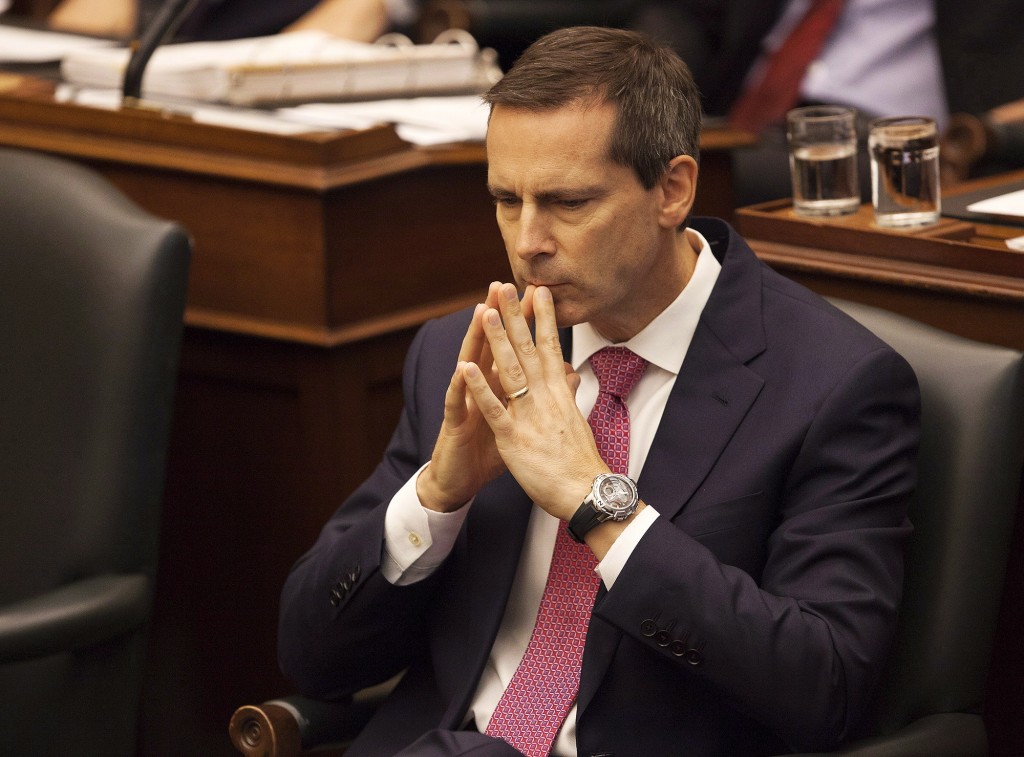
Dalton McGuinty

Premier McGuinty pensively plots his pernicious prorogation.

My column appears in iPolitics under the title, “The Wrong Way to Limit a Premier’s Power to Prorogue.” I am grateful to Doug Beazley for having published it in the “Insight” section.

The controversial prorogation of former Liberal Premier Dalton McGuinty lasted from 15 October 2012 to 19 February 2013. With the legislature back in session, the political backlash to this political tactic has just begun.

On 5 March 2013, New Democratic MPP Catherine Fife introduced a private members’ bill that would amend the Legislative Assembly Act so that the Premier could no longer exercise the judgement and discretion when to advise the Lieutenant Governor to summon and prorogue the legislature. Instead, the Premier could only offer this constitutional advice after “the Legislature has adopted a resolution in support of the prorogation.”

The bill would also require that “the Premier shall also advise the Lieutenant Governor to summon the Legislature in accordance with the recommendation of the Assembly.” The Legislative Assembly would de facto prorogue and summon itself, and the Premier would no longer be able take responsibility the act of the Crown for prorogation.

Despite the bill’s assertion that “nothing alters or abridges the powers of the Crown, including the power to prorogue, dissolve or summon the Legislature,” all the preceding sections would alter and abridge the power to summon and prorogue the legislature.

This bill would be unconstitutional because only an amendment under section 41(a) of the Constitution Act, 1982 can change anything “in relation to the office of the Lieutenant Governor of a province.”

The Lieutenant Governor’s powers to summon (and, implicitly, to prorogue) the legislature come directly from section 82 of the Constitution Act, 1867. Section 5 of the Constitution Act, 1982 further requires that the Legislature sit at least once per year, which puts the maximum theoretical duration of a prorogation at 364 days. The Legislative Assembly Act affirms those powers as part of the Constitution of Ontario.

The Constitution of Ontario includes both the Lieutenant Governor’s written constitutional power to summon and prorogue and the uncodified conventions of Responsible Government that Ministers of the Crown take responsibility for all acts of the Crown and that the Lieutenant Governor acts on and in accordance with the Premier’s advice in summoning and proroguing the legislature. Fife’s bill even acknowledges that the Premier alone advises the Lieutenant Governor to summon, prorogue, and dissolve the legislature.

This bill would limit how the Premier can exercise the discretion to advise and take responsibility for summoning and prorogation and therefore necessarily limit how the Lieutenant Governor promulgates that advice. The legislature cannot drive a wedge between the Governor and First Minister of the Crown without a constitutional amendment.

However, the Legislature could pass a bill that better defines prorogation, provided that it also preserves the respective constitutional roles of the Premier and Lieutenant Governor. The Government would only have to advise the Lieutenant Governor to give the bill Crown Consent (if the provincial legislatures, like the Parliament of Canada, also recognize this procedure).

First, the Legislature could define “prorogation” and “intersession” in statute without infringing upon the power itself. The Legislative Assembly Act currently states, “It is not necessary for the Lieutenant Governor in proroguing the Legislature to name a day to which it is prorogued.”

The Legislature could amend that law such that the Lieutenant Governor issues two proclamations (on and in accordance with the Premier’s advice): the first would prorogue the legislature and the second would summon the next session for despatch of business at, say, intervals of 40 days. The Premier could only advise the Lieutenant Governor to extend the intersession through another 40 days through a subsequent proclamation. Such an amendment would bring Ontario in line with the federal convention on prorogation.

Second, the legislature could also amend the Financial Administration Act in order restrict Special Warrants to periods of 60 days and only when parliament is dissolved. The federal parliament adopted such a reform in the 1990s. Special Warrants give the Government an emergency power to implement spending without first obtaining parliamentary authorization, which directly contradicts the historical and modern purpose of parliament. The current legislation allows the Lieutenant Governor to issue Special Warrants on and in accordance with the advice of the Government “if the legislature is not in session,” which includes both the intersessions when parliament is prorogued and the writ when parliament is dissolved.

Special Warrants are a pure statutory power and pertain neither to the written constitution nor to constitutional conventions. MPPs could simply amend section 1.0.7(1) of the Financial Administration Act to read “If the legislature is dissolved” without raising any constitutional questions. By restricting the Special Warrants to the writ, the legislature would place an indirect but practical and important limit on the duration of a prorogation. Whenever the Government ran out of money during an intersession, Parliament would have to be recalled in order to approve any additional spending.

NDP leader Andrea Horwath has touted this bill as “taking the politics out of prorogation.” In reality, this bill would inject even more politics into every subsequent prorogation – particularly in a minority parliament – and would be unconstitutional. Thankfully, the Legislature could amend the bill at committee so that it both promotes the same principle of better defining prorogation and conforms to the constitution.

James W.J. Bowden is an M.A. Candidate at the University of Ottawa.

Similar Posts:

Posted in Crown (Powers and Office), Prorogation | Tagged , , , , | 9 Comments

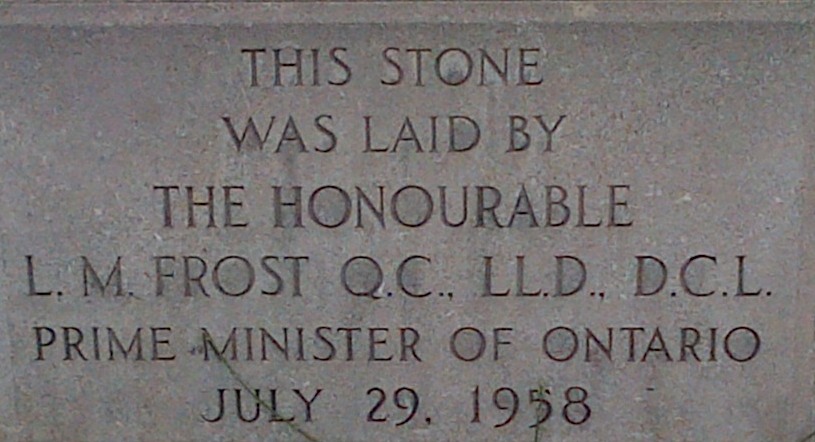
“Prime Minister of Ontario”: The Old Title of Leslie Frost and John Robarts


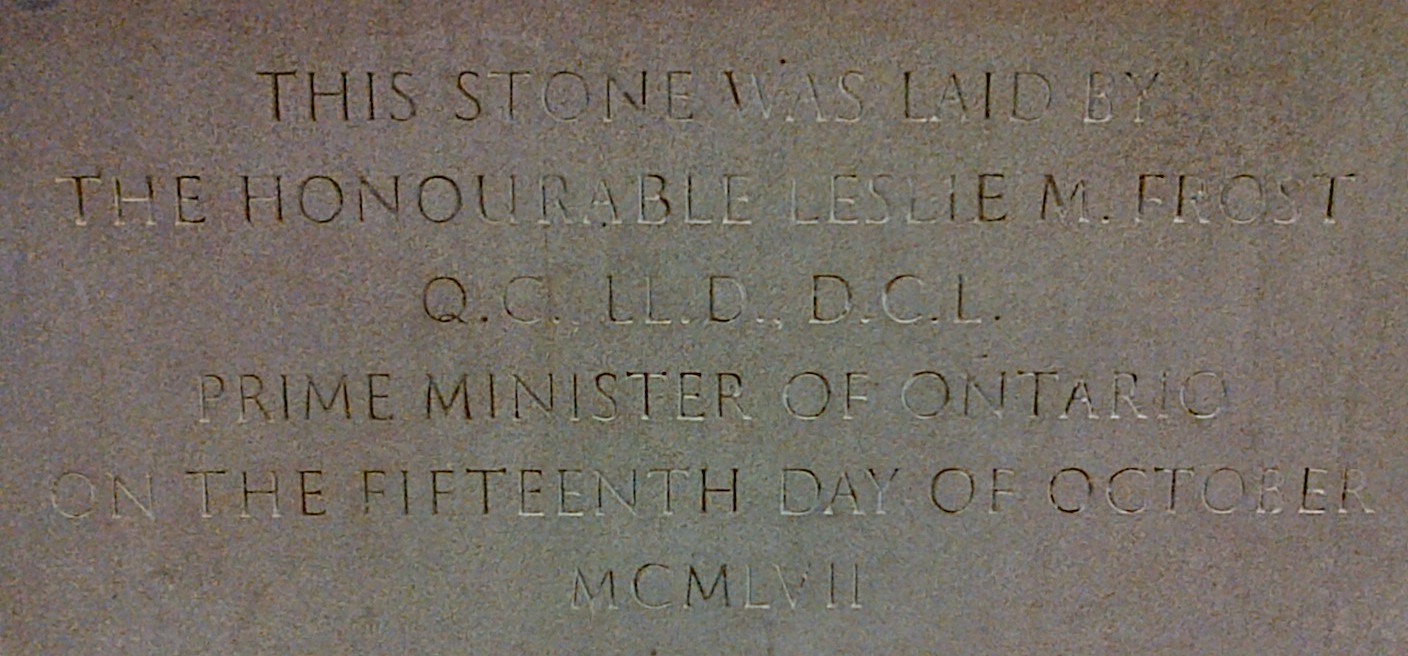
Leslie Frost, Prime Minister of Ontario, commemorates a building in downtown Toronto

Leslie Frost, Prime Minister of Ontario, commemorates a building in downtown Toronto

In the English language, three titles within Commonwealth Realms refer to the same office of head of government: “first minister,” “premier,” and “prime minister.”  One of my correspondents informed me of a fourth title found within the Commonwealth of Nations: the heads of government in the several Indian states go by “Chief Minister,” while the head of government of the Republic of India goes by the conventional “Prime Minister.” The same goes for the heads of government of the United Kingdom,  New Zealand, and Canada and Australia at the federal level. The heads of government of the Canadian provinces and Australian states are referred to as “premiers”, probably in order to distinguish them from each country’s federal prime minister.  The heads of the governments of the devolved jurisdictions within the United Kingdom – Scotland, Wales, and Northern Ireland – became “First Minister,” probably to differentiate them from the Prime Minister of the United Kingdom. (I often use “First Minister” as a convenient generic label that would cover both provincial and federal heads of government in Canada and Australia).

In contrast, the French language only includes one title that covers all four of its English equivalents, premier ministre. Unfortunately, the most bizarre form of pedantic antipathy that English-speaking Canadians sometimes show toward Quebec is the critique that Quebeckers refer to their premier as “prime minister,” as if to elevate the province to the equivalent of a fully sovereign state. I’ve heard this nonsensical assertion on many occasions, and I’m sure that many you have as well. Worse still, some English-speaking scholars, like Sujit Choudhry, have even promoted this bizarre claim:

Quebec’s political elites have long referred to the province, its institutions, its symbols and its collective goals in national terms. The provincial legislature is the National Assembly, its head of government the Prime Minister as opposed to a mere Premier […].[1]

In the French language, the title premier ministre applies to all 10 premiers in Canada, not just to the premier of Quebec, because of a fundamental fact of the French language that has nothing to do with nationalist or secessionist politics in Quebec. The “Premier of Ontario” is le premier ministre de l’Ontario – and no one would suggest that this French-language title would amount to an aggrandizement of the office.

Leslie Frost, Prime Minister of Ontario, commemorates the Tory Building

Leslie Frost, Prime Minister of Ontario, commemorates the Tory Building on 15 October 1957.


Ironically, however, the use of “Prime Minister of Ontario” in English does propagate a political statement and seeks to elevate Ontario to the level of Canada. Leslie Frost served as the 16th Premier of Ontario from 4 May 1949 to 8 November 1961 – but he referred to himself as “Prime Minister of Ontario” rather than as “Premier of Ontario.” As the two photos in this blog entry show, several plaques on buildings that he commemorated have etched this title in stone. I found the first in downtown Toronto, and the other comes from the Tory Building at Carleton University. Frost’s moniker built on another precedent of self-aggrandizement: Ontario also dubbed its provincial legislature the “Provincial Parliament” and “Members of Provincial Parliament” in 1938. [4]

Frost reportedly enjoyed good relations with both Prime Ministers St. Laurent and Diefenbaker, so he probably did not adopt the title “Prime Minister of Ontario” in order to anger or challenge the federal level. [2] Canadian political scientist Rand Dyck concludes that Frost’s premiership “was characterized by […] a lack of concern with provincial status.” [3] (Perhaps Frost merely concerned himself with his own personal status!)

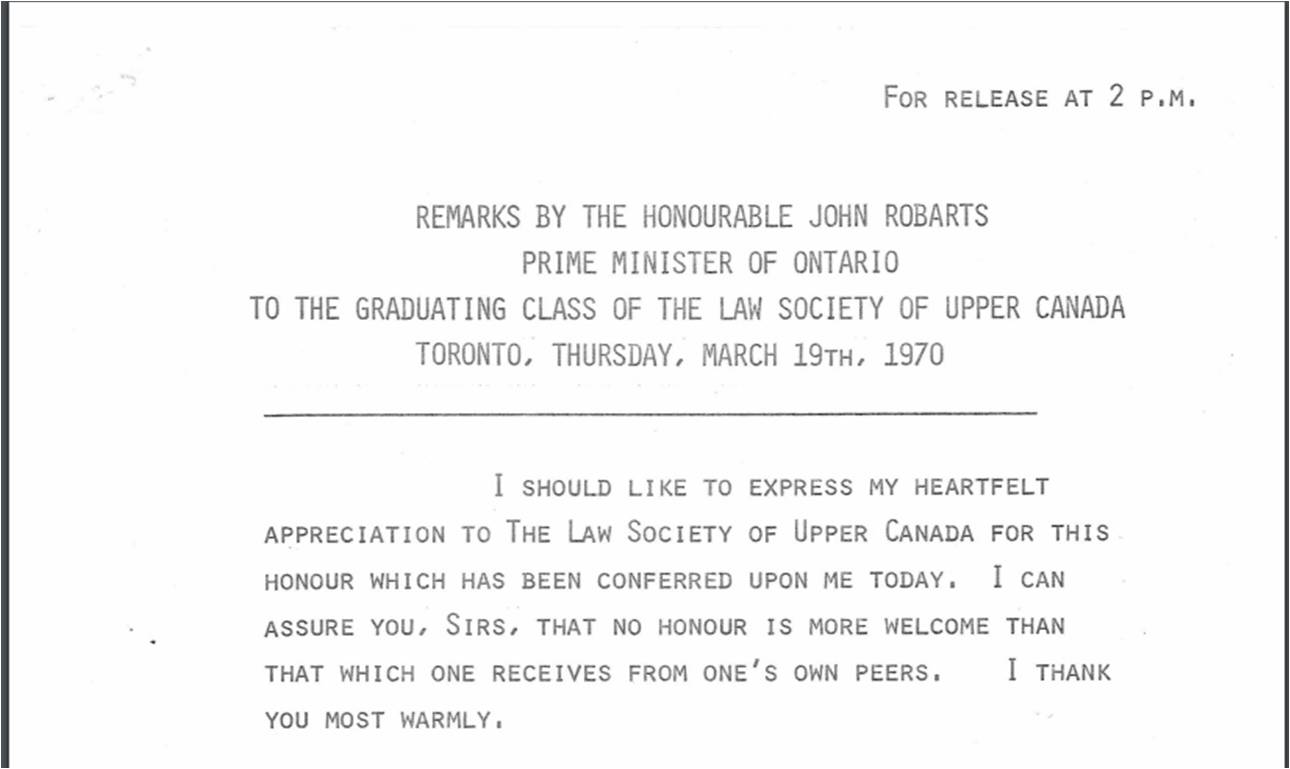
john-robarts-prime-minister-of-ontario

John Robarts also preferred the title “Prime Minister of Ontario,” as his address to the Law Society of Upper Canada in 1970 shows. But the last long-tenured premier of the post-war Progressive Conservative dynasty, Bill Davis, switched the title to “Premier of Ontario”, where it has remained since. Perhaps “Prime Minister of Ontario” sounds self-aggrandizing, but the first minister possesses the prerogative power to alter his own title.

*Update: 2016-06-28: I thank Pierre Allard for having taken an interest in this old entry and for having informed me that it was Davis who changed the title.

Similar Posts:


[1] Sujit Choudhry, “Bills of Rights as Instruments of Nation-Building in Multinational States: The Canadian Charter and Quebec Nationalism”, University of Toronto Legal Studies Series, Research Paper 1006905 (August 2007): 1.
[2] Rand Dyck, Ontario Government and Politics. (Ottawa: Carleton University Graphic Services, 2009): 36.
[3] Rand Dyck, Ontario Government and Politics. (Ottawa: Carleton University Graphic Services, 2009): 37.
[4] Rand Dyck, Provincial Politics in Canada: Toward the Turn of the Century. 3rd Ed. (Scarborough, ON: Prentice-Hall of Canada, 1996), 327.

Posted in Crown (Powers and Office), Prime Minister's Powers | Tagged , | 2 Comments