André Binette and Rob Nicholson on Motard & Taillon’s Legal Challenge to the Succession Law


CTV News

André Binette, the lawyer representing Professors Motard and Taillon, appeared on CTV News on 11 June 2013 to discuss their application challenging the constitutionality of Canada’s succession law.

http://www.ctvnews.ca/canada/royal-succession-laws-challenged-in-bid-to-renew-constitutional-debate-1.1320560

Binette pointed out that this case will ultimately rest on whether the courts agree with the Government of Canada’s absurd position that succession to the Crown of Canada does not form part of the laws of Canada at all. Binette argued that succession most certainly does form part of Canadian law and falls under “the office of the Queen” of section 41(a) of the Constitution Act, 1982.

It’s about the legal status of the monarchy in Canadian law under the Constitution of 1982, and ultimately, it’s about Canadian independence from the United Kingdom. The issue here is whether the laws related to the monarchy are part of Canadian law or not. 

Unfortunately, the comments beneath CTV’s article illustrate several examples of logical fallacies and incorrect assertions, such as the tautology, “Canada is not Australia,” and the thinly veiled anti-Quebec prejudice that no one should pay any attention to this case because Binette, Motard, and Taillon are all Quebeckers. Some of the commenters made the laughable suggestion that the Constitution Acts do not apply to Quebec because the Levesque government did not agree with the Patriation package of 1982. They also demonstrate a disturbing level of apathy toward the Crown of Canada. I have no doubt that the Government of Canada took into account these political considerations and elevated them above the constitutional facts of succession.

CBC News

The CBC provided some additional coverage of Andre Binette and also cited some of Minister Nicholson’s comments on 12 June 2013.

Binette alluded to the nature of the Crown of Canada as a corporation sole: “To me, the office can’t be seen to be separate from the rules around the office-holder.” As Phil Lagassé and I have argued, one indeed cannot seperate the “office of the Queen” under s.41(a) from the office-holder. And more importantly, the corporation sole also includes the successors to the office.

Suddenly Phil Lagassé and I look more prescient and less strident, since we first raised this argument in December 2012 in our column to the Ottawa Citizen. I expect that certain individuals will now claim that they agreed with us all along as our arguments gain legal momentum… And who says that only politicians demonstrate that level of cynicism?

Binette also correctly pointed out that this debate touches upon the independence of Canada as a sovereign state itself. I agree, and I raised this issue in another column to the Ottawa Citizen in February 2013.

Minister Nicholson repeated his refrain from the Senate Committee on Legal and Constitutional Affairs: “We’re on solid ground on this. We’ve had excellent advice on this.” Someone who has to insist that he’s on solid ground without providing any explanation is not on solid ground at all.

Nicholson also relied on this superficial appeal to authority and circular logic throughout the one parliamentary committee before which he relunctantly appeared on this subject. (Do “ctrl-F” for “advice” in the transcript). When presented with contrary evidence, Nicholson glanced tentatively at Warren Newman, the senior lawyer at the Department of Justice, “That is not the advice I have been given.” Then when a Senator asked a question with whose premise he agreed, Nicholson, rather than providing a proper explanation, appealed to authority in the affirmative: “That is the advice I have been given.”

Nicholson also reiterated the blatant falsehood that Canada’s Succession to the Throne Act, 2013, which “assented” to British law as if section 4 of the Statute of Westminster still applied, is “consistent with all other Commonwealth countries who have the Queen as head of state have done.” In reality, New Zealand will pass its own law on succession instead of attempting to invoke a defunct procedure in the Statute of Westminster that has not applied to Canada since 1982 and has not applied to Australia and New Zealand since 1986. New Zealand incorporated the Act of Settlement and other consequential acts into its own laws and will amend them accordingly. Australia will also amend its own laws under s.51(38) of its Constitution Act, which mimics the old procedure under s.4 of the Statute of Westminster. The six Australian states will authorize the Commonwealth Parliament to legislate on succession for all of Australia, at the federal and states levels. In addition to that procedure, Queensland has decided to also enact the legislation directly into its state law.

The proponents of the Government’s position are finally facing some proper opposition, and they don’t like it much.

Similar Posts:

Posted in Corporation Sole, Crown (Powers and Office), Succession (Sovereign) | 9 Comments

Who Made This Statement About Government Formation in Minority Parliaments?


“Whichever party gets the most votes and the most seats, if not an absolute majority, has the first right to seek to govern, either on its own or by reaching out to other parties.”

I hope that the Canadian media criticize whoever made that statement and accuse him of not understanding how government formation works… I’ll update this entry later with the answer and some procedures for the formation of governments.

Update (13 June 2013)

The answer may surprise you. Stephen Harper did not utter this statement, though he has made similar statements regarding the formation of governments in minority parliaments. Nick Clegg, Leader of the Liberal-Democratic Party, made this statement to the press following the indecisive British election of 2010, which produced a minority parliament (or “hung parliament,” as the British call them). Nick Clegg is now also the Deputy Prime Minister in a coalition government of Conservatives and Liberal-Democrats.

The BBC aired an interesting documentary on the formation of the Cameron-Clegg coalition government in later 2010, called “Five Days That Changed Britain.” It includes interviews with Prime Minister Cameron, Deputy Minister Clegg, Lord Mandelson, and various other prominent members of the Conservatives, Liberal-Democrats, and Labour. Sadly, I doubt that the CBC would ever produce such an interesting and relevant documentary here, and I doubt further still that Canadian Ministers would ever agree to such interviews.

Posted in Caretaker Convention & Government Formation, Crown (Powers and Office), Formation of Governments | 3 Comments

Professors of Law Motard & Taillon Challenge Canada’s Succession Law


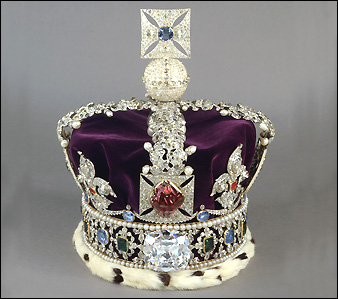
The Imperial State Crown

The Imperial State Crown

Patrick Taillon and Genevieve Motard, Professors of Law at Laval University, have filed a motion to institute proceedings of declaratory judgement in the Quebec Superior Court against the succession law that Parliament hastily rushed through in March 2013.

Taillon and Motard argue that the Succession to the Throne Act should have been presented as an amendment to the Constitution of Canada under s.41(a) because it relates to the “office of Queen.”

They conclude:

The office of the Queen is the constitutional foundation for Canada’s executive and legislative authority in both provincial and federal jurisdictions. The Act is therefore also incompatible with the organizing principles of the Constitution that are the rule of law, the principle of federalism and the principle of the honor of the Crown.

Taillon and Motard noted, “if the Act does not amend the Constitution of Canada, it is subject to it.” They therefore also argued that the current act and the current principles of and statutes on succession to the Crown contravenes the Charter.

I also highlighted this problem in the Government’s reasoning in my entries from January and February. I am curious how the Government will respond, if the case reaches that stage, and I hope that the Government at least anticipated the possibility that someone would initiate legal action against the Succession to the Throne Act.

Professor Taillon first introduced his objections to the bill in February in an op-ed in Le Devoir and stated very clearly his intention to bring forward legal action against the Harper government’s bill. Under the headline “Bill on Succession to the Throne of England – A Chance to Save What Remains of Quebec’s Veto,” Taillon argued that the Constitution Act, 1982 constitutionalized former conventions and former regular statutes pertaining to succession to the Crown of Canada and that the contents of the Harper government’s bill C-53 require a constitutional amendment under s.41(a). Taillon argued that the National Assembly should therefore use “this very rare occasion to negotiate, in exchange for Quebec’s consent, modifications of the Constitution of Canada favourable to its interest.” He suggested that Quebec could demand an amendment to the “office of the Lieutenant Governor of a province” so that each province alone could control its Lieutenant Governor, which would allow Quebec “to modernize in depth” its office of Lieutenant Governor. Taillon also interprets the “office of the Queen” under s.41(a) as including “the existence of the function, the designation of the office-holder, and the powers that go with the office.”

You can look at the full document here.

Another Reason Why The Government of Canada Is Wrong on Succession

In earlier entries (listed below), I outlined why the Crown of Canada is a corporation sole, or legal person, separate from the corporation sole of the Crown of the United Kingdom, and why the nature of the Crown means that succession falls under “office of Queen” under s.41(a) of the Constitution Act, 1982.

After having listened to the Government of Canada’s official interpretation on this issue before the Senate Committee on Legal and Constitutional Affairs, I can now articulate another separate objection to the Government’s approach to this one simple premise. Garry Toffoli of the Canadian Royal Heritage Trust raised this argument in January 2013, and it turned out to respond more directly to the government’s claims.

The Government of Canada has claimed that succession does not form part of the laws of Canada, but only of the United Kingdom. Curiously, the Government also claimed that the preamble of the Constitution Act, 1867 implies a so-called “principle of symmetry” that the Queen of the United Kingdom is automatically the Queen of Canada.

Warren Newman, Queen’s Counsel in the Department of Justice, stated before the Senate Standing Committee on Legal and Constitutional Affairs:

The purpose of this bill, this Canadian legislation, is not to alter the law of succession but simply to assent to the principles in the U.K. bill.

The position in Canada is that there is no need to proceed to an exercise that would have the Canadian Parliament enacting provisions such as that the Royal Marriages Act of 1772, insofar as it applies to Canada, is hereby repealed. We do not think that that is the direction that this legislation should go. It was certainly not the case in 1937 that it was thought necessary, for example, to amend the Act of Settlement of 1700 in Canada. Those are British laws, and we have left it to the British Parliament to amend the legislation. The constitutional rule here is a fundamental one. The sovereign of the United Kingdom is the sovereign of Canada, and the sovereign of the United Kingdom is determined by the law of the United Kingdom.

However, the Government of Canada is wrong to argue that succession does not form part of Canadian law. In fact, Canada incorporated succession into its law by invoking section 4 of the Statute of Westminster in December 1936.

Prior to the enactment of the Statute of Westminster in 1931, the British Parliament legislated for Canada and the other Dominions (and Crown colonies) by passing statutes that “extended to a Dominion as part of the law of the Dominion.” The British Parliament legislated Canada’s constitution through the Constitutional Act, 1791, the Act of Union, 1840, and the British North America Act, 1867. After the Imperial Conferences of 1926 and 1930, the British Parliament agreed to relinquish its power to legislate for the Dominions except at the request and with the consent of a Dominion through section 4 of the Statute of Westminster:

No Act of Parliament of the United Kingdom passed after the commencement of this act shall extend, or be deemed to extend, to a Dominion as part of the law of that Dominion, unless it is expressly declared in the Act that the Dominion has requested, and consented to, the enactment thereof.

The notation accompanying section 4 states, the “Parliament of the United Kingdom not to legislate for Dominion except by consent.” In other words, the British Parliament could only legislate for Canada (i.e., pass a statute that “extends to [Canada] as part of the laws of [Canada]”) after 1931 only at the request and with the consent of Canada. Once Canada so indicated its request and consent, the British legislation would also “extend to Canada as part of the law of Canada.”

On 10 December 1936, the Government of Canada passed P.C. 1936-3144, an “Order-in-Council regarding Canadian Request and Consent for Enactment of United Kingdom Legislation Altering Succession,” and sent it to London by diplomatic cable. The King government declared:

That, in order to insure that the requirements of the fourth section of the Statute [of Westminster] are satisfied, it is necessary to provide for the request and consent of Canada to the enactment of the proposed legislation; and, in order to insure compliance with the constitutional convention expressed in the second recital of the preamble, hereinbefore set forth, it is necessary to make provision for securing the assent of the Parliament of Canada thereto.

On 10 December 1936, the Government of Canada signified Canada’s request and consent that the British Parliament “extend to Canada as part of the laws of Canada” the His Majesty’s Declaration of Abdication Act and all the customs and laws on succession through the Order-in-Council PC 3144. Since His Majesty’s Declaration of Abdication Act also amended the Act of Settlement and the Royal Marriages Act, those statutes have formed part of Canada’s laws since at least 11 December 1936. (Alternatively, they became part of Canada’s laws even earlier through the Doctrine of Reception. But in either case, they form part of Canadian law just as they form part of British law, Australian law, and New Zealand law). The British Parliament passed that act on 11 December 1936 and promulgated the demise of the Crown and succession of the Duke of York as King George VI for the United Kingdom, Canada, Australia, and New Zealand. The law noted in its preamble that it also applied to Canada, Australia, and New Zealand as part of their laws:

And whereas, following upon the communication to His Dominions of His Majesty’s said declaration and desire, the Dominion of Canada pursuant to the provisions of section four of the Statute of Westminster, 1931, has requested and consented to the enactment of this Act, and the Commonwealth of Australia, the Dominion of New Zealand, and the Union of South Africa have assented thereto.

As of 1936, only Canada had ratified the procedure under section 4; Australia and New Zealand had not. So the British Parliament legislated for Canada at the higher threshold of “request and consent,” while it legislated for Australia and New Zealand automatically and only with their parliaments’ assent. On 31 March 1937, the Parliament of Canada  then retroactively assented to that act and the incorporation of all those principles of succession in to the laws of Canada through the Succession to the Throne Act, 1937, which should be regarded as a non-enumerated statute under s.52(2) of the Constitution Act, 1982.

The positive law under section 4 of the Statute of Westminster required the “request and consent” of the Dominion, while the preamble of the Statute of Westminster suggested that the parliaments of the Dominions also give their “assent” by convention. The His Majesty’s Declaration of Abdication Act promulgated the changes “as part of the law of [Canada]” under section 4 in December 1936, while the Parliament of Canada only passed the Succession to the Throne Act, 1937 retroactively in March 1937 as a symbolic gesture of the “assent” mentioned in the preamble of the Statute of Westminster.

The Succession to the Throne Act, 1937 assented to incorporating the British laws on succession into Canadian law, and the Constitution Act, 1982 – whether intentionally or unintentionally –entrenched the laws on succession to the Crown of Canada as part of the Constitution of Canada under s.52(2) and made them subject to the amendment formula of s.41(a). Even M. Olliver’s British North America Acts and Selected Statutes (from 1964) lists the Succession to the Throne Act, 1937 under the section “Acts of Canada Relating to Federal Constitutional Matters.” Most of the acts that Olliver listed made their way to the schedule of the Constitution Acts; in my view, all of them should have.

I believe that this is the crux of the question as to whether the principles and statutes on succession fall under the ambit of the Constitution of Canada.

Also, Australia’s Constitution Act maintained the provision that used to appear as section 3 of our Constitution Act, 1867, which defined “Her Majesty” as “Queen of the time being of the United Kingdom and her heirs and successors,” and the legislatures of the six states and the Commonwealth Parliament will pass legislation under s.51(38) of its Constitution Act, 1901 in order to promulgate the reforms to the succession to the Crown of Australia. In other words, the “implied” principle of symmetry of succession under Canada’s Constitution Act is stated explicitly in Australia’s Constitution Act – yet no government in Australia has taken the position that the British laws on succession automatically apply to Australia. Why? Because constitutional evolution and practice surpassed the ossified written constitutions of both Canada and Australia. In the 19th and early 20th centuries, the “one and indivisible” Imperial Crown bound the Dominions and Crown colonies to the United Kingdom. But in the early 20th century, the formerly “one and indivisible” Imperial Crown multiplied and branched out. Australian constitutional lawyer and scholar Anne Twomey, whom I consider the foremost expert on succession law in all of the Commonwealth Realms, has shown that the “one and indivisible” Imperial Crown branched out when the Sovereign started to act on the advice of the seperate sets of responsible ministers for Canada, Australia, New Zealand, etc., rather than acting with respect to the Dominions on the advice of the British Cabinet. The Statute of Westminster, 1931 officialized the constitutional evolution of the early 20th century: the Dominions possessed both their own Parliaments and their own Crowns so that only the natural person of the Sovereign bound them together.

Conclusion

The wording and meaning of section 4 could not be more clear: Canada incorporated the British laws on succession because His Majesty’s Declaration of Abdication Act “extended to Canada as part of the laws of Canada.” How can the Government of Canada then claim that succession does not pertain to the laws of Canada and that it exists only under British law? And how can succession not form part of Canada’s law and constitution and yet be “implied” in the preamble of the Constitution Act, 1867 — which is part of Canada’s constitution? The Government’s argument makes no sense whatsoever, and Taillon and Motard’s application may expose the Government’s superficial reasoning yet further.

Similar Posts:

Posted in Corporation Sole, Crown (Powers and Office), Succession (Sovereign) | 11 Comments

My Presentation on Fixed-Elections Laws at the Canadian Political Science Association


Legislative Assembly of British Columbia

Legislative Assembly of British Columbia

I am enjoying my stay in Victoria this week for the Canadian Political Science Association’s Annual Conference, though visiting British Columbia reminds me of how living in Alaska felt: like you’re permanently late and behind schedule, because everything important in North America occurs on Eastern Time! I would like to thank Michelle Hopkins and Francesca Scala for accepting my paper, Graham White for acting as the discussant for my panel, and my supervisor Phil Lagassé for supporting me immeasurably on my scholarly odyssey.

Abstract of My Paper on Fixed Elections

In Reining in the Crown’s Power on Dissolution: The Fixed-Term Parliaments Act of the United Kingdom versus the Fixed-Election Laws in Canada, I analyzed the key differences between the powers of the British Crown versus those of the Crown of Canada in order to compare and contrast the fixed-elections laws in Canada (at the federal and provincial levels) with the Fixed-Term Parliaments Act, 2011 of the United Kingdom.  The United Kingdom operates on parliamentary supremacy and an uncodified constitution, and the powers of the British Crown come either from statute or prerogative. The British Parliament can therefore invoke its sovereign right to limit or put into abeyance any prerogative power of the British Crown at will. In contrast, Canada has always operated on a system of constitutional supremacy. Currently, the powers of the Crown of Canada derive from three sources: the provisions of the Constitution Act. 1867, the constitutionalized powers entrenched under the Constitution Act, 1982, and statute. The first two types of powers enjoy the protection from statutory encroachment under the unanimity formula of the Constitution Act, 1982. This is precisely why the Canadian fixed-elections laws have deliberately preserved the Crown’s power of dissolution and the Prime Minister’s (or Premier’s) power to advise and receive early dissolution, in constrast to the Fixed-Term Parliaments Act, 2011, which put the prerogative of dissolution of the British Crown into abeyance, removed the Queen and Prime Minister from dissolution, and thus truly eliminates the possibility of “snap elections.” Finally, Canadian jurists and scholars have long misapplied the British concept of “prerogative” powers to the Constitution of Canada, that the power of dissolution is not a “prerogative” in Canada, if “prerogative” refers to a power that the common law has recognized as belonging to the Crown, and that only a proper constitutional amendment under section 41(a) of the Constitution Act, 1982 could eliminate the Crown’s power on dissolution (at either the federal level or in a province) as the Fixed-Term Parliaments Act, 2011 has put the prerogative of dissolution into abeyance in the United Kingdom.

Discussion

I presented alongside the distinguished Peter Russell, Professor Emeritus of Political Science at the University of Toronto, who wrote on cabinet manuals and constitutional conventions, and the criminologist Johannes Wheeldon, who studied scholarly views of the prorogation of 2008.

If anything, this panel highlighted the ongoing disagreement between scholars on the powers of the Crown and the constitutional positions of the Governor General and Prime Minister under Responsible Government – which will always remain and which always should remain. The discussion touched on two other topics about which I have written but on which I did not present: the Governor’s discretionary authority and the exceptional circumstances under which the Governor could reject a First Minister’s advice to dissolve the legislature and the Manual of Official Procedure of the Government of Canada.

The Manual of Official Procedure of the Government of Canada

Peter promoted the British Cabinet Manual and the New Zealand Cabinet Manual as ideal models for the officialization of constitutional conventions in Canada, though I think that he uses the term “consolidation” instead, based on his article in last August’s issue of the Journal of Parliamentary and Political Law. (Nick MacDonald and I also wrote an article on constitutional conventions and cabinet manuals that appeared in the same issue). I agree with Peter on the main issues: that cabinet manuals do not “codify” conventions – they create an official but politically enforceable interpretation of convention – and that the New Zealand Cabinet Manual and the British Cabinet Manual are generally good and helpful. Peter did not discuss it in his main presentation, though he did acknowledge it in the discussion after Phil inquired about it.

Peter has criticized the Manual of Official Procedure of the Government of Canada because of its length and bulk; he acknowledged that it contains useful information on constitutional conventions, prorogation, dissolution, and the formation of governments, but criticized it for also including procedural minutia relating to matters such as state funerals and ambassadors. I then interjected and asked the audience rhetorically, “Would you dismiss a dictionary as irrelevant and too bulky because it contained 1000 pages?” Of course, you wouldn’t. You’d treat the bulky dictionary as a reference and thus look up the definitions that you need at any given time and move on. You would never question the utility of the dictionary because of length! Peter then criticized the Manual as inaccessible – to which I replied that one can download it from this website. That said, I do agree with Peter’s point that it would have been preferable if the Privy Council Office had uploaded the Manual to its website. I suspect that PCO has not done so because some sections of the Manual are out of date.

I hope that PCO does update the Manual into a second edition. Perhaps PCO could make use of an enterprising young man to undertake such a project!

“The Glory of Responsible Government”

Phil Lagassé asked Johannes Wheeldon why he had not acknowledged the true nature of Responsible Government in his analysis of the constitutional positions of the Governor General and Prime Minister on prorogation. Curiously, Wheeldon seemed to dismiss the history of the scholarship on Responsible Government as irrelevant to the Prorogation-Coalition Controversy of 2008 and made clear that since none of the scholars whom he surveyed brought up this issue, he did not much care about it. Phil then pointed out that Wheeldon had never asked or alluded to the question in his survey and therefore should not have expected any of his respondents to mention it to him!

If I had the time to interject, I would have explained this concept properly. (I should have taken the time to explain it in my presentation, but let’s just say that I’m a far better writer than a public speaker!) As Sir John George Bourinot and Alpheus Todd made clear in the 19th century (but apparently they don’t matter, because any precedent that occurred before 1900 is irrelevant), Responsible Government means that Ministers of the Crown take responsibility for all acts of the Crown; the Sovereign or Governor no longer take responsibility for these executive decisions and thus promulgates these acts of the Crown on and, apart from exceptional circumstances, in accordance with ministerial advice. The Prime Minister and Cabinet govern and rule, while the Sovereign reigns. The Sovereign or Governor could only reject ministerial advice under exceptional circumstances precisely because of the exceptional consequences of such regal or gubernatorial intervention: the Prime Minister (and thus the Ministry) must resign so that the Sovereign or Governor could appoint a new Prime Minister and Ministry prepared to take responsibility for that act of the Crown. In other words, if Governor General Michaelle Jean had rejected Prime Minister Harper’s advice to prorogue on 4 December 2008, Harper would have been obliged to resign, and Jean would then have commissioned Stephane Dion to form a Liberal-New Democratic coalition government. One does not require a PhD to discern these undeniable facts of Responsible Government, which the scholars of the 19th century fully understood.

Graham White mentioned that he used to regard “the glory of Responsible Government as its flexibility” but now agrees with the arguments that Aucoin, Jarvis, and Turnbull put forward in Democratizing the Constitution: Reforming Responsible Government – which he referred to as “the Good Book.” However, as for myself, I think that Democratizing the Constitution falls short of the Bible, though the former has still succeeded in galvanizing its converts. I would argue that the true “glory of Responsible Government” lies in its historic achievement of having successfully preserved the medieval doctrine of royal infallibility within a modern system of democratic accountability. Since Ministers of the Crown take responsibility for all acts of the Crown, the Sovereign can still do no wrong – only Ministers responsible to Parliament and to the people can. Responsible Government thus constitutionalizes monarchy. And that’s why a Sovereign or Governor forces the resignation of, or dismisses, a Ministry by refusing to act on ministerial advice: the Ministers must then resign in order to preserve the dignity of the Crown. But since no one in Wheeldon’s survey explained this concept to him, it must be irrelevant…

White’s Reading of Democratizing the Constitution

 White then read out a quote from Democratizing the Constitution – or “the Good Book, as he calls it – because he replaced one of that book’s co-authors, Mark Jarvis, as the discussant on this panel and felt obliged to “channel” him and his work into the discussion. Coincidentally, he read out the very same quote from the book whose meaning Mark and I had once debated: “Experts disagree on what the Canadian constitution means and thus render themselves collectively of no political consequence whatsoever.”[1] White affirmed that he agreed with this statement, but he noted that constitutional scholars have long debated the King-Byng Affair, which suggests that they will never agree. Interestingly, the authors made a similar statement elsewhere in the book: “Unfortunately, there is little reason for optimism, given that we have seemed content to allow the confusion and disagreement over the King-Byng Affair to fester for more than 85 years.”[2]

If I had had enough time, I would also have asked two questions based on what the first citation necessarily implies. First, why should scholars seek to make themselves politically significant? Perhaps they should form their own political party – except of course that those scholars who disagree would have to form an alternative party. They can if they want to do so, but they don’t have to do so. In addition, scholars do not need to agree with one another and form a united front in order to render themselves of political significance! Governments and parliamentarians consult scholars frequently. For instance, Governor General Jean consulted Peter Hogg, Peter Russell, and Ned Franks in December 2008 – and these scholars did not agree with one another. Second, why is the scholarly disagreement over these issues somehow undesirable or bad? Mark insists that I have misinterpreted the citation from page 150 by asking these corollaries, but the second citation from page x makes clear that the authors do indeed regard the scholarly disagreement as undesirable – or else they would not have used a word laden with a bad connotation like “fester,” which describes a gangrenous wound that will not heal and may lead to amputation. (And if that’s not what they meant, then they should have chosen their words more precisely). Scholars disagree because there are legitimate areas of disagreement and debate over the nature of executive power and the relationship between the executive and the legislature. Even since Robert Macgregor Dawson and Eugene Forsey took opposite views on the King-Byng Affair, subsequent scholars and generations of scholars have done the same – because anytime the Governor invokes his discretionary authority to reject a First Minister’s advice, he exercises judgement. And scholars can always analyze, debate, and disagree on a decision based on a political or constitutional decision because we live in a liberal democratic system and may exercise liberties of expression.

In my next entry, I’ll review today’s panel on executive power in Canada (featuring Nomi Lazar, Dennis Baker, Phil Lagassé, and Peter Russell) and highlight other areas where scholars disagree on the powers of the Crown. Scholars can and should disagree where the evidence warrants. That’s why we hold annual conferences of the Canadian Political Science Association! My field would become rather boring if constitutional scholars agreed on everything.

Similar Posts:


[1] Peter Aucoin, Mark Javis, and Lori Turnbull, Democratizing the Constitution: Reforming Responsible Government (Toronto: Emond-Montgomery Publishing, 2011), 150.
[2] Peter Aucoin, Mark Javis, and Lori Turnbull, Democratizing the Constitution: Reforming Responsible Government (Toronto: Emond-Montgomery Publishing, 2011), x.

Posted in Constitutional Conventions, Fixed-Date Elections, Officialization of Convention, Reform | 6 Comments

The Confidence Convention in Ontario: How the Standing Orders Kept the Wynne Government in Power


I’d like to thank James Anderson for publishing a slightly abridged version of this column on National News Watch.

Introduction

Proponents of democratic reform in Canada focus their efforts at the federal level and have overlooked Canada’s most populous province. However, the Government and Legislature of Ontario have perverted Responsible Government and deviated from necessary and proper federal practices and customs with respect to prorogation, delegated legislation, and the confidence convention.

In Ontario, prorogations do not occur along intersessions of 40 days as at the federal level; instead, prorogations come with unspecified intersessions, and McGuinty’s lasted from 15 October 2012 to 19 February 2013. The Legislature of Ontario sometimes abdicates its own law-making authority to the executive through delegated legislation. The bill that imposed new contracts on teachers included a sleeper-cell clause, “This act is repealed,” which the McGuinty government promulgated while the legislature was still prorogued. Finally, the Legislative Assembly of Ontario has severely restricted its own freedom of action with respect to motions of non-confidence through its own Standing Orders.

The Confidence Convention

Responsible Government means that Ministers of the Crown take responsibility for all acts of the Crown and that the Governor acts on, and apart from exceptional circumstances, in accordance with the advice of Ministers. The Ministry must also retain the confidence of the elected Assembly in order to remain in office. If the Assembly withdraws its confidence from the Government, the Premier must either advise the Lieutenant Governor to dissolve the legislature, or resign.

But the Legislative Assembly of Ontario has severely restricted its own freedom of action with respect to motions of non-confidence through its own Standing Orders and has voluntarily given the Government too much power over a legislative privilege.

At the federal level, a vote of confidence generally includes the Address in the Reply to the Speech from the Throne, supply bills, any government bill that the government deems a matter of confidence, or a motion of non-confidence itself. Theoretically, the Government could accept the Opposition’s amendments to a supply bill and thus retain the confidence of the Assembly, but Governments in Canada have generally taken a hard line on this class of confidence vote. The Government judges when it has lost the confidence of the Assembly on some votes, but the Assembly determines when it has withdrawn confidence from the Government on an unambiguous motion of non-confidence.

Standing Orders in Ontario

The Standing Orders of the Legislative Assembly of Ontario have all but banned the fourth category of confidence vote and restricted the Assembly’s power to withdraw its confidence from the Government of Ontario.

First, section 43 forbids the Opposition from introducing a motion of non-confidence (under the older term “motion of want of confidence”) on an Opposition Day. It states, “Opposition Day motions […] shall not be motions of want of confidence in the government.” The Standing Orders of the Legislative Assembly of Ontario provide for ten Opposition Days per calendar year. This strange rule contradicts the very concept of the Opposition Day (also known as a “Supply Day” or an “Allotted Day” in the Parliament of Canada), which normally refers to a day on which the Opposition, rather than the Government, chooses the topics for debate. In contrast, the Standing Orders of the federal House of Commons provide for 22 “Allotted Days” per calendar year with no restrictions on what motion the Opposition MP can table. While the Government of Canada can alter the scheduling of Allotted Days as a tactic against the Opposition, nothing in the Standing Orders of the House of Commons prohibits the Opposition from introducing a motion of non-confidence in the Government.

Second, section 44(a) of Ontario’s Standing Orders limit the Opposition’s latitude yet further. The Official Opposition can introduce no more than three motions of non-confidence per session, and the second largest party in opposition can introduce no more than two per session. Sessions in Ontario often last for two years. (An adjournment ends a sitting, a prorogation ends a session, and a dissolution ends a parliament). Worse still, section 44(b) effectively empowers the Government to veto altogether holding a vote on the motion of non-confidence, because the Assembly can only vote on the motion “at a time allotted by agreement of the House Leaders of the recognized Parties.” In other words, the Government decides when the Legislative Assembly may attempt withdraw its confidence. Even if the Government House Leader agreed to such motions of non-confidence, the Opposition could quickly use up all of them if the Government wins each vote.

The Legislative Debates

The legislative debates in May 2013 have shown the consequences of this policy. Premier Wynne inherited her Liberal minority government from her predecessor Premier McGuinty. Wynne has since admitted that the McGuinty government cancelled the construction of powerplants for political reasons in 2011, which cost Ontarian taxpayers at least $585 million in penalties. The Wynne government still has yet to pass a budget but recently secured the support of the New Democrats. The Conservatives, being the Official Opposition, introduced a motion of non-confidence in the Wynne government, which in turn has invoked section 44 and refused to put the motion of non-confidence to a vote.

On 29 April, the Conservatives filed their motion of want of confidence, and it has sat on the Order and Notice Paper ever since. The Conservatives condemn the cancellation of the gas plants and the Government’s “prima facie breach of privilege” for not releasing documents on the cancellation of the gas plants and conclude, “the Government has lost the confidence of the House.”

Over the weeks of May 6 and May 13, Conservative leader Tim Hudak and his front bench pressed the Government House Leader and the Premier why the Government would not allow the Assembly to vote on their non-confidence motion. On May 15, the Government House Leader John Milloy praised “the consensus of all the recognized House leaders” required under section 44. Milloy also explained that the Legislative Assembly first adopted the rule sometime under the Davis government (1971-1985). Perhaps this rule helped the Davis government survive through two minority parliaments. Milloy then emphasized that the Opposition would have the chance to vote against the government’s upcoming supply bills “within the next several weeks.”         

Conclusion

In a majority parliament, sections 43 and 44 would rarely become pertinent political issues; even if the Government refused to bring the motion to a vote, its single-party parliamentary majority would virtually guarantee that it retains the confidence of the Assembly. But the confidence convention becomes more significant when a volatile minority parliament could easily withdraw its confidence from a single-party minority government – particularly one plagued by scandal.

The Standing Orders have distorted and place unwarranted restrictions on the confidence convention in Ontario and ensured that the Government only loses the confidence of the Assembly of its own terms and not the Assembly’s. The Assembly could only withdraw its confidence from the Government on the Address in Reply, supply bills, or government bills that the Government deems matters of confidence. Sections 43(b)(vi) and 44(a) of the Standing Orders have destroyed spontaneity by unduly restricting what the Opposition can do on Opposition Days and by allowing the Government to bide its time if it fears a loss of confidence.

The Wynne Government used section 44 to shield itself against a vote of non-confidence and bought itself enough time to remain in power until at least the fall of 2013. The Conservatives introduced a motion of non-confidence in an effort to force an early dissolution and fresh elections, which gave the New Democrats the balance of power. After playing coy with the Assembly and media for several weeks, New Democratic Leader Andrea Horwath announced on May 21 that her party would support the Wynne Government’s upcoming budget.

It is therefore reasonable to conclude that section 44 of the Standing Orders helped keep Premier Wynne’s Liberal minority government in power, because the Government’s refusal to call the vote on the motion of non-confidence after it sat on the Order and Notice Paper for weeks allowed the New Democrats to extract concessions from the Liberals.

But if the Assembly had voted on the Conservatives’ non-confidence motion at the beginning of May, the New Democrats would have found supporting the Liberal minority government politically unpalatable after criticizing its scandals and receiving no budgetary concessions in return.

The Opposition should more certainly be able to introduce a motion of non-confidence on an Opposition Day, and the Assembly should not require the Government’s permission in order to vote on a motion of non-confidence. At its next review of its Standing Orders, the Legislative Assembly should follow the recommendation of Conservative MPP Randy Hillier and repeal sections 43(b)(vi) and 44 because they give the Government unwarranted control over a legislative privilege.

Perhaps the Legislature and Government of Ontario have gotten away with the poor practices on duration of prorogation, legislative drafting, and the confidence convention because the simple amendments that could fix these three problems do not lend themselves to broader rallying cries or catchy media lines. But sometimes simple changes prove the most effective.

I’d like to thank Utsav Sanduja for alerting me to sections 43 and 44 of the Standing Orders.

Similar Posts:

Posted in Confidence Convention, Constitutional Conventions, Reform | 6 Comments