Succession to the Crowns in Australasia & Succession as Part of Canadian Law


Australia

On 19 April 2013, the Council of Australian Governments (the equivalent of the Council of the Federation plus the Government of Canada) convened in Canberra. All six state Premiers and the federal Prime Minister came to a consensus on how Australia should enact the alterations to the rules of succession to the Crown (or Crowns) of Australia into Australian law based on the Perth Agreement of 2011.

COAG agreed to a hybrid model to implement the previously agreed changes to the rules of  Royal succession in Australia.  Under the hybrid model, States may choose to enact State  legislation dealing with the rules of Royal succession.  States have agreed that they will request  the Commonwealth under s.51(38) of the Constitution to enact legislation, and that any State  legislation will be consistent with their requests to the Commonwealth under s.51(38).[1]

COAG has taken into account the “hybrid approach” because the State of Queensland had introduced its separate Succession to the Crown Bill, 2013 in February. Initially, the Government of Queensland asserted its sovereignty and insisted that each state should pass its own law on succession because in Australia, each state may well possess its own separate Crown (unlike in Canada, where the provinces undoubtedly do not possess separate Crowns). The other states did not agree. Thankfully, COAG struck a reasonable compromise by allowing each state to pass the alterations to the rules of succession into their own laws, provided that they also invoked section 51(38) of  The Commonwealth of Australia Constitution Act, 1901 and delegated their authority to the Commonwealth Parliament to legislate for all of Australia.

Section 51 of the The Commonwealth of Australia Constitution Act, 1901 falls under the “Powers of the [Commonwealth] Parliament.” My Canadian readers will notice some interesting similarities between section 51 of Australia’s Constitution and section 91 of Canada’s Constitution Act, 1867! Section 51(38) reads:

The Parliament shall, subject to this Constitution, have power to make laws for the peace, order, and good government of the Commonwealth with respect to: […]
the exercise within the Commonwealth, at the request or with the concurrence of the Parliaments of all the States directly concerned, of any power which can at the establishment of this Constitution be exercised only by the Parliament of the United Kingdom or by the Federal Council of Australasia.

As of 1 July 2013, the Parliament of New South Wales has passed its delegated legislation under s.51(38) through the Succession to the Crown (Request) Act, 2013. The other states will soon follow suit. The New South Welsh legislation consists of two parts, the request law itself and an appendix containing the law that the state Parliament has delegated to the Commonwealth Parliament and requested it to enact, the Succession to the Crown Act 2013 of the Commonwealth. Section 3 of the first part explains the “object of this Act:”

The main object of this Act is to facilitate the law relating to the effect of gender and marriage on royal succession being changed uniformly across Australia and consistently with changes made to that law in the United Kingdom, so that the Sovereign of Australia is the same person as the Sovereign of the United Kingdom.  

In other words, the procedure under s.51(38) ensures the uniform application of succession within Australia, and it also preserves the Personal Union of the British and Australian Crowns. This procedure mimics the defunct procedure under section 4 of the Statute of Westminster, by which after 1931 the British Parliament would only legislate for a Dominion (i.e., pass a statute that “extends to a Dominion as part of the law of a Dominion”) “at the request and with the Dominion.” The Premier of New South Wales even declared upon Second Reading of the bill:

The bill provides for the New South Wales Parliament to request and consent to the Commonwealth Parliament’s enactment of legislation to change succession rules throughout Australia. All other States have agreed to make a similar request to the Commonwealth Parliament.

In Australia, the royal succession falls under the head of power of the Commonwealth Parliament as per section 51. Unlike in Canada, it does not require a constitutional amendment, because the Australian Constitution does not place “the office of the Queen of Australia” under an amending formula. However, section 51(38) does amount to an extraordinary procedure that enjoys a quasi-constitutional entrenchment. The six state parliaments of Queensland, New South Wales, Victoria, Tasmania, South Australia, and Western Australia have delegated their powers to the Commonwealth Parliament; as the New South Welsh law makes clear:

This Act may be expressly or impliedly repealed or amended only be an Act passed at the request or with the concurrence of the Parliaments of all the States.

The Australian procedure under s.51(38) thus requires the unanimous consent of the parliaments of all six states and the Commonwealth Parliament. Despite having the strongest republican movement of the four most senior Realms and having undertaken a referendum on becoming a republic in 1999, the Australian governments have managed to agree to a procedure remarkably similar to Canada’s constitutional amending procedure under s.41(a) of the Constitution Act, 1982, which requires resolutions from the federal House of Commons and Senate, and from all 10 provincial assemblies.

New Zealand

As of 2 July 2013, the Royal Succession Bill has passed First Reading in the Parliament of New Zealand. As a unitary state with a unicameral parliament, New Zealand will no doubt soon pass its law altering the rules of succession to the Crown of New Zealand as per the Perth Agreement of 2011. In contrast to the two federal Realms, New Zealand makes for a rather dull affair.

Canada

Given that Australia will hold its federal elections sometime in our fall and their spring, probably in September 2013, and that the other state parliaments still need to pass their requesting statutes under s.51(38), the Commonwealth Parliament probably would not enact its law altering the royal succession in and over Australia until late 2013, or possibly not until 2014. The Parliament of New Zealand has also yet to pass its law on royal succession. In addition, the British law, the unconstitutional Canadian law, the Australian bills, and the New Zealand bill all included clauses that all their respective governments to promulgate the enabling provisions of the acts into force by proclamation, so that all countries can implement their alterations to the succession to their Crowns simultaneously. This process conforms to the precedents for altering the Royal Style and Titles in 1948 and 1953.

However, the status of the bills in our Australian sister realms only further highlights the absurdity of Canada’s approach. In March 2013, Minister Nicholson and departmental officials implored the Senate Committee on Legal and Constitutional Affairs to expedite the Canadian succession bill onto Third Reading as quickly as possible. As Joe Wild, the Assistant Secretary to the Cabinet, indicated, the Government of Canada “did not want [Canada] to be last” and “did not want to be the reason for holding up the United Kingdom and its being able to move forward with its provisions.” However, Wild also acknowledged that the Government of Canada would wait for Australia and New Zealand.

The Government of Canada could have used the last year to consult with the provinces in preparation for an amendment under s.41(a), especially given that Australia and New Zealand haven’t yet passed their laws.

The primary sources show that in 1937, the Government of Canada believed that succession formed part of Canadian law, just as in 2013, the Governments of Australia and New Zealand understand that succession forms part of their countries’ respective bodies of law. The Government of Canada maintained that position in 1947-1948 and 1952-1953 after enacting alterations to the Royal Style and Titles. But for whatever reason, the Government of Canada never affirmed its long-held position in 1982 by adopting an Imperial Laws Application Act to replace the Colonial Laws Validity Act, as Australia and New Zealand had done in the 20th century. Perhaps Canada never passed equivalent legislation because, according to Justice Barry Strayer (who served as an Assistant Deputy Minister in the Department of Justice and a main architect of Patriation), section 52(2) of the Constitution Act, 1982 “maintain[ed] the continuity of our system” by “reaffirming the constitutional supremacy principle” that before 1982 resided in section 7(1) of the Statute of Westminster and section 2 of the Colonial Laws Validity Act.[2] Strayer explained that section 2 of the Colonial Laws Validity Act, 1865 (a British statute) ensured that an Imperial law (passed at Westminster) would supersede a colonial law to the extent that they conflicted with one another. Until 1982, the British North America Acts served as Canada’s written constitution and existed as Imperial laws. Section 7(1) of the Statute of Westminster “saved” the British North America Acts and made them supreme over all federal and provincial Canadian statutes. Since Canada repealed section 4 and section 7(1) of the Statute of Westminster in 1982, and then made that amended act part of Canada’s constitution, the Constitution Act, 1982 needed to ensure the continuity of the principle of constitutional supremacy through section 52(2).

At some point in the late 20th century, the Department of Justice of Canada lost significant institutional memory and contradicted the position that it held from at least 1937 to 1953: that succession to the Crown of Canada forms part of Canadian law.

Similar Posts:


[1] Council of Australian Governments, “Communique – Royal Succession,” (Canberra, Australia: 19 April 2013), 4.
[2] Barry L. Strayer, Canada’s Constitutional Revolution (Edmonton: University of Alberta Press, 2013), 163-164.

Posted in Crown (Powers and Office), Succession (Sovereign) | 3 Comments

Prime Minister King and the Government of Canada’s Position on Succession in 1936-1937


Introduction

In 2013, the Government of Canada has claimed that succession does not form part of Canadian law, except inasmuch as the preamble of the Constitution Act, 1867 contains an implied principle of symmetry such that the Sovereign of the United Kingdom is automatically the Sovereign of Canada. Therefore, any alteration to the laws on succession that the British Parliament adopts automatically applies to Canada by virtue of the preamble of the Constitution Act, 1867. This political trickery has allowed the Government of Canada to acknowledge the fact that the British Parliament can no longer legislate for Canada. The Government of Canada maintains that no other laws or principles of succession form part of Canadian law and that therefore Canada cannot alter any law on succession, whether by statute or by a constitutional amendment.

Warren Newman, Senior General Counsel in the Department of Justice, explained before the Senate Standing Committee on Legal and Constitutional Affairs the principle behind Bill C-53, the Canadian succession to the Crown bill that “assents to” the British legislation:

The purpose of this bill, this Canadian legislation, is not to alter the law of succession but simply to assent to the principles in the U.K. bill. […]

The constitutional rule [in Canada] is a fundamental one. The sovereign of the United Kingdom is the sovereign of Canada, and the sovereign of the United Kingdom is determined by the law of the United Kingdom.  

However, the Government of Canada’s own primary-source documents on abdication, succession, and the Royal Style and Titles between the years 1936 and 1953 (inclusive) contradict the Government of Canada’s current position on succession. In short, all three of these precedents show that alterations to the British laws on succession and the Royal Style and Titles post-1931 do not apply automatically in Canada, which shows that this so-called “principle of symmetry” does not exist. The Government of Canada created this doctrine sometime after 1953.

In this entry, I shall present an argument on succession to the Crown that the Government of Canada in 2013 may find compelling: the Government of Canada’s position on succession in 1936-1937.

I will devote a subsequent entry to the two sets of alterations to the Royal Style and Titles in 1947-1948 and 1952-1953. You can read all the documents referred to in this entry on this page.

Background on the Abdication Crisis of 1936

The Abdication Crisis of 1936 came about when Edward VIII declared his intention to marry Wallis Simpson, a twice-divorced American. From around the mid-19th century to the mid-20th century, strong social norms against divorce (in the United Kingdom, Canada, Australia, and New Zealand) made marrying a divorcee politically impossible – particularly for a King.[1] While no statute law prohibited the King from marrying a divorcee, the King of the United Kingdom also serves as the Supreme Governor of the Church of England, which during that period strongly opposed divorce and helped enforce the social norms against it.

At this stage, contemporary critics will consider themselves witty by pointing out that Henry VIII, whose Reformation Parliament established Henry VIII as Supreme Head of the Church of England in 1534 through the Act of Supremacy, broke with Rome specifically so that he could sanctify his own divorce from Catherine of Aragon. But anyone who brings up the historical origins of the Church of England would, rather than being clever, in fact have missed the point entirely, because social norms, not laws, prevented Edward VIII from marrying a divorcee.

Edward VIII became King upon the death of George V on 20 January 1936. The Abdication Crisis unfolded in December 1936. British Prime Minister Stanley Baldwin expressed his and his cabinet’s displeasure with Edward VIII’s intent to marry Wallis Simpson and suggested that he and his government would resign in protest. Edward VIII countered that he would abdicate, which eventually he did. The Archbishop of Canterbury, who fulfills a key function in the coronation of the Sovereign and in presiding over the marriages of members of the Royal Family, also opposed Edward VIII’s intent to marry Wallis Simpson.

Prime Minister King told the Commons that British Prime Minister Baldwin had contacted him and the five other Dominion Prime Ministers and asked for their opinion on three options:

  1. Allowing Edward VIII to marry Wallis Simpson outright;
  2. Permitting a morganatic marriage (which would have deprived any of their issue of right of inheritance of the Crown, and thus taken them out of the line of succession and still required an alteration to the laws on succession); or,
  3. Prohibiting Edward VIII from marrying Wallis Simpson at all and forcing his abdication, which would also require an alteration to the laws on succession.

At the urging of Baldwin, King decided on December 8 1936, decided that His Majesty’s Canadian Government should rely a message directly to Edward VIII, some other Dominions had done. The King government drafted a message to Edward VIII and sent it to the Palace via the Governor General.[2] The Government of Canada supported the third option.

On 8 December 1936, the Government of Canada advised Edward VIII to abdicate if he intended to marry Wallis Simpson. Essentially, the message said, “His Majesty should put His duty to the Crown and Empire before His personal preference and thus abdicate.” The Government of Canada’s official message read as follows:

My colleagues and I desire to have Your Majesty made aware of the deep sympathy we feel for you in the momentous decision which, at the present time, you are being called upon to make.

There is no doubt in our minds that a recognition by Your Majesty of what as king is owing by you to the throne and Your Majesty’s subjects in all parts of the British commonwealth should, regardless of whatever the personal sacrifice may be, be permitted to outweigh all other considerations.[3]      

Procedure for Altering the Succession in Canada in 1936

In fact, Canada incorporated succession into its law by invoking section 4 of the Statute of Westminster in December 1936.

Prior to the enactment of the Statute of Westminster in 1931, the British Parliament legislated for Canada and the other Dominions (and Crown colonies) by passing statutes that “extended to a Dominion as part of the law of the Dominion.” The British Parliament legislated Canada’s constitution through the Constitutional Act, 1791, the Act of Union, 1840, and the British North America Act, 1867. After the Imperial Conferences of 1926 and 1930, the British Parliament agreed to relinquish its power to legislate for the Dominions except at the request and with the consent of a Dominion through section 4 of the Statute of Westminster:

No Act of Parliament of the United Kingdom passed after the commencement of this act shall extend, or be deemed to extend, to a Dominion as part of the law of that Dominion, unless it is expressly declared in the Act that the Dominion has requested, and consented to, the enactment thereof.

The marginal notation accompanying section 4 states, the “Parliament of the United Kingdom not to legislate for Dominion except by consent.” In other words, the British Parliament could only legislate for Canada (i.e., pass a statute that “extends to [Canada] as part of the laws of [Canada]”) after 1931 only at the request and with the consent of Canada. Once Canada so indicated its request and consent, the British legislation would also “extend to Canada as part of the law of Canada.”

On 10 December 1936, the Government of Canada passed P.C. 1936-3144, an “Order-in-Council regarding Canadian Request and Consent for Enactment of United Kingdom Legislation Altering Succession,” and sent it to London by diplomatic cable. The King government declared:

That, in order to insure that the requirements of the fourth section of the Statute [of Westminster] are satisfied, it is necessary to provide for the request and consent of Canada to the enactment of the proposed legislation; and, in order to insure compliance with the constitutional convention expressed in the second recital of the preamble, hereinbefore set forth, it is necessary to make provision for securing the assent of the Parliament of Canada thereto.

On 10 December 1936, the Government of Canada signified Canada’s request and consent that the British Parliament “extend to Canada as part of the laws of Canada” the His Majesty’s Declaration of Abdication Act and all the customs and laws on succession through the Order-in-Council PC 3144. Since His Majesty’s Declaration of Abdication Act also amended the Act of Settlement and the Royal Marriages Act, those statutes have formed part of Canada’s laws since at least 11 December 1936. (Alternatively, they became part of Canada’s laws even earlier through the Doctrine of Reception. But in either case, they form part of Canadian law just as they form part of British law, Australian law, and New Zealand law). The British Parliament passed that act on 11 December 1936 and promulgated the demise of the Crown and succession of the Duke of York as King George VI for the United Kingdom, Canada, Australia, and New Zealand. The law noted in its preamble that it also applied to Canada, Australia, and New Zealand as part of their laws:

And whereas, following upon the communication to His Dominions of His Majesty’s said declaration and desire, the Dominion of Canada pursuant to the provisions of section four of the Statute of Westminster, 1931, has requested and consented to the enactment of this Act, and the Commonwealth of Australia, the Dominion of New Zealand, and the Union of South Africa have assented thereto.

As of 1936, only Canada had ratified the procedure under section 4; Australia and New Zealand had not. So the British Parliament legislated for Canada at the higher threshold of “request and consent,” while it legislated for Australia and New Zealand automatically and only with their parliaments’ assent. On 31 March 1937, the Parliament of Canada  then retroactively assented to that act and the incorporation of all those principles of succession in to the laws of Canada through the Succession to the Throne Act, 1937, which should be regarded as a non-enumerated statute under s.52(2) of the Constitution Act, 1982.

The positive law under section 4 of the Statute of Westminster required the “request and consent” of the Dominion, while the preamble of the Statute of Westminster suggested that the parliaments of the Dominions also give their “assent” by convention. The His Majesty’s Declaration of Abdication Act promulgated the changes “as part of the law of [Canada]” under section 4 in December 1936, while the Parliament of Canada only passed the Succession to the Throne Act, 1937 retroactively in March 1937 as a symbolic gesture of the “assent” mentioned in the preamble of the Statute of Westminster.

Prime Minister King and former Prime Minister R.B. Bennett explained that section 4 of the Statute of Westminster allowed the Government of Canada to take action and did not require that the Parliament of Canada assent to His Majesty’s Declaration of Abdication Act beforehand. Bennett – who was Prime Minister in 1931 – explained, “The Statute of Westminster provides that no act passed by the parliament at Westminster shall have effect in this dominion without the request and assent of the dominions.”[4] Bennett meant to say, “request and consent” rather than “assent”, because he was alluding to the wording of section 4 of the SoW. Bennett argued that section 4 of the Statute of Westminster says “at the request and with the consent of the Dominion” (which allows the Government to act) instead of “parliament of the Dominion” (which would have precluded the Government from acting in the name of the Dominion) “for the purpose of meeting an emergency which might arise, just as an emergency arose in this case.”[5] The delegates at the Imperial Conference of 1930 had explicitly rejected an amendment adding “parliament of the Dominion” to the clause that became section 4 of the SoW.[6]

Contrary to Andrew Heard’s assertion before the Senate Committee on Legal and Constitutional Affairs on 20 March 2013, I would put stock in the clear difference between the constitutional convention contained in the second recital of the preamble of “assent” versus the former statutory provision on the request and “consent” in the Statute of Westminster. An “assent” can be either pro-active or retro-active, though it should normally be the latter. For instance, the Sovereign or Governor gives Royal Assent after both houses have passed a bill. In contrast, “consent” is necessarily pro-active and forms an essential prerequisite step in a legal process. For instance, a bill affecting the powers of the Crown must first receive Royal Consent, or else it cannot proceed further.

Prime Minister Mackenzie King Explains the Government of Canada’s Position on Succession upon the Abdication Crisis of 1936

Prime Minister King stated that his administration sought to balance “national autonomy and, on the other, the equal importance of laying emphasis upon imperial unity.” On the evening of 9 December 1936, the Government of Canada received its “first definite word” that Edward VIII would issue an Instrument of Abdication. Prime Minister Mackenzie King explained that Edward VIII had transmitted originals of his Instrument of Abdication and message to the Governor General of Canada on 10 December 1936, who in turn immediately forwarded them to the King government.[7] The Palace sent originals “to each of the governments of the self-governing dominions.”[8]

When the Government of Canada passed the Order-in-Council PC 1936-3144, the Parliament was not sitting. Parliament resumed as scheduled on 14 January 1937. King then explained that he decided not to summon Parliament for an emergency sitting “before receiving the definite word” on abdication on 9 December 1936 because that decision would have presumed the King’s abdication before he had confirmed his intention to do so.[9] In addition, Parliament would not have convened until at least 6 days after the summons went out, and the Parliament of Canada could not possibly have passed legislation simultaneously with or before the British Parliament.[10]

Prime Minister King then acknowledged in the following statement that His Majesty’s Declaration of Abdication Act would not have extended to Canada as part of its law automatically. In so doing, King also unwittingly contradicted the position that the Government of Canada has taken in 2013.

“If we had waited for a week for Canada’s parliament to assemble and act,” King explained, the delay would have “made Canada’s apparent separation from the other members of the commonwealth so marked to all the world. That was the real alternative.”[11]

In other words, King took for granted that the British Parliament could no longer legislate for Canada unless Canada had “request and consented” under section 4 of the Statute of Westminster. Since the Parliament of Canada could not take action in December 1936, the Government of Canada did so instead and provided Canada’s necessary request and consent pursuant to section 4. King made clear that if Canada had taken no action, or had waited an extra week for the Parliament of Canada to reconvene, then Edward VIII would have remained as King of Canada even after he had abdicated as King of the United Kingdom; there is simply no other interpretation of King’s reference to “Canada’s apparent separation from the other members of the Commonwealth.”

Based on the evidence from Hansard and King’s reasoning contained therein, King would probably have introduced a bill signifying Canada’s request and consent to the enactment of His Majesty’s Abdication Act, 1936 so that it extended to Canada as part of Canada’s law under section 4 of the SoW if Parliament had been sitting in December 1936.

King later reiterated the Government of Canada’s position that only by invoking section 4 of the Statute of Westminster could Canada have ensured that His Majesty’s Declaration of Abdication Act applied to Canada as part of Canada’s laws.

The Government was acting entirely within the provisions of the Statute [of Westminster] when by order-in-council it communicated its request and consent, and secured the insertion of “the request and consent of” Canada in the preamble of the abdication bill, thereby making the provisions of that applicable also to our dominion when the statute was enacted.[12]

On 19 January 1937, Prime Minister King offered further explanation for the Government of Canada’s decision of the previous December. King explained:

Until 1931, this power to alter the succession was vested solely in the parliament of the United Kingdom. In that year formal recognition was given to the fact that the succession to the throne was a matter of direct and deep concern to all members of the British Commonwealth of Nations. That recognition is set forth in the Statute of Westminster, both in section 4, and in the preamble.[…]

As the parliament of the United Kingdom could not, under the terms of the Statute of Westminster, pass an abdication act which would extend or be deemed to extend to Canada unless the dominion had requested such legislation in advance and consented thereto, steps were taken in the most expeditious and appropriate manner to convey that request and consent and to secure their expression in the United Kingdom Act.[13]

Prime Minister King then affirmed the Government of Canada’s position in PC 1936-3144. His Majesty’s Declaration of Abdication Act, 1936 extended to Canada as part of the laws of Canada pursuant to the Government of Canada’s “request and consent” under section 4 of the Statute of Westminster, and thus promulgated the demise of the Crown of Canada and subsequent accession of George VI to the throne of Canada, while the Canadian Succession to the Throne Act, 1937 gave the Parliament of Canada’s “assent” retroactively, pursuant to the second recital of the preamble of the Statute of Westminster.

The action of December 10 was designed to secure immediate legal effect to the change. The present legislation is designed to carry out the constitutional convention expressed in the preamble to the Statute of Westminster.[14]

The Minister of Justice, Ernest Lapointe, also explained the necessity of PC 1936-3144: “If we had to do anything it had to be done immediately or there would have been chaos in Canada.”[15] In addition, His Majesty’s Declaration of Abdication Act ensured the following:

first, to make the abdication and the accession of George VI effective; second, to alter the law touching the succession to the throne. In so far as the contemplated legislation would related to the abdication and succession it would extend at once to the dominion as part of the law of that dominion, and would consequently require the previous request and consent of the dominion to the enactment thereof, in accordance with section 4 of the Statute of Westminster.[16]

Conclusion

Prime Minister Mackenzie King, Minister of Justice Ernest Lapointe, and thus the Government of Canada, believed that His Majesty’s Instrument of Abdication Act and the Succession to the Throne Act, 1937 extended succession to the Crown as part of Canadian law.

The Government of Canada’s position on succession in 1936 contradicts the Government of Canada’s position on succession in 2013. Succession forms part of Canadian law, as Prime Minister King made clear more than once in the Commons.

Pursuant to section 4 of the Statute of Westminster, His Majesty’s Declaration of Abdication Act, 1936 “extended to Canada as part of the laws of Canada” not only the abdication but also the Act of Settlement and Royal Marriages Act by necessary implication and incorporation by reference. The Canadian Succession to the Throne Act, 1937 affirmed this explicit reception of the laws on succession. Upon the Patriation of the Constitution in 1982, the laws on succession became constitutionally entrenched under section 41(a) of the Constitution Act, 1982 and the “office of the Queen” Today, only a constitutional amendment can alter succession to the Crown of Canada.

The Succession to the Throne Act, 1937 assented to incorporating the British laws on succession into Canadian law, and the Constitution Act, 1982 entrenched the laws on succession to the Crown of Canada as part of the Constitution of Canada under s.52(2) and made them subject to the amendment formula of s.41(a). Even M. Olliver’s British North America Acts and Selected Statutes (from 1964) lists the Succession to the Throne Act, 1937 under the section “Acts of Canada Relating to Federal Constitutional Matters.” Most of the acts that Olliver listed made their way to the schedule of the Constitution Acts.

As Garry Toffoli of the Canadian Royal Heritage Trust argues:

The Succession to the Throne Act of 1937 is the statutory repository of the law of Succession for Canada, so it is irrelevant whether or not the patriation of the Constitution  in 1982 specifically incorporated the UK laws of succession into Canadian law, as that had already been done in 1937, and it was not necessary in 1982 to create a Canadian law of Succession since one already existed.[17]

The Succession to the Throne Act, 1937 removed any doubt that succession formed part of Canadian law, because our domestic legislation included His Majesty’s Instrument of Abdication Act, 1936 (which initially promulgated the demise of the Crown and the accession of George VI in the UK, Canada, Australia, and New Zealand on 11 December 1936) as part of the schedule. (The schedule to an act forms part of the law; for example, the schedule to the Constitution Act, 1982 contains a non-exhaustive list of other statutes that form part of the Constitution of Canada).

I cannot fathom why the Government of Canada has since repudiated and abandoned its own position and in so doing lent credence to the anti-monarchist arguments that Canada will remain a colony of the United Kingdom unless it becomes a federal republic. You (you know who you are) simply cannot acknowledge, on the one hand, that the Crown of Canada is a legal person separate of and independent from the Crown of the United Kingdom and then, on the other hand, cling to the Government of Canada’s absurd notion that succession does not exist under Canadian law. These two propositions are mutually exclusive. You can’t have it both ways.

Similar Posts:


[1] Until the liberalization of divorce laws in the 1960s, divorce occurred rarely (except among wealthy elites) and came with a significant social stigma. In Canada prior to the 1960s, only an act of parliament (initiated as a “private bill”) could effect a divorce and dissolve a marriage. (Today the private bill is a rarely used instrument and must not be confused with a private member’s bill).
[2]Mackenzie King, “The Address – Mr. King,” in Canada, House of Commons, House of Commons Debates (Hansard), 18th Parliament, 2nd Session (18 January 1937), 38.
[3] Mackenzie King, “The Address – Mr. King,” in Canada, House of Commons, House of Commons Debates (Hansard), 18th Parliament, 2nd Session (18 January 1937), 39.
[4] R.B Bennett, “The Address – Mr. Bennett,” in Canada, House of Commons, House of Commons Debates (Hansard), 18th Parliament, 2nd Session (18 January 1937), 27.
[5] R.B Bennett, “The Address – Mr. Bennett,” in Canada, House of Commons, House of Commons Debates (Hansard), 18th Parliament, 2nd Session (18 January 1937), 27.
[6] Mackenzie King, “The Address – Mr. King,” in Canada, House of Commons, House of Commons Debates (Hansard), 18th Parliament, 2nd Session (18 January 1937), 44.
[7] Prime Minister Mackenzie King, “Abdication of Edward VIII,” in Canada, House of Commons, House of Commons Debates (Hansard), 18th Parliament, 2nd Session (Thursday, 14 January 1936), 2.
[8] Mackenzie King, “The Address – Mr. King,” in Canada, House of Commons, House of Commons Debates (Hansard), 18th Parliament, 2nd Session (18 January 1937), 40.
[9] Mackenzie King, “The Address – Mr. King,” in Canada, House of Commons, House of Commons Debates (Hansard), 18th Parliament, 2nd Session (18 January 1937), 41.
[10] Mackenzie King, “The Address – Mr. King,” in Canada, House of Commons, House of Commons Debates (Hansard), 18th Parliament, 2nd Session (18 January 1937), 42.
[11] Mackenzie King, “The Address – Mr. King,” in Canada, House of Commons, House of Commons Debates (Hansard), 18th Parliament, 2nd Session (18 January 1937), 43.
[12] Mackenzie King, “The Address – Mr. King,” in Canada, House of Commons, House of Commons Debates (Hansard), 18th Parliament, 2nd Session (18 January 1937), 45.
[13] Mackenzie King, “Succession to the Throne – Mr. Mackenzie King,” in Canada, House of Commons, House of Commons Debates (Hansard), 18th Parliament, 2nd Session (19 January 1937), 67.
[14] Mackenzie King, “Succession to the Throne – Mr. Mackenzie King,” in Canada, House of Commons, House of Commons Debates (Hansard), 18th Parliament, 2nd Session (19 January 1937), 67.
[15] Ernest Lapointe, “Succession to the Throne – Mr. Lapointe,” in Canada, House of Commons, House of Commons Debates (Hansard), 18th Parliament, 2nd Session (19 January 1937), 80.
[16] Ernest Lapointe, “Succession to the Throne – Mr. Lapointe,” in Canada, House of Commons, House of Commons Debates (Hansard), 18th Parliament, 2nd Session (19 January 1937), 80.
[17] Garry Toffoli, “Is There a Canadian Law of Succession and Is There a Canadian Process of Amendment?” Background Paper for the Canadian Royal Heritage Trust (Toronto: The Canadian Royal Heritage Trust, 9 February 2013), 3.


Posted in Corporation Sole, Crown (Powers and Office), Succession (Sovereign) | 7 Comments

Anne Twomey on Succession to the Crown of Canada and Good Evidence of the Personal Union


Good Evidence of the Corporation Sole and the Personal Union

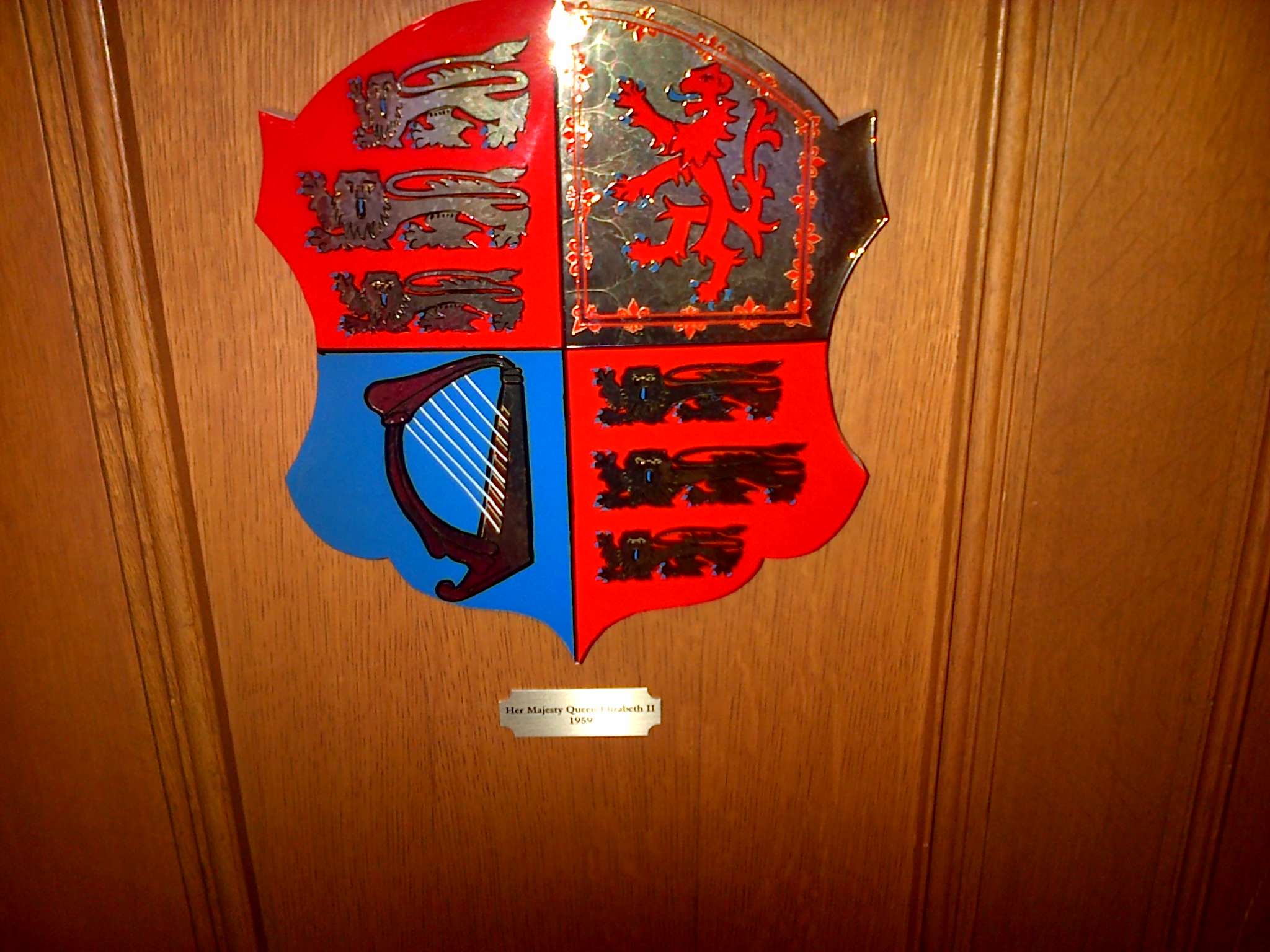
Government House in Victoria, British Columbia (the state residence of the Lieutenant Governor of British Columbia) contains some good evidence for the fundamental constitutional arrangements of Canada and the United Kingdom, namely a Personal Union of separate Crowns, which are in turn corporations sole. The grand staircase of Government House includes the heraldry of all the members of the Royal Family who have stayed at the residence, as well as the personal heraldry of various Governors General.

Princess Elizabeth's Personal Heraldry

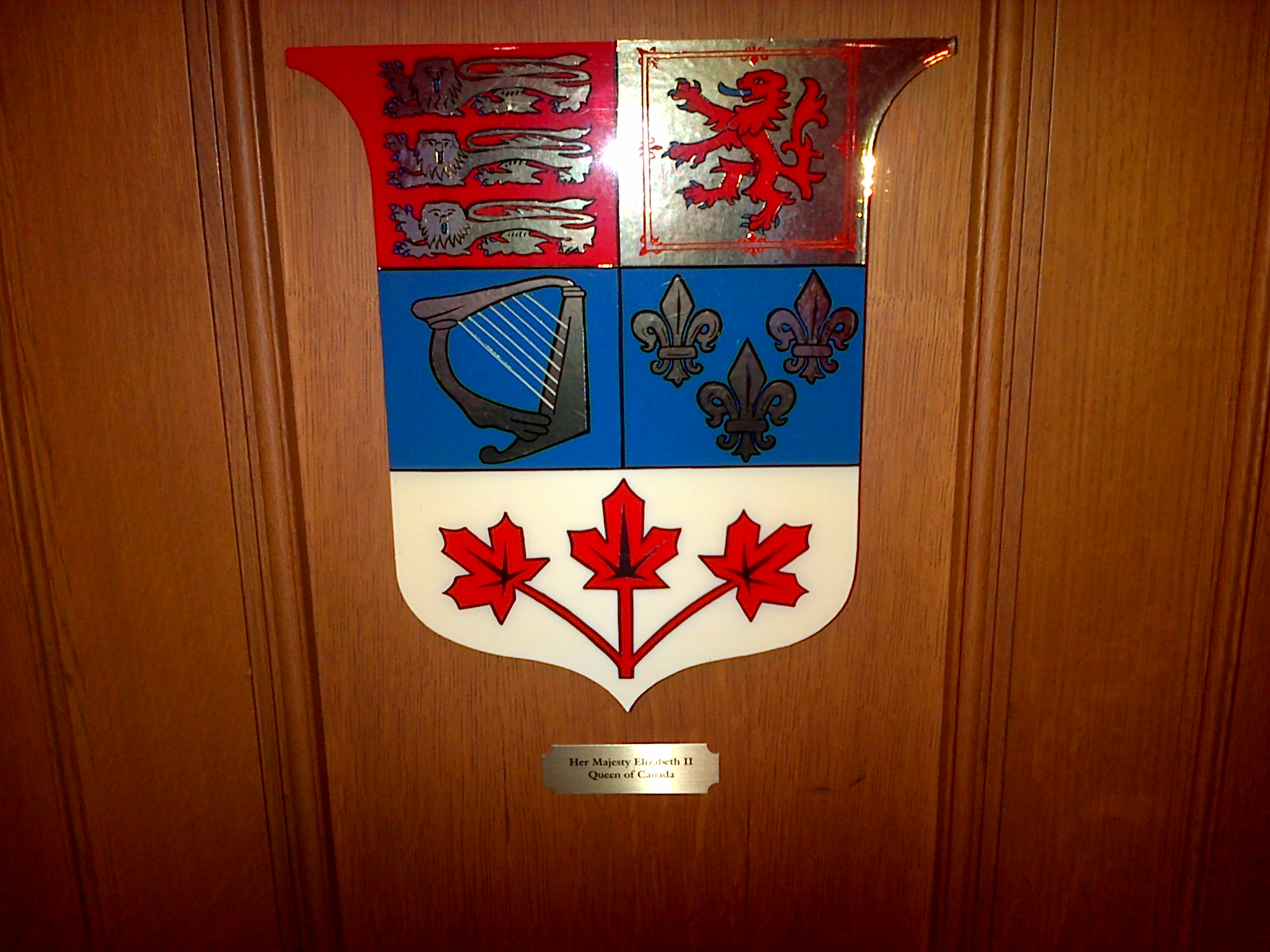
The personal crest of Princess Elizabeth of 1947 differs from the official crest of Queen Elizabeth II of the United Kingdom, and the Queen of Canada bears a different crest still. The Queen of the United Kingdom displays the heraldry of the Royal Standard; crucially, her predecessor Sovereigns have, and her own heirs and successors will, bear the same Royal Standard because it belongs to the office of Queen or King (or “Crown”) of the United Kingdom.

The British Royal Standard as a crest

The British Royal Standard as a crest

As such, the Royal Standard never flies at half-staff, because automatic hereditary succession as prescribed by law ensures that the Queen never dies. This necessary heraldic tradition caused much consternation among the British popular press and public in 1997, when they complained that Buckingham Palace did not fly a flag at half-staff in mourning of the late Princess Diana. Prior to 1997, the Royal Residence would either fly the Royal Standard when the Sovereign was present, or it would fly nothing. Since 1997, the Palace has created a new procedure whereby the Royal Palace may fly the Union Flag at half-staff as a symbol of mourning – but the Royal Standard can only ever fly at full-staff.

The Canadian Royal Standard as a crest

The Canadian Royal Standard as a crest

The Canadian Royal Standard draws inspiration from the British Royal Standard but includes the Fleur-de-lys as a symbol of French Canada and the sheath of Maple Leaves. The Canadian Royal Standard represents the Crown of Canada, in other words, the Sovereign for the time being and her heirs and successors.      

Anne Twomey’s Interview on the CBC

Anne Twomey recently did an interview on the CBC regarding Canada’s useless statute on succession that promulgated nothing into law. Twomey mostly reiterated the arguments that she made in her blog entry, “The Royal Succession and the De-Patriation of Canada’s Constitution.” Twomey explained that the federal and state governments in our sister Realm of Australia would never accept the absurd argument of the Government of Canada that succession does not form part of Australian law but only British law. Thankfully, Australia has decided to alter its succession law under section 51(38) of its Constitution Act.

Twomey explained that Canada’s statute on succession has promulgated nothing into law and that the Personal Union of the Crowns will therefore break, barring subsequent intervention, at the children of the Duke and Duchess of Cambridge. Canada has retained the unreformed rules of succession of male-preference cognatic primogeniture, while the United Kingdom has reformed its succession in line with equal primogeniture. If the Duke and Duchess of Cambridge have a daughter followed by a son, the first-born child (the daughter) would become Queen of the United Kingdom, while the first-born son would become King of Canada. If the first child of the Duke and Duchess of Cambridge is a son, then he would become King of the United Kingdom under the reformed rules and King of Canada under the unreformed rules, and so the Personal Union would not break upon his accession to the various thrones. And if the Duke and Duchess of Cambridge have only daughters, then the first-born daughter would become Queen of the United Kingdom under the reform British succession and Queen of Canada under the unreformed succession, because male-preference cognatic primogeniture does not preclude women from inheritance and the demise of property altogether. But so long as the Canadian and British rules do not match and continue to contradict one another, the Personal Union will eventually break.

Taken to their logical extensions, the Government of Canada’s pernicious arguments would undermine not only Canada’s independence and the Crown of Canada as a separate legal entity, but the independence of Australia and New Zealand as well. Indeed, some Canadian scholars have tried to characterize Australia’s and New Zealand’s position on succession as anomalous – when in fact, the Government of Canada’s current position is at variance not only with Australia and New Zealand, but the previous positions of the Government of Canada!

I will soon upload the parliamentary Hansard from 1937 and demonstrate that Prime Minister Mackenzie King, Minister of Justice Ernest Lapointe, and the Government of Canada believed that His Majesty’s Instrument of Abdication Act ensured that succession to the Crown extended to Canada as part of its law. Maybe the Government of Canada will find its own earlier position on succession (which contradicts its current position) persuasive.

Similar Posts:

Posted in Corporation Sole, Crown (Powers and Office), Succession (Sovereign) | 9 Comments

“Lucky Pierre”, by Gilbert Bowden


I have expressed considerable skepticism toward Justin Trudeau, the hereditary leader of the Liberal Party of Canada, because he consistently denies the divisive nature of politics and thus, ironically, promotes the very cynicism that he claims to oppose and subverts necessary and proper political differences. There is nothing more cynical than an elected politician who casts himself as a unifying figure, because anyone who presents himself for election in a democratic system necessarily both attracts supporters and repels opponents. Politics is, by nature, divisive and should remain so. He also has a tendency to speak in the third person, like Hercule Poirot (though Justin Trudeau’s “little grey cells” probably work less hard than those of the great Walloon sleuth).

Thankfully, I, too, come from a hereditary line: in this case, of irreverent Trudeau-skeptics!

My great-uncle Gilbert Bowden, then a civil servant living in Ottawa, put his creative talents and sardonic wit to good use in 1979 when he wrote his ode to Pierre Trudeau (who at the time had just resigned as Liberal leader and Prime Minister) – “Lucky Pierre.” A local Ottawa musician named Michael O’Shea performed the rendition that I’ve posted below.

The true political junkies (a description which, if we’re going to be honest with one another, probably applies to most of you, dear readers!) should spot the political references and the then-current but now-historic events mentioned herein. My favourite line is, “Two Christmas kids put [Pierre] one above God” – and the sentiment hasn’t gone unnoticed. Justin’s legion of adoring fans seem to think of him in messianic terms, as if he were the Second Coming of Canadian politics.

“Lucky Pierre”

Oh, Lucky Pierre was a real Romeo.
Girls all went crazy wherever he’d go.
Grabbin’ his fingers and rufflin’ his hair –
O how they loved Lucky Pierre!

They used to treat him like he was star.
Why did they scream at the side of his car?
Lining the streets with their hands in the air,
Yelling for Lucky Pierre.

He wasn’t the king of the diamond ring;
He wasn’t the star of the pool.
And how can you go
On a portfolio?
And whoever heard of a cool
House of Commons?

Nevertheless, he’s the one we root for,
Right from Vancouver to Newfoundland shore.
All of us fellows, we couldn’t compare,
And wished we were Lucky Pierre.

Climbing the mountains or diving for pearls,
Everywhere he went, so did the girls.
Under the ocean or up in the air, following Lucky Pierre!
He’d blow them kisses, they hollered for more,
They climbed on the roof and they’d bang on the door.
There’s no peace anyway, and I’m not so Lucky Pierre.

One day in despair, he took to the air.
He vanished away in the blue.
Then he went to BC
Where he met Mrs. P.
All of the girls shouted, ‘you fuddle-duddle!’

Blow on your trumpets and ring on the bell,
Finally someone has broken the spell.
Give an ovation to that lady fair
Who saved us from Lucky Pierre.

O how fortune favoured him really was odd:
Two Christmas kids put him one above God.
All he was losin’ it seemed was his hair.
Happy, go-lucky Pierre!

Suddenly we knew that something was wrong
When Maggie sang Mrs. Castro a song.
Then she went off and got stoned in the air
With one of the Rollin’ Pierres!

Then Rene Lesvesque took over Quebec;
He started to making himself King.
And Maggie said, ‘dear, I’ve had it to here,
I’ve just go to do my own thing.’

Now that they’re showing the House on TV,
He’s not the fellow that he used to be.
One more election, and maybe he’s through.
Then we could say, ‘Pierre Who?’!

Posted in Humour | 4 Comments

Toronto Newspaper Attacks the Undemocratic Centralization of Power in the Prime Minister and the Corrupt, Unelected Senate


Stop Harper!

I’d like to thank James Anderson and National News Watch for having published my column on putting the current parliamentary scandals into historical perspective.

“The Power of the Prime Minister”

In “The Power of the Prime Minister”, the editorial board of the Toronto News rails against the undemocratic centralization of power in the Prime Minister and the ineffectiveness of the appointed Senate  and calls for more “checks and balances” in our system of government.[1] The Toronto News first exposes the formal Crown-in-Parliament contained in the written constitution as farcical and compares it to the informal Crown-in-Parliament that exists in practice:

Canada is governed by two legislatures, one real, the other sham. The sham legislature is composed of the Governor General, the Senate, and the House of Commons. The real legislature consists of a despotic ruler – the Premier; an upper house – the Cabinet; and a lower house – the caucus of the Government members of parliament.[2]

The editorial board also asserts that the Canadian Prime Minister has emerged as dangerous, anti-democratic hybrid who wields the vast executive powers of the American President without sufficient legislative check on his powers like the British Prime Minister.

The Premier is almost the absolute ruler of the country. Our politics have developed in such a way that his office combines the peculiar advantages of the premiership as it exists in Great Britain with many powers of the American boss. […]

Controlling an enormous patronage, able to influence the fortunes of almost every legislator in his following, concentrating in his hands executive and legislative power, the Premier exercises a real authority which is greater than that of the President of the United States or any modern King. His supremacy, unlike that of the British Premier, is independent of his general policy and of his parliamentary performances.

The editors then compared the centralized executive and legislative power of the Canadian Prime Minister to that of a medieval monarch.

Our Premier is really a species of absolute monarch of the medieval type. He fights his way to the throne. He has to contend against one or more pretenders, the Leader of the Opposition being the more conspicuous of these. […] His reign often ends in catastrophe. He must succeed, and if successful, can do nearly everything he wishes […].

Finally, they suggest two possible solutions to this problem of centralization of power in the Prime Minister: the Governor General could exercise more discretionary authority against the Prime Minister, or the Senate of Canada could be reformed into a properly independent chamber that could check prime ministerial power, because the current corrupt, unelected Senate serves as little more than a house of patronage.

There is the influence, rather than the power, of the Governor-General. […] [The influence of the Governor General] is probably greater than the general public suspects and is almost wholly beneficial. It is almost our only check upon the supremacy of the Premier, and the Governor-General after all is interested in the whole body of the people, while the Premier is interested almost exclusively in his own party. 

At present, the Senate has sunk into an almost incredible lassitude. […] We are back to the need for checks and balances […]. Of course, the Government may be relied upon to oppose any such change. To put the Senate on a basis of real independence would assail [the Government] in two ways. [The Senate] would lesson [the Government’s] patronage and would curtail its authority. Only a real and sustained outburst of public feeling will effect such a measure.

Conclusion

You’ve probably never heard of the Toronto News, given that this newspaper went out of business some time ago. Robert Macgregor Dawson included this newspaper article in his compendium of Constitutional Issues in Canada, 1900-1931. The editorial board submitted all these common refrains – which we could hear almost verbatim today! – over 100 years ago, in 1905. Plus ça change, plus c’est la même chose.

Today’s crop of reformers and Romantics make almost precisely the same criticisms against the Prime Minister. Nearly identical arguments appear in Democratizing the Constitution: Reforming Responsible Government and the recent special printed issue of iPolitics. For instance, both this editorial from 1905 and the modern Romantic literature exalt their ideal of parliamentarism, the Balanced Constitution and the era of the independent MPs, which existed from 1688 to 1832. (Of course, this Romantic exaltation omits any mention of the rotten boroughs and corruption that placed these independent MPs in the Commons). But Responsible Government necessitates party discipline. Worse still, today’s reformers and Romantics display the audacity and arrogance that can only result from a profound ignorance of history and thus consider their criticism and proposed solutions original, urgent, and essential.

Peter Russell, drawing heavily from Eugene Forsey, argues that the Governor should exercise a heightened discretionary authority to reject ministerial advice because “Prime Ministers must not become Kings.”[3] In reality, however, the Prime Minister became King in the 19th century as a natural and necessary corollary of Responsible Government. When “Ministers of the Crown take responsibility for all acts of the Crown,”[4] when the Prime Minister alone enjoys direct and privileged access to the Sovereign, and when the tenure of a Ministry depends directly and exclusively upon the Prime Minister’s official commission to govern[5], the Prime Minister does indeed become King, or what Benemy calls “the Elected Monarch.”[6] All these conditions had emerged by the mid-19th century, which explains why reformers and Romantics could criticizes the Canadian system of government with recognizable, contemporary refrains as early as 1905. As so often occurs in Canadian politics, everything old is new again. Today’s pundits and politicians who do well to look to history before portraying contemporary situations as unprecedented or unusual.

Similar Posts:


[1] Robert Macgregor Dawson, ed. Constitutional Issues in Canada, 1900-1931. (London: Oxford University Press, 1933): 121-125. The Toronto News article, “The Power of the Prime Minister”, came from 28 November 1905.
[2] In fact, the Crown-in-Parliament consists of the Queen as represented by the Governor General, the Senate, and the House of Commons.
[3] Peter H. Russell, “Prorogation – Prime Ministers Must Not Become Kings,” Canada Watch (Spring 2011): 17.
[4] Sir John George Bourinot, Parliamentary Procedure and Practice, 4th ed. (Montreal: Dawson Brothers Publishing, 1916): 102.
[5] Canada. Privy Council Office, Manual of Official Procedure of the Government of Canada, Henry F. Davis and André Millar. (Ottawa, Government of Canada, 1968): 151 and 77-79.
[6] F.W.G. Benemy, The Elected Monarch: The Development of the Power of the Prime Minister. London: George G. Harrap & Co. Ltd., 1965.

Posted in Articles and Books, Crown (Powers and Office), Prime Minister's Powers, Reform, Reviews, Senate Reform | Tagged , , , , , , , , | 1 Comment