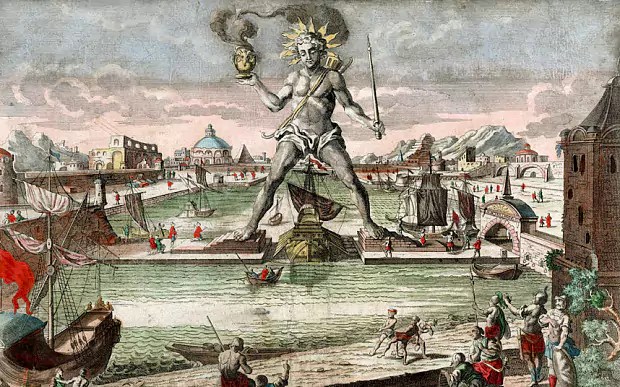
The Grand Coalition of the Social Democrats and Christian Democrats straddles the center-left and center-right like the Colossus of Rhodes and leaves no credible opposition as an alternative government in its wake.
Introduction
Germans elected a new parliament on 24 September 2017. The main center-right and center-left parties, the Christian Democrats and Social Democrats, both lost ground to the far-right Alternative for Germany and the far-left, aptly named The Left. The Free Democrats, a pro-business liberal party, won back the presence and representation that they lost in 2013, and the Greens also made gains.
From 2005 to 2009 and from 2013 to 2017, Angela Merkel’s Christian Democrats governed in Grand Coalition with the Social Democrats. From 2009 to 2013, the Christian Democrats entered into a more ideologically compatible coalition with the Free Democrats. In 2017, the Christian Democrats won a plurality of seats and sought to form another coalition, but the Social Democrats refused to continue their previous arrangement and instead sought to become the official opposition. The Christian Democrats entered into negotiations with the Free Democrats and Greens — since all three would need to coalesce in order to form a parliamentary majority.
On 20 November 2017, coalition talks between these three parties broke down after the Free Democrats withdrew. The German media then discussed the possibility that Germans would have to go to polls in an early election in 2018.[1] Incumbent Chancellor Angela Merkel herself reportedly favours this possibility.[2] Most of these media articles did not comment on precisely how the Basic Law allows for early elections under limited circumstances or delve into discussions of constructive non-confidence and confirmation voting. Essentially, there are two possibilities for how an early election can occur in Germany, and I’ve outlined them below.
Continue reading →