How This Happened
Today, on 13 February 2021, Newfoundlanders and Labradoreans across the province should have made their way to their polls and cast their ballots in a general election for their province’s 50th General Assembly. But events intervened.
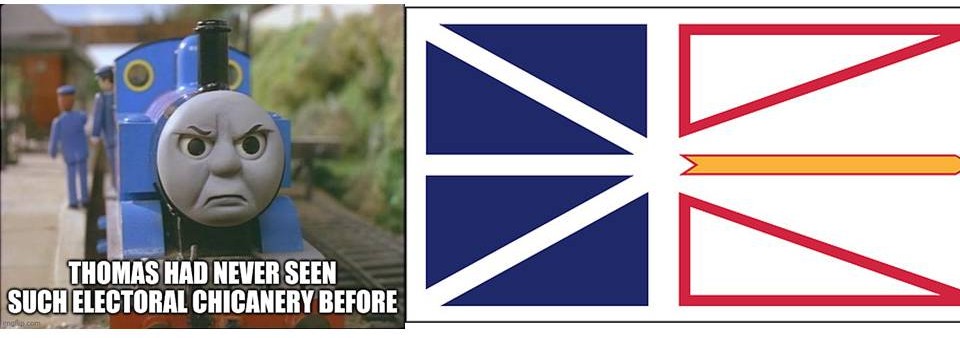
Newfoundland and Labrador now finds itself navigating through uncharted waters amidst thick fog. Premier Dr. Furey made the foolish decision to trigger an election at the peak of flu season, with a campaign between 15 January and 13 February. Cases of COVID-19 started mounting earlier this week, and Chief Electoral Officer Bruce Chaulk issued a desperate plea on 11 February that the Premier advise the Lieutenant Governor postpone the election after poll workers for Elections Newfoundland and Labrador quit in fear of their safety. Chaulk then took the unprecedented action of cancelling in-person voting in 18 out of 40 ridings that same day, through ambiguous legal authority. On 12 February, the Chief Medical Officer announced that the province would enter another stringent lockdown effective immediately, and the Chief Electoral Officer later that day cancelled all in-person voting in the remaining 22 ridings and unilaterally extended the writ for special ballots to 1 March 2021, in direct violation of section 58(1) of the Elections Act, which sets the maximum writ at 35 clear days, in this case, up to 20 February 2021 at most.[1]The Premier made a terrible error in judgement, which, in turn, has forced the Chief Electoral Officer to issue an illegal directive which directly contradicts the Elections Act that he is tasked to uphold. This confluence of stupidity and illegality calls into question the integrity and constitutionality of this entire election, the ill-begotten results of which we will not know until mid-March at the earliest.
Newfoundland and Labrador should have amended and updated its Elections Act when the House of Assembly sat between September and December 2020 to give the Chief Electoral Officer flexibility within the clear bounds of statutory authority, similar to how the Lieutenant Governor-in-Council of Saskatchewan passed new Elections Act Regulations, as secondary legislation, in advance of its election in 2020 – which its fixed-date election law also scheduled during the pandemic. At this stage, I can only hope that other provinces and territories, and Ottawa, will take note and that their legislatures will amend through primary legislation, or their Governors-in-Council will modify through second legislation, as the case may be, their respective Election Acts, so that no other jurisdiction in Canada subjects itself to this pathetic and unedifying spectacle.
Continue reading →

 James Bowden's Blog