Why Justin Trudeau’s Snap Election in 2021 Does Not Break the Fixed-Date Elections Law


The Signs Pointing to a Snap Election, June to August 2021

Since at least mid-June, the media had treated an early election as a fait accompli, and politicians and political parties began acting as if the writ had already begun by early July. On 15 June, several MPs in the House of Commons delivered their “Farewell Speeches”, including Jack Harris (New Democratic Member for St. John’s East), Simon Marcil (Blocist Member for Mirabel), and Kate Young (Liberal Member for London West).[1]The very same day, Elections Canada announced that it could administer a general election during the pandemic without the statutory amendments contemplated by Parliament which ultimately died on the Order Paper on 15 August.[2]On 22 June, Prime Minister Trudeau denounced the 43rd Parliament for its “obstructionism and toxicity,” not the sort of thing that one would say in advance of a productive fall sitting.[3]

Justin Trudeau then shaved off his beard and cropped off his pandemic locks around Canada Day.[4] The rest of July then saw a plethora of campaign-style announcements and joint press conferences with willing mayors and premiers; Trudeau appeared alongside Naheed Nenshi, Mayor of Calgary, on 7 July to pledge “Build Back Better” funding to expand the city’s commuter rail,[5] and he held a joint press conference with John Horgan, the New Democratic Premier of British Columbia, the next day to announce funding for childcare.[6] In a marked contrast to the last snap federal election in 2008, the CBC supported the prospect of an early election so strongly that when Jagmeet Singh appeared on Power & Politics on 11 August to implore the Prime Minister to let the current 43rd Parliament meet for its fall sitting in September, the reporter tried to goad Singh three times to embracing the inevitable early election as an opportunity to convince voters that the New Democrats can best govern Canada at the end of this pandemic.[7]

Ever mindful of new political developments, Dr. Theresa Tam, Canada’s top public health official, declared a potential snap election during the onset of the fourth wave of the pandemic safe on 5 August as safe — “there are ways to vote safely.” [8] (The previous week, she argued that Canada finds itself “in a slightly precarious moment” until 80% of Canadians are vaccinated).[9] The Liberals briefed the press on 12 August that the Prime Minister would kick off the election on Sunday[10], and Justin Trudeau, with wife and children in tow, dutifully paid an anti-climactic visit to Rideau Hall and Her Excellency Mary Simon to tender his constitutional advice to dissolve the 43rd Parliament for a general election on 15 August.[11] The Chief Electoral Officer, Stéphane Perrault, told the Procedure and House Affairs Committee in June that Elections Canada would prefer a longer writ closer to the 50-day maximum rather than the 36-day minimum, because of the logistical challenges of administering an election during a pandemic.[12] But Trudeau opted for the minimum of 36 days and thus a polling day of 20 September, perhaps because, as Paul Martin and Stephen Harper could both corroborate, the longer elections over the last 15 years have not benefited the incumbent.  

What Canada’s Fixed-Date Elections Do and Do Not

Continue reading

Posted in Crown (Powers and Office), Dissolution, Fixed-Date Elections | 3 Comments

Putting the Personal above the Factual: Errol Mendes on Early Dissolution and Fixed-Date Election Laws in 2008 vs in 2021


Introduction

I have chronicled several examples of scholarly inconsistency between how some academics cover and write about Harper versus Trudeau, The four most notable examples come down to the following: tactical prorogation, contempt of parliament, the caretaker convention and the appointment of Supreme Court Justices just before the writ, and, finally, on calling snap elections when the House of Commons has not first withdrawn its confidence from the government. I documented last year how the same scholars who launched incessant vituperations over Harper’s tactical prorogations in 2008 and 2009 remained silent or became far more measured and reasonable in response to Trudeau’s tactical prorogation in 2020. Some of the disparity in the coverage of Trudeau’s prorogation versus Harper’s and the House of Commons declaring the Trudeau government in contempt of parliament in 2021 versus the House of Commons declaring the Harper government in contempt of parliament in 2011 undoubtedly does stem from our collective fatigue over the pandemic. I myself have largely tuned out of much of the news, and I quit Twitter around 12 months ago. This calculus might even factor into some of the coverage of the upcoming early election in 2021 versus that of 2008. However, this factor most certainly does not apply to the control group in our sample: the hyperventilating over the Caretaker Convention and the appointment of justices to the Supreme Court in 2015 versus in 2019 occurred half a year before the pandemic disrupted all our lives.

With an early dissolution and general election bearing down on us in 2021, I find revisiting the similar early election of 2008 and comparing the press coverage then and now instructive and intriguing. Here I will use one particular and overt about-face as an example to illustrate the perils when partisan or ideological thinking replaces a neutral and reasonable examination of the facts, in the form of Errol Mendes, Professor of Law at the University of Ottawa.

Continue reading
Posted in Comparative, Confirmation Voting, Constructive Non-Confidence, Crown (Powers and Office), Dissolution, Fixed-Date Elections, Reform | 1 Comment

Peter H. Russell Now Agrees With Me: What Happens When a Governor General Rejects a Prime Minister’s Constitutional Advice


Phil Lagassé took this action shot on 28 October 2013, where Peter Russell and I talk at the Regina International Airport

For the last eight years or so, I have stated in numerous blog posts, presentations at conferences, my thesis, and several journal articles the basic precepts of the established constitutional position of the governors and prime ministers under Responsible Government. Namely, governors can only reject a premier’s constitutional advice under exceptional circumstances precisely because of the exceptional consequences that this exercise of discretion causes: that the prime minister whose advice the governor rejected must resign or be dismissed from office, and that the governor must then appoint a new ministry which can take responsibility for the dismissal of its predecessor and command the confidence of the elected assembly.

Contrary to what the reactions of most academics and journalists in the late 2000s and early 2010s would suggest, this viewpoint remained the bog standard and universally accepted formulation of Responsible Government until well into the 20th century. In fact, I derived – or perhaps, simply re-stated – this argument from a long line of Canadian constitutional scholars active from the 1840s to the 1990s, from Alpheus Todd and R. Macgregor Dawson to Eugene Forsey, and Graham Eglington[1], and various real historical precedents from the 19th and 20th centuries where precisely this series of events happened. These include the Double Shuffle in the Province of Canada in 1858, where George Brown resigned after Governor Head rejected his advice to dissolve the legislature,[2]the instance where Prime Minister Sir Charles Tupper resigned in 1896 after Governor General Lord Aberdeen refused to implement his constitutional advice to appoint judges and summon senators,[3]and the famous King-Byng Affair of 1926, where William Lyon Mackenzie King resigned as Prime Minister because Governor General Lord Byng rejected his constitutional advice to dissolve parliament.[4]

To make matters even easier, the official written correspondence between the Governor and Prime Minister makes clear in all three cases that the Prime Minister resigned because the Governor rejected his constitutional advice.  

Continue reading
Posted in Crown (Powers and Office), Dissolution, Governor's Discretion, Prorogation | 3 Comments

Quebec’s Irredentist Designs on Labrador


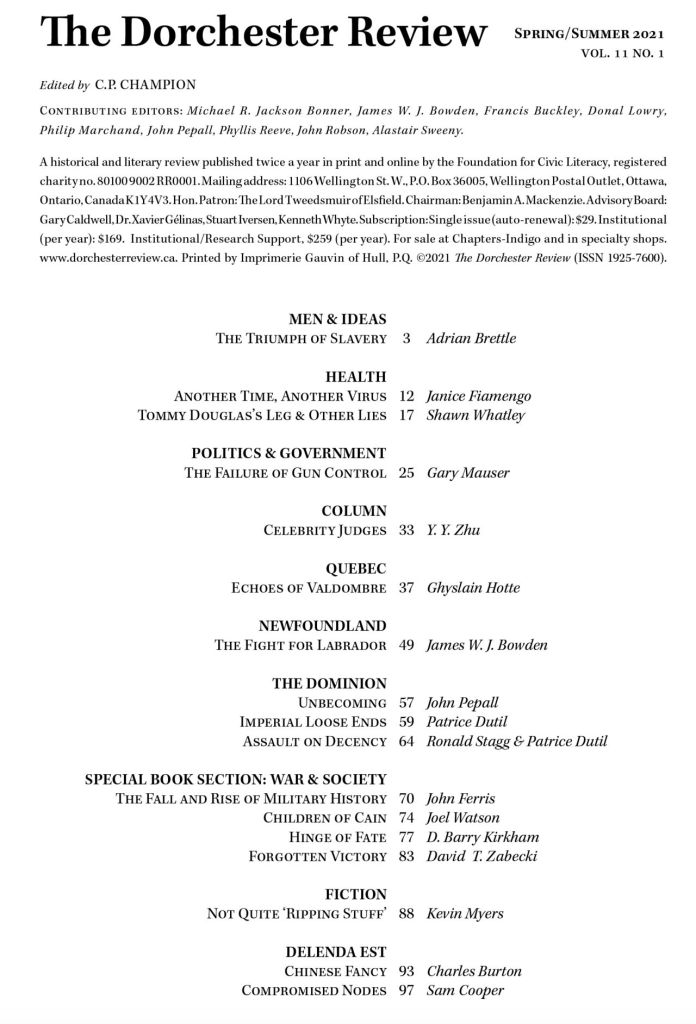
Some of you might be interested in my piece in the latest issue of the Dorchester Review on the Labrador Boundary Dispute, Quebec’s continuing irredentist designs on the territory, and the story of the most recent constitutional amendment passed under the Section 43 Amending Procedure, the Constitution Amendment, 2001 (Newfoundland and Labrador). A

Similar Posts:

Posted in History of British North America | 3 Comments

The Privileges of Aristocracy: Solicitor-Client Privilege Under the Access to Information Act


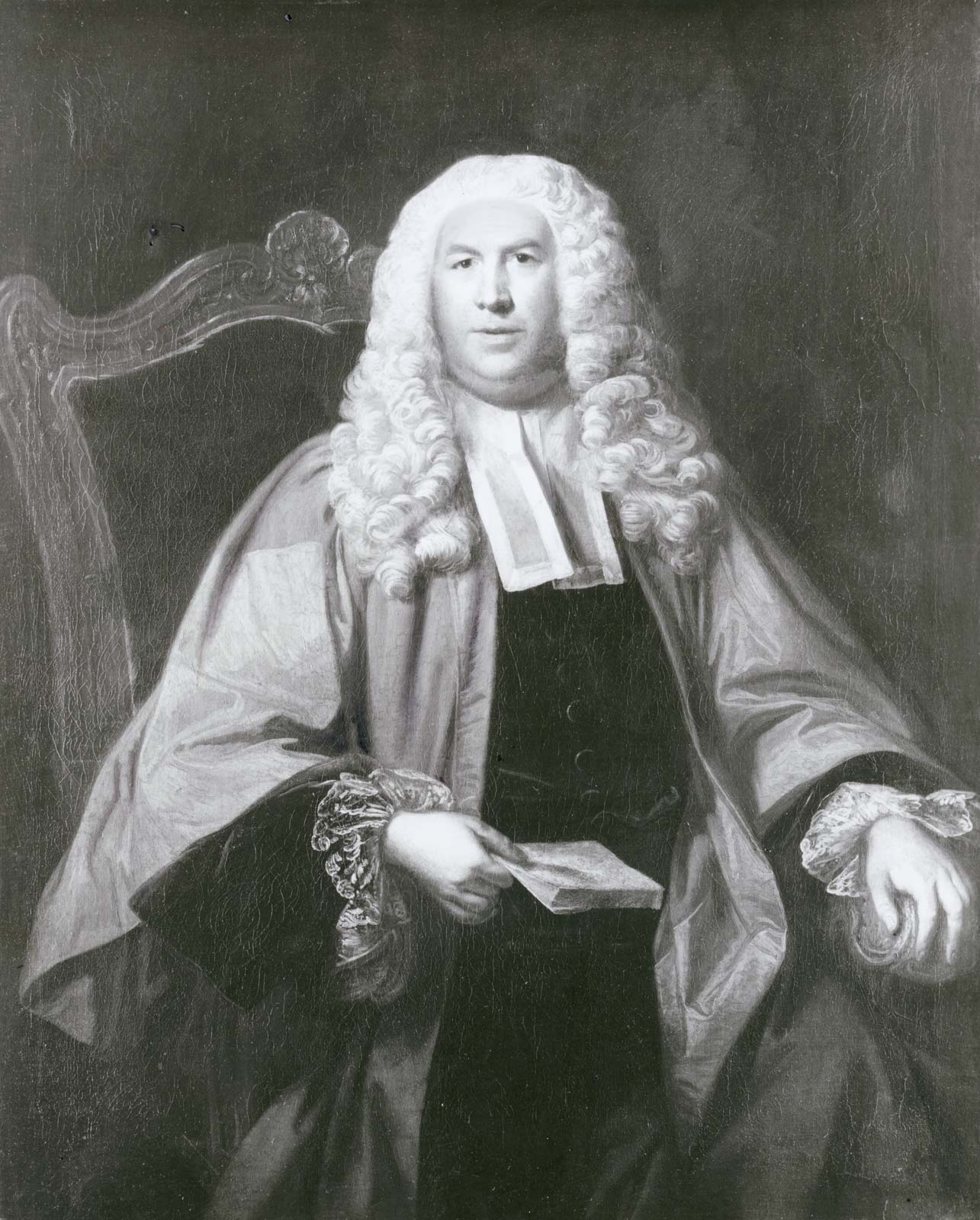
“The American aristocracy is at the attorneys’ bar and on the judges’ bench.”

In On Democracy in America, Alexis de Tocqueville argued that lawyers had already emerged as the aristocratic class of the United States of America by the 1830s. But his observation would apply readily to most Common Law jurisdictions, thus including Canada, because we all rely on a cumulative and evolving body of precedent, the principle of stare decisis, or judge-made law.

The United States firmly rejected peerages and titles of emolument in its Constitution in the 1780s. Canada likewise lacks a hereditary legislative body like the House of Lords – even though the Constitutional Act, 1791 gave the Governors of Upper Canada and Lower Canada the authority to create hereditary peerages for the Legislative Councils – so the legal profession in both the United States and Canada has assumed the role and functions of the aristocracy in Europe.  

Tocqueville observed:

Continue reading
Posted in History of British North America | 2 Comments