Constitutional Norms in the United States vs Constitutional Conventions in Canada
I’ve been mulling overGould’s article “Codifying Constitutional Norms” (in the United States) and about constitutional norms in the American versus Canadian systems of government a bit more over the last few days, as well as on the differences between Responsible Government and Consensus Government, as well as a strange precedent that just unfolded in the State of South Australia this week (more on that in a subsequent post). It seems to me that constitutional norms in the United States still remain, for the most part, different in kind rather than merely in degree to most of the constitutional conventions which apply in the Commonwealth Realms, what the British call “the political constitution.”
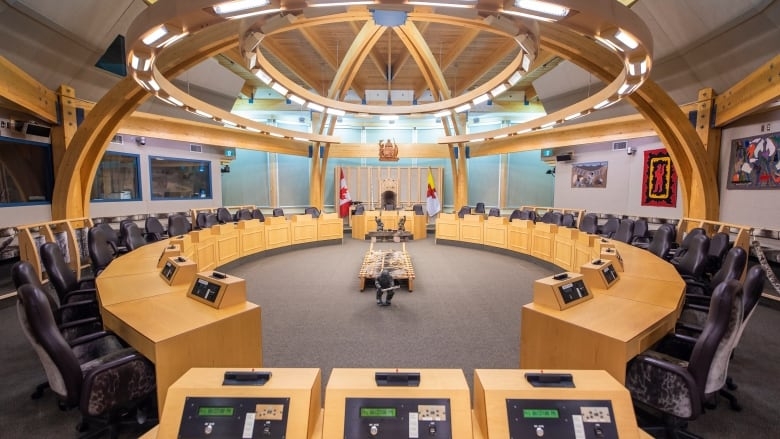
Nunavut held its second scheduled general election under the Nunavut Elections Act on 25 October 2021, and the Commissioner convened the 1st session of the 6th Legislature on 17 November so that the 22 members of the Legislative Assembly could gather as the Nunavut Leadership Form and elect a Speaker and also to select the Premier and Executive Councillors of Nunavut, too. MLAs elected Tony Akoak as Speaker, and P.J. Akeeagok as the next Premier of Nunavut (at age 37, perhaps the first head of government of my generation in Canada), along with 8 other MLAs – David Akeeagok. Pamela Gross, David Joanasie, Lorne Kusugak, Adam Arreak Lightstone, John Main, Margaret Nakasuk, and Joanna Quassa – as Executive Councillors.[1]Premier P.J. Akeeagok will assign them portfolios as ministers in the coming days and weeks.
As of 2021, I have been writing scholarly journal articles and blogging here on Parliamentum for ten years. What I find most interesting is seeing how my earlier works have influenced or been used by other scholars, in some cases now a decade after its original publication.
One such example came to my attention earlier this year: Jonathan S. Gould’s “Codifying Constitutional Norms” in the Georgetown Law Journal. Gould cited the piece that Nick MacDonald and I wrote on officialising constitutional conventions in cabinet manuals; we drafted it in 2011, but it did not appear in the Journal of Parliamentary and Political Law until 2012.
We have just undergone a futile election which has produced substantively the same outcome as the previous general election in October 2019: a Liberal plurality around 15 to 20 seats short of a majority.
On 21 October 2019, Canadians elected the 43rd Parliament as follows:
Party
Seat Count
Popular Vote
Vote Total
Liberals
157
33.1%
5,911,588
Conservatives
121
34.4%
6,150,177
Bloc Quebecois
32
7.7%
1,377,234
New Democrats
24
15.9%
2,845,949
Greens
3
6.5%
1,160,694
As of around 0900 on 21 September, the preliminary results show that on 20 September 2021, we have elected a 44th Parliament virtually identical to its predecessor. The results in some ridings might change as Elections Canada counts the rest of the mail-in ballots this week, but the general result of a Liberal plurality at roughly the same level as two years ago will not.
Party
Seat Count
Popular Vote
Liberals
158
32.2%
Conservatives
119
34.0%
Bloc Quebecois
33
7.7%
New Democrats
26
17.7%
Greens
2
2.3%
Thus far, the Liberals have lost one seat, from 157 to 156, and the Conservatives have held steady at 121.
Canadians not amongst those who voted in the advanced polls in record numbers shall go to the polls today (myself included) to elect their MPs for the 44th Parliament. However, Elections Canada has cautioned that we might not know the final results of this election, and the winner in each of the 338 ridings, for up to 5 days (26 September),[1] because of the logistics of this pandemic election. Elections Canada explained in a recent press release:
“Given the number of local special ballots we have received, we expect most of the country’s 338 ridings to report the results of their local special ballot count on Tuesday, September 21, and the vast majority to finish counting by Wednesday, September 22. However, due to high volumes or logistical challenges, the full count may take up to four days in some ridings.”[2]
While Elections Canada can start counting ballots cast in local advance polls on election night, and the mail-in ballots and ballots cast by Canadian Armed Forces personnel up to 14 days before polling day (so as of 6 September), it cannot start counting local mail-in ballots (from locals who vote by mail within their own ridings) until tomorrow, 21 September. It is possible that these could tip the balance in some closely contested ridings. And given that the opinion polls taken throughout this campaign from 15 August to 19 September have shown a consistent statistical dead heat between the Liberals and Conservatives, with each hovering between 31 and 34%, we seem poised to elect another minority parliament today – so close races could affect the overall outcome of the general election and make the difference between a plurality or a majority for one party over another.


 James Bowden's Blog