
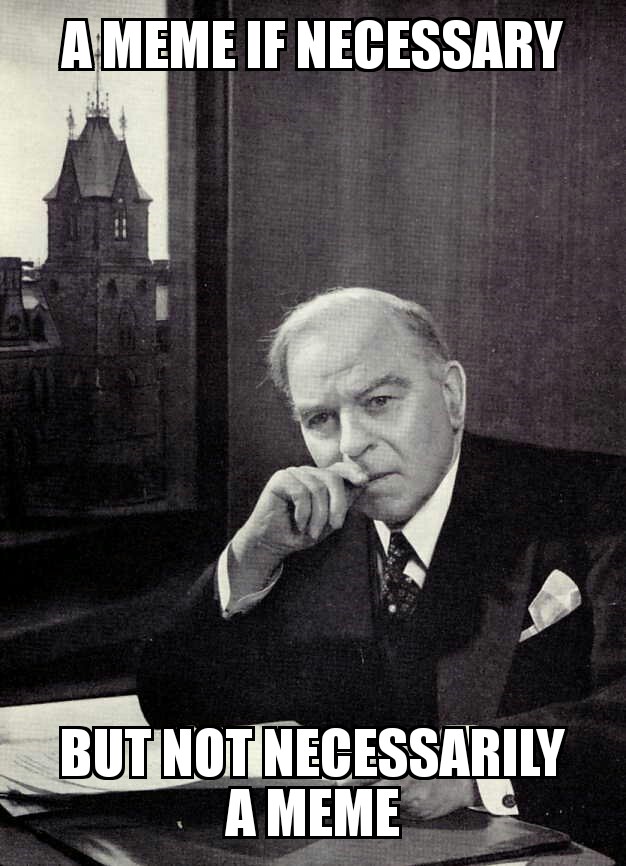
The myth which holds that Mackenzie King holds the record of “Canada’s longest-serving Prime Minister” persists. Steve Paikin has outdone himself now by going so far as to claim Mackenzie King holds the record of not merely Canada’s longest-serving Prime Minister but also as “the longest-serving Prime Minister in the history of the British Empire or Commonwealth.”
This is false for two reasons. First, “Canada” as a polity extends all the way back to 1791 and not to 1867.[1] The Imperial Parliament established Upper Canada and Lower Canada in 1791, continued and combined them into the Province of Canada in 1841, and then made the Dominion of Canada the direct continuator and successor polity to the Province of Canada in 1867. Second, “Prime Minister” and “Premier” were used interchangeably in Canada to describe the head of either a federal or provincial ministry until the mid-20th century; not until Bill Davis adopted the title of “Premier of Ontario” instead of “Prime Minister of Ontario” in 1975 did the modern distinction between the federal Prime Minister and provincial Premiers emerge.[2] What we today call provincial premiers in Canada and state premiers in Australia should also count in the calculation of the “longest-serving prime minister in the history of British Empire or Commonwealth” because federated polities also matter.
And we must not forget the former British Crown colonies in the Pacific and Caribbean which achieved responsible government and gained independence as Commonwealth Realms in the 1960s, 1970s, and 1980s, because they also count as and have made contributions to “the history of the British Empire and Commonwealth.” I have defined Paikin’s phrase to include only the properly democratic Commonwealth Realms and parliamentary republics within the Commonwealth of Nations. On that basis I exclude Fiji because of its multiple coups and suspensions from the Commonwealth of Nations, but I have kept Grenada in the dataset because it suffered one bloodless Marxist coup and then restored itself as a Realm under its original constitution four years later after the United States invaded and deposed the Marxist usurpers. I have also excluded Singapore and Lee Kuan Yew’s continuous premiership of 31 years from 1959 to 1990 because I share Freedom House’s doubts on that country’s liberal democratic bona fides. I have also excluded Ireland because it withdrew from the Commonwealth in 1949.
Steve Paikin devoted The Agenda of 17 December 2024 to “Mackenzie King at 150” and began the episode with a challenge:
“Quick now: who’s the longest-serving Prime Minister in the history of the British Empire or Commonwealth? Here’s a hint: he’s not British. He’s actually Canadian. The answer is William Lyon Mackenzie King, who was Prime Minister of Canada for more than 21 years.”
He repeated this assertion several times throughout the episode. The first half of Paikin’s statement is true: the longest-serving Prime Minister in the history of the British Empire and Commonwealth is not British. However, Mackenzie King does not hold the record as the longest-serving Prime Minister of Canada, let alone in all the Commonwealth Realms. None other than Sir John A. Macdonald holds the record in Canada. Mackenzie King clocked in 7,826 days, or about 21 years and five months, across three ministries between 1921 and 1948.[3] Sir John A. Macdonald served 10,248 days, or about 28 years, across four ministries between 1856 and 1891 as Co-Premier of the Province of Canada and Prime Minister of the Dominion of Canada.[4]
And Sir Vere Bird holds the record for the longest-serving Prime Minister of the Commonwealth Realms and in the Commonwealth of Nations; he served two terms as Prime Minister of Antigua and Barbuda between 1960 and 1994 for a total of 29 years and 2 months.
| Sir John A. Macdonald | William Lyon Mackenzie King | ||||
| Start Date | End Date | Number of Days | Start Date | End Date | Number of Days |
| 1856-05-24 | 1858-08-02 | 800 | 1921-12-29 | 1926-06-28 | 1,642 |
| 1858-08-06 | 1862-05-24 | 1387 | 1926-09-25 | 1930-08-07 | 1,412 |
| 1864-05-30 | 1873-11-05 | 3446 | 1935-10-23 | 1948-11-15 | 4,772 |
| 1878-10-17 | 1891-06-06 | 4615 | |||
| 10,248 | 7,826 | ||||
| 28 years 0 months 22 days | 21 years 5 months 5 days | ||||
The eminent historians of the 19th century like Alpheus Todd treated Macdonald’s ministry from 1864 to 1873 as one continuous ministry which survived the continuation of the Province of Canada into the Dominion of Canada intact. Governor General Lord Monck appointed Macdonald as Prime Minister of the Dominion of Canada in May 1867 – even before the British North America Act, 1867 entered into force on 1 July – because he was already the the Co-Premier of the Province of Canada. Almost all the cabinet continued as well, with the addition of some new ministers from New Brunswick and Nova Scotia. The Dominion of Canada’s first general elections in November 1867 gave Macdonald’s grouping a working majority in the House of Commons, so he stayed as Prime Minister.
“Upon the confederation of the British North American provinces in 1867, Sir John A. Macdonald was appointed Premier (his ministry having already been in existence in the Province of Canada for three years); and he continued as prime minister until November 5, 1873, when the Mackenzie administration was formed. [. . .] In 1878 Sir John A. Macdonald returned to power, bringing with him most of his former colleagues, and remained in office until death removed him on June 6, 1891, having but one change of ministry in twenty-seven years.”[5]
Incidentally, this paragraph shows the interchangeability of “Prime Minister” and “Premier” as well prior to the mid-20th century. More importantly, Todd so took for granted that the Province of Canada continued as the Dominion of Canada that he mentioned it as an innocuous aside as part of a larger argument in favour of ministerial by-elections, which supported stability in the executive in Canada, in contrast to the chaos and high turnover of ministries in the Australasian colonies that had not adopted this British practice. Todd cited 1864, and not 1867, as the year in which Macdonald’s cabinet took office in passing and so unostentatiously precisely because it seemed so obvious, uncontroversial, and unremarkable in the late 19th century that the Dominion of Canada was the direct continuator and successor polity to the Province of Canada. Sadly, what was once manifest and undeniable to Todd’s generation has faded into obscurity.
Insisting that King served the longest as prime minister in the British Commonwealth makes omitting Sir John A. Macdonald even more damning, because even if you deny the place of the Province of Canada in Canadian history and the incontrovertible fact that it serves as the predecessor polity of the Dominion of Canada, you cannot deny its place in the history of the British Empire and Commonwealth more broadly. King would only be the longest-serving prime minister of Canada if 1867 marks our Year Zero. King can only claim the title of Canada’s longest-serving prime minister since Confederation, but not of all time in Canada.
Worse still, when Paikin keeps insisting that no one has served as prime minister “in the British Empire or Commonwealth” longer than Mackenzie King, he not only denies the Province of Canada as the direct predecessor of the Dominion of Canada but also denies the status of the Canadian provinces and the Australian states within the British Commonwealth, as well as the newest Commonwealth Realms and parliamentary republics in the Caribbean. The Commonwealth Caribbean has produced four long-serving prime ministers post-Second World War who all surpassed Mackenzie King’s record of about 21 and a half years, with a fifth poised to join their ranks by the middle of 2025. Paikin’s ironically Euro-centric conception of the “British Empire and Commonwealth” erases the existence of our sister Realms in the Caribbean and Pacific altogether, even though four of them have already produced longer-serving Prime Ministers than Mackenzie King despite having achieved Responsible Government some 120 years after Canada.
King’s tenure surpasses that of Sir Robert Walpole, the longest-serving British prime minister, and Robert Menzies, the longest-serving Australian prime minister. The longest-serving New Zealand prime minister, Richard Seddon, doesn’t even come close to King either. But we need to look beyond the oldest Commonwealth Realms and acknowledge our new sister Realms in the Caribbean, as well as the parliamentary republics of the region if we treat Paikin’s reference of “the British Empire and Commonwealth” to include the “Commonwealth of Nations” as it emerged after 1949.
Keith Mitchell clocked up 22 years as Prime Minister of Grenada in two terms between 1995 and 2022 and thus surpassed King’s tenure as Prime Minister of Canada by a few months. In addition, Lynden Pindling also bested Mackenzie King’s record within Steve Paikin’s lifetime; he served as Premier of the Bahama Islands (as a self-governing colony as Canada was from 1848 to 1931) and Prime Minister of the Bahamas (after it gained independence as a Commonwealth Realm in 1973) continuously from 1967 to 1992, some 25 years. Similarly, George Price served two terms as First Minister and Premier of British Honduras and Prime Minister of Belize between 1961 and 1993 for a total of 27 years and 6 months. Furthermore, Eric Williams served continuously as Chief Minister, Premier, and Prime Minister of Trinidad and Tobago from 1956 to 1981, some 25 years, across three stages of Crown Colony, Commonwealth Realm, and parliamentary republic within the Commonwealth of Nations. Here I am counting Trinidad and Tobago as part of the Commonwealth of Nations to maximize Steve Paikin’s statement about “The British Empire and Commonwealth” even though Trinidad and Tobago gained independence initially as a Commonwealth Realm in 1962 but then decided to become a republic in 1976. The polity of Trinidad and Tobago remained intact but took on a new constitution. Similarly, Roosevelt Skerrit has served as prime minister of Dominica, a parliamentary republic in the Caribbean and member-state of the Commonwealth of Nations, continuously since January 2004 and will surpass King’s record later this year.
While Eamon de Valera served as a head of government of Ireland in four non-consecutive terms for about 24 years between 1919 and 1959, I would not count him as a contender against Mackenzie King because Ireland left the Commonwealth of Nations in 1949.
The Australian states and Canadian provinces have also sustained premiers who have surpassed Mackenzie King’s record. The longest-serving Australian state premier, Thomas Playford, headed a ministry of South Australia for 26 years. One Canadian premier established his record long before King ever took office; Oliver Mowat remains the longest-serving Premier of Ontario, having occupied the post for 24 years from 1872 to 1896. George Murray began his record tenure as Premier of Nova Scotia the same year and stayed until 1923, for a total of about 27 years. Ernest Manning served as Premier of Alberta for 25 years from 1943 to 1968 at around the same time that Joey Smallwood emerged as the titan of The Rock and racked up 23 years in office as Premier of Newfoundland and Labrador from 1949 to 1972.
Yet even then, Sir John A. Macdonald still holds the record of the longest-serving prime minister of Canada and in Canada at a staggering 28 years across four ministries, one of which straddled the Province of Canada and Dominion of Canada. And Sir Vere Bird remains the longest-serving prime minister of a Commonwealth Realm (or even of a parliamentary republic within the Commonwealth of Nations), having served 29 years as prime minister of Antigua and Barbuda.
I really wish that Steve Paikin and others would speak about this topic more precisely and carefully. He’d no doubt come up with what he regards as some clever rejoinder and shift the goalposts, or perhaps blame Sheldon and the other elves of The Agenda who continually whisper into his earpiece, but Mackenzie King is neither the longest-serving prime minister of Canada nor in the Commonwealth writ large.
Similar Posts:
- Ousting Party Leaders: From the King Doctrine to the Unenforceable Reform Act (October 2024)
- Bowden, J.W.J. “Canada’s Legal-Constitutional Continuity, 1791-1867.” Journal of Parliamentary and Political Law 14, no. 3 (2020): 581-623.
- The Prime Minister of Ontario Was Also a Member of Provincial Parliament (September 2019)
- The “1867 As Year Zero” School of Canadian History (June 2017)
- Who is Canada’s Longest-Serving Prime Minister? It Depends on When “Canada” Began (July 2016)
Notes
[1] J.W.J. Bowden, “Canada’s Legal-Constitutional Continuity, 1791-1867,” Journal of Parliamentary and Political Law 16, no. 2 (2022): 581-623.
[2] J.W.J. Bowden, “The Prime Minister of Ontario Was Also a Member of the Provincial Parliament,” Parliamentum, 11 September 2019; Gaston Deschenes and Gary Levy, “What’s In a Name: Titles of Federal and Provincial Legislators,” Canadian Parliamentary Review 6, no. 2 (1983): 27; Province of Ontario & Province of Quebec v. Dominion of Canada. In re common School Fund & Lands (1898) 28 SCR 609; Ontario, Legislative Assembly, “Scavenger Hunt at the Legislative Assembly of Ontario,” accessed 10 September 2019; Pierre Burton, “George Drew,” Maclean’s, 1 October 1948; J. Holland Rose et al., editor, Cambridge History of the British Empire: Volume VI – Canada and Newfoundland (Cambridge University Press, 1930), 486, 510, 511; Chester Martin, “Dominion Lands” Policy (Toronto: McClelland-Stewart, 1937), 222; Steve Paikin, “Transition,” Chapter 6 in Bill Davis: Nation-Building, and Not So Bland After All (Toronto: Dundurn Press, 2016), no page numbers in this electronic format.
[3] J.W.J. Bowden, “Canada’s Legal-Constitutional Continuity, 1791-1867,” Journal of Parliamentary and Political Law 16, no. 2 (2022): 598-599; Privy Council Office, “Twelve Ministry,” “Fourteenth Ministry,” “Sixteenth Ministry,” in Guide to Canadian Ministries Since Confederation, 13 November 2024.
[4] J.O. Côté, editor, Political Appointments and Elections in the Province of Canada, 1841-1865, 2nd Edition (Ottawa: G. E. Desbarats, 1866), 30-35; Privy Council Office, “First Ministry,” “Third Ministry,” in Guide to Canadian Ministries Since Confederation, 13 November 2024.
[5] Alpheus Todd, Parliamentary Government in the British Colonies, 2nd Edition (London: Longmans, Green, and Co., 1894), 62-63.

 James Bowden's Blog
Spaikin strikes again!
LikeLike