Fareed Zakaria Is Right About Parliamentarism’s Efficiency, but Wrong on How It Works


Earlier I explained why the American form of presidentialism is inherently “irresponsible” (as opposed to responsible government in Westminster parliamentarism) because of its famous separation of powers, which is ultimately the source of all these fractious financial debates over the debt ceiling. Eugene Forsey criticized the separation of powers, based on the quote from Walter Bagehot that I offered in the aforesaid post:

So it ends up that nobody — not the president, not the senators, not the representatives — can be held really responsible for anything done or not done. Everybody concerned can honestly and legitimately say, “Don’t blame me!”

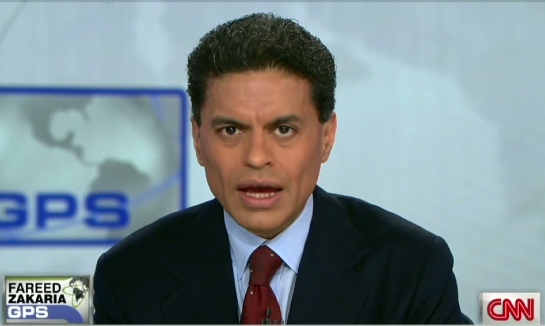
Fareed Zakaria of CNN has picked up on this narrative as well, based on the work of Professor Juan Linz of Yale. He introduced the topic in “Does America Need A Prime Minister?” on August 17th and then followed up on August 21 with “Prime Minister… of America?”  I agree with Zakaria and Linz in principle that parliamentarism produces more efficient and effective government that presidentialism, and that in a parliamentary system, the protracted debate on raising the debt ceiling would simply never happen because either the government would succeed in passing its legislation relatively quickly through parliament, or the House of Commons would withdraw its confidence in the government and force either a change of government or a fresh elections, putting the question to the people directly. Eugene Forsey explains this principle in How Canadians Govern Themselves more eloquently:

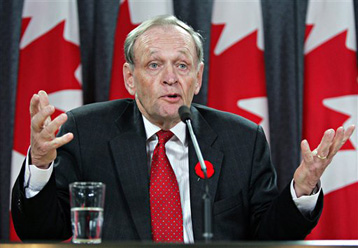
In the United States, president and Congress can be locked in fruitless combat for years on end. In Canada, the government and the House of Commons cannot be at odds for more than a few weeks at a time. If they differ on any matter of importance, then, promptly, there is either a new government or a new House of Commons.

An American president can be blocked by one house or both for years on end. A Canadian prime minister, blocked by the House of Commons, must either make way for a new
prime minister, or allow the people to elect a new House of Commons that will settle the matter, one way or another, within two or three months. That is real responsibility.

I also enjoy the novelty of an American who advocates in favour of parliamentarism. Judging by some of the xenophobic and overtly nationalistic comments on both of Zakaria’s posts, defending this position takes some courage in the United States!

However, in his analysis of parliamentarism, Zakaria made some crucial errors, such as the suggestion that “the executive controls the legislature”. In fact, the exact opposite is true. All parliamentary democracies (Westminster or otherwise) operate on the basic principle of responsible government, which recognizes parliamentary sovereignty by requiring that the government command the confidence of a majority of the House of Commons in order to govern. The government thus derives its legitimate authority to govern from parliament – parliament therefore controls the legislature.

Single-party majority governments tend to obscure this principle because a majority of the backbenchers sit on the government side and will, except in exceptional circumstances, support the government. But Parliament can even oust prime ministers leading single-party majority governments: British Prime Minister Thatcher faced a caucus revolt and resigned in 1990, as did Australian Prime Minister Kevin Rudd in 2010.

Judging by many of the comments on his blog posts, many Americans unknowingly have a time capsule of 18th-century Britain and George III in mind when they think of parliamentary government, before the entrenchment of responsible government, or an altogether incorrect view that parliamentary systems represent the tyranny of the majority and run roughshod over liberty.

Similar Posts

Posted in Parliamentarism v Presidentialism | 8 Comments

Fixed Elections in the Provinces, Part II


The list in Fixed Elections in the Provinces, Part I shows a clear trend toward the establishment of fixed-elections laws in Canada. British Columbia led the charge in 2001 and set the basic formula that all other provincial legislatures, and the federal parliament, would follow: the inclusion of a clause that preserves the crown prerogative on dissolution (and in BC and some other provinces, on prorogation as well), and the selection of a day (in BC, the second Tuesday in May) on which elections will be held every four years. All the provincial legislatures, and the federal parliament, chose to set the limit at four years, probably because prior to the introduction of the fixed-election laws, most first ministers leading majority governments would advise dissolution after 4 years rather than the written-constitutional limit of five years. Newfoundland and Labrador passed similar legislation in 2004, but added a provision that forces a new government formed within the same legislature to “seek its own mandate”, in the popular media parlance. In 2005, Ontario passed its fixed-elections law. Canada and New Brunswick passed their laws in 2007. Finally, in 2008, Saskatchewan, Manitoba, and Prince Edward Island all followed suit.

At the time of writing, only Alberta, Quebec, and Nova Scotia operate under the traditional system.

Saskatchewan

The Legislative Assembly and Executive Council Act, 2007 sets the rules for the fixed elections to the Legislative Assembly of Saskatchewan. This legislation takes a different approach than the British Columbian Constitution Act.

When general elections must be held

8.1(1) Unless a general election has been held earlier because of the dissolution of the Legislative Assembly, the first general election after the coming into force of this section must be held on Monday, November 7, 2011.

(2) Following the first general election held after the coming into force of this section, a general election must be held on the first Monday of November in the fourth calendar year after the last general election.

Prerogative of Crown not affected

8.2 Nothing in section 8 or 8.1 alters or abridges the power of the Crown to prorogue or dissolve the Legislative Assembly.

This legislation mandates fixed elections on the first Monday in November every four years; however, in an earlier section, the Act preserves the traditional constitutional limit of the life of a parliament of five years.

Duration

6 No Legislative Assembly is to continue for longer than five years from the date fixed for the return of the writs at a general election of members.

Section 6 is wholly redundant in light of section 8.1. Perhaps the Legislative Assembly forgot to repeal this section in 2008 when it amended to Act to include the fixed elections, or the Legislative Assembly could have left it as an additional safeguard, like a redundant deadbolt on a door. Section 8.2 preserves the powers of the “Crown” rather than those of the Lieutenant Governor, though this different wording ought to entail no legal implications.

Manitoba

Manitoba will undergo its first fixed election in October 2011 on the basis of section 49.1 of The Elections Act, and the first Tuesday in October every four years thereafter.

Powers of Lieutenant Governor preserved

49.1(1) Nothing in this section affects the powers of the Lieutenant Governor, including the power to dissolve the Legislature at the Lieutenant Governor’s discretion.

General election on first Tuesday in October

49.1(2) Subject to subsection (1),

(a) a general election must be held on Tuesday, October 4, 2011, unless a general election has been held between the coming into force of this section and October 3, 2011; and

(b) thereafter, a general election must be held on the first Tuesday in October in the fourth calendar year after election day for the last general election.

Prince Edward Island

The Legislative Assembly of Prince Edward Island amended its Elections Act in 2008 in order to accommodate the fixed elections.

4.1  (1) Nothing in this section affects the powers of the Lieutenant Governor, including the power to dissolve the Legislative Assembly, by proclamation in Her Majesty’s name, when the Lieutenant Governor sees fit.

(2) Subject to the powers of the Lieutenant Governor referred to in subsection (1),

(a) a general election shall be  held on Monday, October 3, 2011, unless a general election has been held, after the day in which this subsection comes into force and before Monday, October 3, 2011, because of a dissolution of the Legislative Assembly; and

(b) thereafter, general elections shall be held on the first Monday in October in the fourth calendar year following ordinary polling day in the most recent general election.

4.2 (1) Notwithstanding subsection 4.1(2), if the Chief Electoral Officer is of the opinion that a Monday that would otherwise be the date of ordinary polling day is not suitable for that purpose because it is a day of cultural or religious significance, or the day of a federal election, the

Chief Electoral Officer shall choose an alternate day in accordance with subsection (3) and recommend to the Lieutenant Governor in Council that ordinary polling day should be that alternate day.

(2) The Lieutenant Governor in Council may, on the recommendation of the Chief Electoral Officer pursuant to subsection (1), make an order changing the date of ordinary polling day to the alternate day recommended by the Chief Electoral Officer.

(3) The alternate day recommended under subsection (1) and set out in an order made under subsection (2) shall be one of the seven days following the Monday that would otherwise be ordinary polling day.

Prince Edward Island, like New Brunswick, included a provision that allows the fixed date to be changed in order to take into account a federal election. Of the four provinces (New Brunswick, Saskatchewan, Manitoba, and Prince Edward Island) that passed their fixed-election laws after Canada passed its fixed-election law in 2007, only the legislatures of New Brunswick and Prince Edward Island adopted provisions that allow the province to change its election date if it conflicts with the federal election. Any general provincial election should not overlap with a general federal election.

In the third and final instalment, I will analyse these laws and their effects on parliamentarism, and compare the Canadian approach to the British approach contained in the Fixed-Term Parliaments Bill.

Related Posts


Posted in Crown (Powers and Office), Dissolution, Fixed-Date Elections, Prime Minister's Powers | 4 Comments

Fixed Elections in the Provinces, Part I


Over the next few days, I will present and analyse the fixed-election laws in the provinces as a follow up to my post on section 56.1 of the Canada Elections Act and the early dissolution of 2008. The following provinces have passed legislation for fixed-elections. The Northwest Territories also passed legislation for fixed elections in 2006, but I’m only including the provinces in this analysis because they are sovereign in their jurisdiction and thus possess constitutionally separate legislative assemblies and lieutenant governors.

  • British Columbia, 2001
  • Newfoundland and Labrador, 2004
  • Ontario, 2005
  • New Brunswick, 2007
  • Saskatchewan, 2008
  • Prince Edward Island, 2008
  • Manitoba, 2008

Here are the next scheduled fixed elections in each of these provinces, in geographic order. This year, 2011, will see five provincial elections.

  • British Columbia: May 2013
  • Saskatchewan: 7 November 2011
  • Manitoba: 4 October 2011
  • Ontario:  6 October 2011
  • New Brunswick: September 2014
  • Prince Edward Island: 3 October 2011
  • Newfoundland and Labrador: 4 October 2011

The Campbell government in British Columbia set the trend of implementing fixed elections. All these provincial laws contain wording similar to section 56.1 of the federal law. I will examine each province’s law below. While each province follows the same general principle of inserting a clause that preserves the powers of the crown, they make interesting variations on the precise wording. This issue of fixed elections shows that in our federal system, the provinces are indeed the laboratories of policy experimentation!

I will cover the first four provinces that passed fixed-elections laws in this post, and the other three provinces in tomorrow’s post.

British Columbia

British Columbia placed its fixed-elections law in its provincial constitution. (So far, it is the only province to have formally established its provincial constitution in statute). Section 23 reads as follows:

(1) The Lieutenant Governor may, by proclamation in Her Majesty’s name, prorogue or dissolve the Legislative Assembly when the Lieutenant Governor sees fit.

(2) Subject to subsection (1), a general voting day must occur on May 17, 2005 and thereafter on the second Tuesday in May in the fourth calendar year following the general voting day for the most recently held general election.

The British Columbian legislation preserves the discretion of the Lieutenant Governor to dissolve parliament in order to ensure the constitutionality of the provision, just as the Canadian legislation preserves the discretion of the Governor General. British Columbia has since held two elections, both of which yielded majority parliaments. It thus reminds unclear how the premier would interpret section 23 in a minority parliament. In addition, there is rampant speculation that Christie Clark, who became premier in March 2011 two years into the current parliament, after the resignation of Gordon Campbell, will advise an early dissolution. If the premier were to request an early dissolution, it also remains unclear of the extent to which her action would prove controversial.

Newfoundland and Labrador

The Williams government amended the House of Assembly Act in 2004 in order to implement fixed elections every four years on the second Tuesday in October, starting in 2007.

Duration of House of Assembly

 3. (1) Notwithstanding subsection (2), the Lieutenant-Governor may, by proclamation in Her Majesty’s name, prorogue or dissolve the House of Assembly when the Lieutenant-Governor sees fit.

(2) A polling day at a general election shall be held on the second Tuesday in October, 2007 and afterward on the second Tuesday in October in the fourth calendar year following the polling day at the most recently held general election.

Election on change of Premier

3.1 Where the leader of the political party that forms the government resigns his or her position as leader and as Premier of the province before the end of the third year following the most recent general election, the person who is elected by the party to replace him or her as the leader of the party and who is sworn in as the Premier of the province by the Lieutenant-Governor shall, not later than 12 months afterward, provide advice to the Lieutenant-Governor that the House of Assembly be dissolved and a general election be held.

Section 3.1 of Newfoundland and Labrador’s law codifies the myth that we elect governments rather than parliaments. A premier who took office and formed a new government after the election due to the resignation or death of his or her predecessor must advise dissolution within 12 months, presumably in order to obtain “his or her own mandate”. This could result in another general election as early as one year into the life of a parliament. Premier Williams resigned in December 2010, and the next provincial election will take place in October 2011, so Premier Dunderdale does not need to invoke that rule. I don’t accept this argument that “they weren’t elected.” Kathy Dunderdale was elected (in Newfoundland’s case) as a Member of the House of Assembly in 2007, just as Danny Williams was. The Williams government and the Dunderdale government both commanded the confidence of the House of Assembly.

Ontario

The McGuinty government passed legislation to establish fixed-elections in 2005 under the Elections Act.

Four-Year Terms, General elections at four-year intervals

Powers of Lieutenant Governor

9.  (1)  Nothing in this section affects the powers of the Lieutenant Governor, including the power to dissolve the Legislature, by proclamation in Her Majesty’s name, when the Lieutenant Governor sees fit.

First Thursday in October

(2)  Subject to the powers of the Lieutenant Governor referred to in subsection (1), (a) a general election shall be held on Thursday, October 4, 2007, unless a general election has been held, after the day on which the Election Statute Law Amendment Act, 2005 receives Royal Assent and before October 4, 2007, because of a dissolution of the Legislature; and

(b) thereafter, general elections shall be held on the first Thursday in October in the fourth calendar year following polling day in the most recent general election.

I think that the headline of the legislation “Four-Year Terms” should read “Four-Year Parliaments”, because we elect parliaments, not premiers to serve out “terms” in office like presidents.

New Brunswick

The Legislative Assembly of New Brunswick incorporated its fixed-elections legislation into its Legislative Assembly Act, and much to my surprise, included far more detail than the equivalent fixed-election laws in the other provinces, along with some unique elements.

2(1) A Legislative Assembly of the Province shall not be affected by the demise of the Crown.

2(2) The present and every future Legislative Assembly shall continue until dissolved by the  Lieutenant- Governor.

2(3) Nothing in this section affects the power of the Lieutenant-Governor to prorogue or dissolve the Legislative Assembly at the Lieutenant-Governor’s discretion.

2(4) Subject to the power of the Lieutenant-Governor referred to in subsection (3), the Premier shall provide advice to the Lieutenant-Governor that the Legislative Assembly be dissolved and a provincial general election be held on the following dates:

(a)    on Monday, September 27, 2010; and

(b)   thereafter, on the fourth Monday in September in the fourth calendar year following the ordinary polling day for the most recently held provincial general election.

2(5) If the Premier is of the opinion that a Monday that would be an ordinary polling day under subsection (4) is not suitable for that purpose because it is in conflict with a day of cultural or religious significance or a federal election, the Premier may choose an alternative day in accordance with subsection (6) and shall provide advice to the Lieutenant-Governor that the provincial general election be held on that day.

2(6) The alternative day shall be one of the following:

(a) if the date of a provincial general election under subsection  (4) is not suitable because it is in conflict with a day of cultural or religious significance, the

Monday immediately preceding or immediately following the Monday that would otherwise be the day on which the provincial general election would be held; or

(b) if the date of a provincial general election under subsection  (4) is not suitable because it is in conflict with a federal election, the fourth Monday in August or the fourth Monday in October in the fourth calendar year following the ordinary polling day for the most recently held provincial general election.

New Brunswick’s legislation takes the interesting step of codifying the relationship between the Premier and the Lieutenant Governor in section 2(4), which states that the Premier advises the Lieutenant Governor to dissolve the Legislative Assembly; it also implies that the Lieutenant Governor must accept the Premier’s advice – at least when the Premier conforms to this fixed elections law. If the Premier advised dissolution early, the standard formula that preserves the Lieutenant Governor’s powers should preserve the relevant constitutional conventions. In addition, the Legislative Assembly of New Brunswick included an emergency provision whereby the provincial election can be held either one month earlier or one month later than the standard date if the latter conflicts with a federal election.

Related Posts

Posted in Crown (Powers and Office), Dissolution, Fixed-Date Elections, Prime Minister's Powers | 7 Comments

Flawed Republican Arguments Sadden One Canadian


Bob Hepburn of the Toronto Star expressed his dismay over the Harper government’s decision to restore the Royal designations to the Royal Canadian Air Force and the Royal Canadian Navy in his column Royal Return Saddens One Canadian. For the record, I wholeheartedly support the restoration of the Royal designations and agree with Defence Minister MacKay that it corrects the last vestige of Defence Minister Hellyer’s historic mistake from 1968 of collapsing the three separate branches of the Canadian Armed Forces into one entity. Paul Hellyer himself also wrote a column criticizing the decision, but unlike Hepburn, he made logical arguments and gave reasonable explanations on his opposition to the policy decision. Like many republicans, Hepburn based his arguments on incorrect, emotive statements that obscure the true nature of constitutional monarchy and the Commonwealth realms.

Hepburn made several arguments based on incorrect interpretations of constitutional monarchy and the constitutional arrangements of the Commonwealth Realms (i.e., Canada, Australia, New Zealand, and the other 12 former colonies that share the British sovereign as head of state). I know that he’s a republican, but he should do his readers the courtesy of basing his arguments against constitutional monarchy on accurate information. In that sense, his column saddens me.

Elizabeth I is the only Elizabeth to take the title of “Queen of England.” Her Majesty Queen Elizabeth II, however, is the Queen of the United Kingdom of Great Britain and Northern Ireland. Canada and the other Commonwealth realms in fact gained their independence in 1931 with the Statute of Westminster. Canada did not exercise the full extent of its independence with immediate effect, but constitutionally, Canada could have taken on all the trappings of independence in 1931: patriation of the constitution, appointment of Canadians as our governors general, the creation of a separate Canadian citizenship, the use of the Supreme Court of Canada as our final court of appeal, etc. The Statute of Westminster established the principle that henceforth, the former colonies, now independent, would now only be linked by the Crown. Queen Elizabeth II is therefore the Queen of the United Kingdom of Great Britain and Northern Ireland, and separately, the Queen of Canada, the Queen of Australia, the Queen of New Zealand, etc. The Royal designation of the Royal Canadian Navy and the Royal Canadian Air Force refer to the Queen Elizabeth II in her constitutionally distinct role as Queen of Canada.

Hepburn made two other incorrect arguments in particular, some of the typical refuges of republicanism.

“With this move, the Harper government is taking us back to a time that has long since ended, a time when Canada was part of the “British Empire” and when all parts of the country except Quebec was dominated by Anglo society.”

The Pearson government, under Minister of Defence Paul Hellyer, erased the distinction between the three branches of the Canadian Armed Forces and collapsed the Royal Canadian Air Force, the Canadian Army, and the Royal Canadian Navy into one entity – the Canadian Forces. Hellyer even forced the three former branches to adopt the same uniform. This policy entered into force in 1968 – long after Canada ceased to be a part of the British Empire that he so derides. The British Empire had disintegrated by 1968, and the Commonwealth of Nations came into being in 1949. The Harper government now in 2011 has corrected the Pearson government’s mistake by restoring the Royal designations to the Air Force and Navy.

“Maybe [Prime Minister Harper] just doesn’t care if he is insensitive to the millions of Canadians from Asia, Africa and elsewhere who have no historic ties to England.”

I find this republican argument particularly bizarre. (“England” should probably read “The United Kingdom” in that sentence as well). But more significantly, Hepburn is essentially trying to argue the following: “One must be white, and in particular, Anglo-Saxon, in order to support the monarchy. Therefore anyone who is not Anglo-Saxon should oppose it on principle because the Crown inherently excludes them.” The Crown of Canada knows no racial or ethnic distinctions and represents all Canadians, who can support the Crown proudly. Conversely and ironically, as someone with a thoroughly English name like Bob Hepburn demonstrates, even Canadians of British heritage can be republicans and oppose the Crown!

Related Posts

Posted in Monarchism v Republicanism | 11 Comments

Fixed Elections: Stephen Harper Did Not “Break His Own Law” in 2008


Historical Context of Fixed Elections in Canada

Admittedly, this controversy occurred three years ago and may no longer be as relevant, but many Canadians (even academics!) still remain confused (or harbour resentment) regarding Prime Minister Harper’s advice to dissolve the 39th Parliament of 7 September 2008. In short, PM Harper most certainly did not break his own law, as so many pundits and opposition MPs claimed at the time, though it is true that he did not conform to the spirit of the law. While courts may take into account parliamentary debate on how the law ought to be applied, that debate on a law cannot supersede the text of the law itself.

Two Early Dissolutions: “A Proof Is A Proof”

The Reform Party proposed in its platform in 1993: “If elected, a Reform Government will enact legislation to ensure that elections are held every four years at a predetermined time of the year. If a government were defeated in the House such that an election would be called immediately, the date of the subsequent election would be four years from the predetermined time of the year following the election.” In addition to the Reform Party’s long-standing goal, many Conservative MPs had long resented that Prime Minister Chretien requested early dissolutions in both 1997 and 2000, both only three and one-half years into the respective parliaments, for political advantage and therefore sought with great zeal to restrain this virtual prime ministerial prerogative. I for once fully support the constitutional rationale of both of these dissolutions: the Chretien government, in both cases, commanded the confidence of the majority of the House of Commons with a Liberal majority government, so clearly no alternative government could have been formed in either parliament. Indeed, this Chretien government’s command of confidence of the House in both instances bound by constitutional convention the governor general to carry out the advice to dissolve. While I believe that the governor general’s reserve powers still apply to dissolution, in no way did the dissolutions of 1997 and 2000 meet the threshold of “most exceptional circumstances” in which a governor general could legitimately reject a prime minister’s advice. Being mean to Preston Manning and Stockwell Day don’t count. Even if a prime minister led only a minority government, when he obviously commands the confidence of the House and requests dissolution after 12 months or more into the life of the parliament, I see no constitutional argument against the advice to dissolve. (I’ll write more on this issue of the reserve powers and dissolution later, and the spectrum of academic interpretations on the matter.)

The Law Itself

The Harper government’s amendment to the Canada Elections Act responded to this context of a powerful prime minister in a majority parliament, in which the prime minister alone wields effective control of the timing of dissolution, in contrast to a hung parliament, where the House could withdraw its confidence at any time. During the 39th Parliament, the Harper government introduced a bill to amend the Canada Elections Act in order to provide for fixed elections on the third Monday in October every four years after the previous election. The bill passed. Section 56.1, however, preserves the governor general’s powers on dissolution, because any change to the offices of the queen or governor general requires the unanimous consent of all provincial legislatures and the federal parliament, as per the Constitution Act, 1982.  It says: “Nothing in this section affects the powers of the Governor General, including the power to dissolve Parliament at the Governor General’s discretion.” The constitutional conventions of responsible government mean that the prime minister alone advises the governor general on summoning, proroguing, and dissolving parliament, and that powers essentially reside with him. While the governor general retains some personal discretion in the form of the reserve powers on dissolution (though not on the summoning and prorogation of parliament), the exercise of the reserve powers to reject a prime minister’s advice to dissolve is distinct from the initial proffering of that advice. The governor general absolutely cannot independently dissolve parliament without any input from the prime minister or cabinet because William III relinquished the independent royal power on dissolution in 1694 as part of Westminster’s consolidation of the Glorious Revolution and the modern constitutional settlement. Therefore, the insertion of this language into the Canada Elections Act, though necessary in order to avoid constitutional problems, rendered the fixed-elections provisions almost useless: these provisions limit only the power of a prime minister who feels morally or politically bound to follow them, rather than limiting the powers of the offices of prime minister or governor general.

Stephen Harper Calgary StampedeIn a majority parliament, most prime ministers would abide by section 56 of the Canada Elections Act, particularly because political expediency would compel them to follow it; however, the political considerations of a minority parliament are altogether different, focussing on the short-term and the tactical, and the inherent difficulty of passing government legislation. Harper himself even retroactively stated that section 56.1 only worked properly in a majority parliament, and he thought that he was merely pre-empting a withdrawal of confidence that would likely have taken place in the fall of 2008. When Prime Minister Harper advised Governor General Michaelle Jean to dissolve the 39th Parliament on 7 September 2008, for the election to occur on 14 October 2008, the Harper government indisputably commanded the confidence of the House of Commons. The conventions of responsible government stipulate that when a prime minister’s government commands the confidence of the House of Commons, the governor general must carry out his advice, because the reserve powers that allow the governor general to reject prime ministerial advice only apply when the government has lost the formal confidence of the House, or under other “exceptional circumstances”. That Harper acted in bad faith or broke the spirit of section 56, or even contradicted some of his own statements in the House, most certainly did not meet the threshold of most exceptional circumstances; therefore, the governor general was bound to carry out the prime minister’s advice.

Issues to Consider

The Fixed-Term Parliaments Bill currently before Westminster, and fixed elections in Canada and the provinces will make the issue remain pertinent in the UK and Canada for a while yet. (The British bill proposes a much more radical approach, however. More on that later). Incidentally, the Canadian terminology of “fixed elections” differs from the British “fixed parliaments” and reveals a significant difference of focus. I prefer the British term because it implicitly acknowledges that ultimately the House of Commons provides the government its legitimate authority to govern, and once the term of the parliament expires by the “efflux of time” (the formal, legal term) after five years. In contrast, the Canadian idea of “fixed elections” draws attention to the government and the prime minister’s role in advising the governor general to dissolve parliament; the term probably comes from the influence of the American system and its fixed biannual and quadrennial elections.

I find the nature of this law unusual. As I mentioned above, section 56 only limits the prerogative powers of a prime minister who considers the provision binding, because it clearly avoids changing the powers of the governor general in order to avoid a constitutional amendment. But therein lies the problem: section 56 attempts to alter an aspect of crown prerogative so fundamental that any real, binding change would necessitate a constitutional amendment. This new provision could not open up the constitution. So in effect, section 56 as a law attempts to force the establishment of a new constitutional convention, whereby the prime minister would only advise dissolution if the House of Commons withdrew its confidence in his government. But can law create convention? Certainly, conventions can develop in order to fill gaps in or act as political interpretations of law. But a law cannot establish a convention per se, for conventions by nature are unwritten; any convention written into statute ceases to be convention and becomes codified.

In general, I’m undecided on the normative value and desirability of fixed elections. On the one hand, they bring stability under majority parliaments and can establish a reliable periodicity. But on the other hand, minority parliament exposes the significant shortcomings of the Canadian model of fixed elections and that they make a mockery of responsible government – that the House of Commons empowers the government to govern – and seem like an inappropriate attempt to graft American methods onto the Westminster system. For instance, Canadians often incorrectly talk of prime ministers and premiers seeking “a second term” or a “third term.” Nonsense! Dalton McGuinty of Ontario is not seeking a “third term” as Premier of Ontario, but rather a third consecutive parliament in which the Liberals hold a majority of seats. Canada is now on its 40th Parliament but only its 28th ministry, as this webpage of the Privy Council Office shows, precisely because a prime minister’s “term” in fact refers to the number of consecutive years of presiding over cabinet as prime minister. Prime Minister Trudeau served two terms as Prime Minister, 1968 to 1979 and then 1980 to 1984, despite leading the Liberal party to five electoral victories. Prime Minister Harper has served only one “term” but through three parliaments. So in my future posts, I will use the more accurate British parlance.

And here’s something to ponder: if Ontarians elect another majority government this fall 2011, then the next provincial election will coincide with the next federal election in October 2015. What would happen then? Surely, Canada and Ontario can’t hold their election campaigns simultaneously.

Related Posts:

Posted in Crown (Powers and Office), Dissolution, Fixed-Date Elections, Prime Minister's Powers | 12 Comments