The History of Senate Reform, 1867 to 1913


I reviewed the political philosophical debate on the merits of the elective versus appointive upper house, and the elective Legislative Council in the earlier post. We’re all generally familiar with the modern proposals for Senate Reform (post-1980), essentially the “Triple-E Senate,” so here I’ll describe the little-known proposals for Senate reform from the 19th century and early 20th century in order to demonstrate that Senate reform has been a fixture in Canadian politics since our Confederation in 1867. Of course, none of these proposals proved successful, but I find the debate instructive; it shows the inherently imperfection of the theory of the balanced constitution that Ajzenstat and Smith discussed in their scholarship. The philosophic disagreements had crystallized before Confederation, and they have continued to manifest themselves as different institutional arrangements.

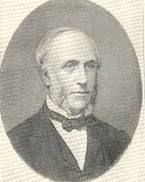
At the Quebec Conference, two prominent Clear Grits (sometimes called “Canada West Reformers”) supported an elected Senate: William McDougall and Oliver Mowat.[i] Both cut their political teeth in the 1840s as partisans of the movement toward responsible government in Upper Canada, and Mowat served as Premier of Ontario from 1872 to 1896 and consistently championed provincial rights and decentralized federalism – much to the frustration of his former mentor Sir John A. Macdonald.

On 12 April 1874, David Mills, MP submitted a resolution on reforming the senate such that the provincial legislatures would appoint senators.  It did not call for a re-evaluation of the number of senators representing each province, nor did it question the equality of the regions as opposed to the provinces. By empowering each province to adopt its own procedure, it respected their differences. Even under Mackenzie’s new Liberal government, the proposal fell flat and the issue of senate reform did not reappear in the federal parliament for over thirty years. David Mills clearly rejected the philosophy of the balanced constitution, which created the Senate specifically in order be independent of the crown and of the people.

That the present mode of constituting the Senate is inconsistent with the Federal principle in our system of government, makes the Senate alike independent of the people, and of the crown, and is in other material respects defective, and our Constitution ought to be so amended as to confer upon each Province the power of selecting its own Senators, and to defining the mode of their election.[ii]

On 30 April 1906, Mr. McIntyre, MP for Perth put forward a motion that prescribed changes far less radical than those of Mills. While he invoked “the spirit of representative and popular government”, he did not call for the election of senators, merely the curtailing of their power by limited their appointments to a maximum of fifteen years, or the mandatory retirement age of 80. The Harper government took on the idea of limiting the tenure of senators in the 39th Parliament, and the Pearson government successfully fixed the retirement age at 75. McIntyre also rejects the theory of the balanced constitution.

That, in the opinion of this House, the Constitution of the Senate should be brought into greater accord with the spirit of representative and popular government, and the genius of the Canadian people, by Amendments in future appointments:

1. Abolish the life tenure of Senators.
2. Limit the tenure of one appointment to within the legal term of three Parliaments.
3. Provide a fixed age, not exceeding eighty years, for compulsory retirement.[iii]

In 1909, Mr. Lancaster, MP for Lincoln, advocated outright abolition of the Senate because he believed that the upper house derogated from the principle of responsible government in the lower house and thus threatened Westminster principles and the prerogative of the Crown. Lancaster thus considered any notion of a federal principle deleterious to and incompatible with responsible government.  The New Democratic Party takes a similar position today.

that a Humble Address be presented to His Majesty declaring that the Senate is no longer required or advisable for the carrying on of responsible government in Canada, or a safeguard of His Majesty’s full rights and prerogatives, and that the abolition of the said Senate would greatly conduce to the welfare of the Dominion of Canada, and promote the interests of the British Empire.[iv]

In 1909 Senator Sir Richard Scott introduced a motion on Senate reform that would have hybridized the senate by retaining the Crown prerogative of appointment for one-third of the senators, while electing two-thirds of them and limiting all terms to seven years.

1. That in the opinion of the Senate the time has arrived for so amending the Constitution of this branch of Parliament as to bring the modes of selection of Senators more into harmony with public opinion.
2.That the introduction of an elective element, applying it approximately to two-thirds of the number of Senators, would bring the Senate more into harmony with the principles of popular government than the present system of appointing the entire body of the Senators by Crown for life.
3. That the term for which a Senator may be elected or appointed be limited to seven years.[v]

In the Liberal-Conservative platform of 1908, Borden pledged, under the heading “Reform of the Senate” to implementing “Such reform in the mode of selecting members of the Senate as will make the Chamber a more useful and representative legislative body.”[vi]  The Halifax Platform continued:

those who have watched with any care the work of our Senate in recent years must be convinced that it is not playing the part which was intended by the framers of our Constitution.  There seems to be little sense of individual responsibility, little desire to grapple with public questions, little disposition for effective work, but intense inclination, and indeed resolve, to make its sittings as infrequent and as brief as the barest decency will permit.[vii]

Apart from the more poetic language, Borden’s statement could have come from a more contemporary politician. Many Canadians today would recognise that kind of description of the senate, which shows that so little has changed after one hundred years.  Laurier held the prime ministership from 1896 to 1911, so by the time that Borden took office, most of the senators were Liberals and therefore naturally inclined to oppose Borden’s program.  “On 11 June 1914, Borden introduced legislation for the new Western Senate section” that would have created a new western region and accorded it 24 seats.

The Liberal-dominated Senate, however, […] returned the legislation with an amendment providing that ‘this Act shall not take effect until the termination of the now-existing Canadian Parliament’ […][viii]

After the senate rejected his legislation, Borden was considering requesting dissolution and would have included this plebiscitary question in the election:

Since 1867 the evolution and development of Federal systems both with the British Empire [referring to Australia, which federated in 1901] and in foreign countries has strongly tended in the direction of the election of members of the Upper House instead of appointment thereto by the Executive. Are you in favour of abolishing the Senate of Canada as at present constituted and substituting therefor a Senate elected by the people?[ix]

The outbreak of the First World War halted all further discussion of the issue and prevented an early dissolution and the holding of this proposed referendum.

Mills, McIntyre, Lancaster and Scott all agreed on the basic idea that the Senate had become independent of “popular government”. Indeed, they were right, because the Framers designed the Senate as entirely separate from “popular government” or “responsible government” because they believed that two elective chambers would come into conflict. Smith would probably suggest that all of them failed to consider the Senate in bicameral perspective, in other words, its relationship to the House of Commons within the Crown-in-Parliament. This is why reform of the upper house ought to both introduce election and curtail the Senate’s formal powers so that it is clearly subordinate to the House of Commons and acts primarily as a house of review.

Related Posts:

[i] Ibidum, 70.
[ii]
Sir George Ross, The Senate of Canada: Its Constitution, Powers and Duties Historically Considered. (Toronto: The Copp-Clark Co. Ltd., 1914), 91.
[iii]
Ibidum, 92-93.
[iv]
Ibidum, 94.
[v]
Ibidum, 94-95.
[vi]
D. Owen Carrigan.  Canadian Party Platforms, 1867-1968.  (Toronto: Copp-Clark Publishing Company, 1968): 51.
[vii]
Ibidum, 54.
[viii]
White, 1990, 110.
[ix]
White, The Voice of Region, 110.
Posted in Responsible Government, Senate Reform | 4 Comments

Paul Dewar Dodged My Question on Section 52 and Over-Representation of Quebec


The Canadian Study of Parliament Group held its fall business seminar earlier today on the “Democratic Reform Agenda“, and the second panel discussion featured Professor of Law and former Minister of Intergovernmental Affairs of Quebec, Benoit Pelletier; former Liberal cabinet minister and the second Liberal leader since Edward Blake who never became Prime Minister, Stephane Dion; and Paul Dewar, MP for Ottawa Center and candidate for the leadership of the New Democratic Party.

The panel discussed the talking points of Minister of State for Democratic Reform Tim Uppal with respect to the Harper government’s agenda on democratic reforms of the Senate and House of Commons. Uppal confirmed that the Harper government will indeed soon reintroduce Bill C-12 from the last parliament in its original form.

After the panellists finished talking points, I asked Paul Dewar and, as a Professor of Law, Benoit Pelletier, about the constitutionality of the New Democrats’ and Pelletier’s idea that Quebec receive more seats than its population warrants. I said something to the effect: “James Bowden, University of Ottawa. I’m directing this question primarily at MM Pelletier and Dewar. The Harper government introduced legislation in the last parliament that would amend Section 51 of the Constitution Act, 1867 and the formula by which seats in the House of Commons are allocated. But let’s look at Section 52 as well. It says that ‘The Number of Members of the House of Commons may be from Time to Time increased by the Parliament of Canada, provided the proportionate Representation of the Provinces prescribed by this Act is not thereby disturbed.’ Proportionate representation means of course representation by population. Wouldn’t the New Democrats’ current proposal that Quebec receive additional seats that its population does not warrant ‘disturb’ the principle of rep by pop and therefore be unconstitutional?”

Paul Dewar dodged the specific question on section 52; however, he still revealed some interesting information in his response. He replied that the New Democrats are preparing counter-legislation that would recognize Quebec’s cultural distinctiveness as a nation by rewarding the province with a fixed proportion of 24% of the seats in the House of Commons. The idea of awarding Quebec one or two extra seats once might withstand a legal challenge in the courts with respect to section 52, because, as Benoit Pelletier pointed out, Canada has never followed representation by population strictly. However, legislation that would fix a specific proportion of seats in the House of Commons would clearly “disturb” the principle of representation by population that Section 52 enshrines. And Section 42 of the Constitution Act, 1982 (the general amending formula) stipulates that any legislation that alters “the principle of proportionate representation of the provinces in the House of Commons prescribed by the Constitution of Canada” must receive the support of at least 7 provincial legislatures representing 50% of the population. But as Stephane Dion pointed out to me, the Regional Veto Act, 1996 that Chretien devised in order to appease Quebec after the referendum has practically rendered the general 7/50 amending formula into the unanimity formula. In other words, our constitution has become virtually impossible to amend – and Paul Dewar`s bill must necessarily be presented as a constitutional amendment.

Benoit Pelletier further argued that because section 51A of the Constitution Act, 1867 codifies the Senate Floor Rule (which states that a province shall not possess fewer seats in the House of Commons than it does in the Senate) and because provinces don’t lose seats, Canada has never followed strict representation by population. This is true — however, Pelletier is ignoring the obvious counter-point: these provisions that explicitly “disturb” the principle of rep by pop are only constitutional because they appear as constitutional amendments. In other words, the New Democrats’ proposal will remain unconstitutional unless it becomes an amendment to Section 52. And in order to become an amendment to Section 52, the federal parliament and at least 7 provincial legislatures representing 50% of the population must pass identical legislation. This will never happen! I can guarantee Pelletier and Dewar that none of the Western provinces will ever allow Quebec to retain 24% of the seats in the House of Commons in perpetuity. The Charlottetown Accord would have codified this principle (with a fixed proportion at 25%), but Canadians rejected it in a national referendum in 1992.

Paul Dewar criticized the Conservatives for taking the electorate for fools. In reality, it is the New Democrats who take us all for fools: they’ve assimilated the mythology of Quebecois nationalism that fixates on Quebec as the humiliated victim of the federation and then sing siren songs of enshrining Quebec’s nationhood into the constitution as if they wouldn`t need to follow an amending formula and obey the Constitution of Canada. I expected that Paul Dewar, as a leadership candidate from Ontario, would have sought to differentiate himself from Brian Topp by taking a principled stance against the Quebec nationalist ethos that has now taken over the New Democratic Party. But I was wrong. The New Democrats` transformation to Le nouveau bloc quebecois is complete.

Related Posts:

Posted in Electoral Boundaries Readjustments | 7 Comments

From Leader to Laggard in Elective Upper Houses: Canada’s Elective Legislative Council, 1856-1867


Introduction

Most Canadians are probably unaware that for a brief period in our history, the upper house in the United Province of Canada (called a Legislative Council) was making the transition from an appointive chamber to an elective one, between 1856 and 1867. Even though this elective innovation first started several years after the entrenchment of responsible government, the Fathers of Confederation abandoned the elective principle and reverted to the appointive upper house in the Senate of Canada. Canada thus became the first English-speaking country to entrench an elective upper chamber – long before the Australian colonies federated in 1901, and long before the Americans converted their Senate into an elective chamber in 1913. Where once Canada led, it now lags behind. I will explore the political philosophy and debates surrounding the upper chamber in our Confederation Debates and identify the various political groupings and their positions on the subject and conclude with some plans for reforming the Senate of Canada.

The “Balanced Constitution” of Pluralist Liberal Constitutionalism

Contrary to popular belief in Canada, our Framers were no mere political operators devoid of political philosophy and principle.[i] Our Framers derived their political philosophy from the Enlightenment, the American Framers, various British thinkers like J.S. Mill, and British political history. The British devised in the 1790s a colonial replica of the tripartite Crown-in-Parliament in a new form of representative government: the House of Assembly, Legislative Council, and the Governor-in-Council, the Crown’s representative.[ii] The British implemented this model in the Constitutional Act, 1791 that repealed parts of the Quebec Act, 1774 by splitting Quebec into Upper Canada (Ontario) and Lower Canada (Quebec). Like Ajzenstat, Smith also attributes this tripartite arrangement of the Crown-in-Parliament to the “theory of a balanced constitution.”[iii]

The Canadians Framers founded a system of liberal constitutionalism premised on the Whiggish idea of a “balanced constitution”; they also reconciled constitutional monarchy and federalism for the first time, which the Australians later replicated (though in a different form) thirty years later.[iv] Ajzenstat defends the Framer’s decision on an appointive Senate along largely the same lines as Smith: “a majority vote in both houses detracts from responsible government. It muddles the accountability of government to the peoples’ representatives in the executive branch.”[v] Parliamentarism in the 19th existed in a state of flux, and Ajzenstat demonstrates that the Framers favoured a balanced constitution in which the Crown, Senate, and House all acted as checks and balances on each other.[vi] We often think of this concept of government as “checks and balances” as inherently American; while the American separation of powers best exemplifies this idea today, we should remember that the American Framers drew upon a wealth of British parliamentary precedent in the era of representative era (before responsible government) and Enlightenment philosophy. One delegate at the Charlottetown Conference, James Ross, spoke of the “three branches of the legislature”: the Crown (the monarchical branch), Senate (the aristocratic house), and House (the democratic house).[vii] John George Bourinot, who wrote the first manual on the procedure and practice of the Canadian House of Commons in 1884 Parliamentary Procedure and Practice, also sometimes referred to the Crown-in-Parliament as “branches.” The Framers intended that the Senate would act as a check on the Crown (the cabinet) and the House of Commons if the cabinet tried to “silence dissent and suppress minorities” through its majority in the House of Commons.[viii] This refers to political minorities, as in the institutionalized parliamentary opposition, which represents the electorate who voted against the party in power. Ajzenstat concludes that “bicameralism protects liberal democracy and that bicameralism is therefore more democratic than unicameralism.”[ix]

The Elective Legislative Council

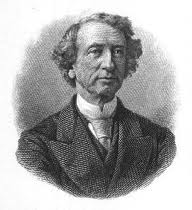
John A. Macdonald

While the Senate would function as an aristocratic check on the popular lower house, by the mid-19th century, all the British North Americans accepted the relative egalitarianism of the colonies and rejected the notion that the Senate would turn into a hereditary chamber like the House of Lords. Macdonald himself argued that the Senators would be like the elected Members of Parliament, “men of the people, and from the people.”[x] The property qualification has become almost irrelevant today, but even at the time, Ajzenstat explains that the “property qualification and […] appointment for life were meant to render the Upper House independent of the Crown” and of the lower house.[xi] The Senate figured prominently in the Confederation Debates. The Legislative Council of the United Province of Canada started the transition toward an elective chamber in 1856, though by 1867 it still had not completed its transformation; Prince Edward Island had also adopted an elective Legislative Council in 1862. Where once Canada led, Canada lagged behind the rest of the core Commonwealth after Confederation and ceded the pioneering elective principle to Australia. Despite having overlapped with responsible government for a decade, the moderate Liberals and Tories, led by George Brown and John A. Macdonald, respectively, supported an appointive upper house in order to avoid competing democratic mandates and the threat that deadlock between the two houses would pose to responsible government in the new federal system.[xii] The Clear Grits supported an elective upper house on democratic principle; curiously, the ultra-Tories also supported an elective upper house – precisely because they agreed with the moderate Liberals that it would create a powerful rival to responsible government.[xiii]

Macdonald originally favoured the elected Legislative Council, which consisted of 24 constituencies in Upper and Lower Canada. Similar to the staggered nominations in the American Senate of the day, “Each constituency elected one member every eight years and elections occurred in one-quarter of the constituencies every two years.”[xiv] Macdonald, however, saw the necessity of compromise, and the Lower Canadian Bleus and the Upper Canadian moderate Reformers opposed continuing the elective chamber. Macdonald thus damned the elective legislative council with faint praise in order to save face:

“The arguments for an elective council are numerous and strong; and I ought to say, as one of the administration responsible for introducing the elective principle into Canada. I hold that this principle has not been a failure in Canada; but there were causes – which we did not take into consideration at the time – why it did not so fully succeed in Canada as we had expected.”[xv]

George Brown argued against the elective Legislative Council because he feared that it would rival the lower house and attempt to block supply:

“Who will venture to affirm that the council would not cliam that power over money bills which this house claims of right belong to itself? Could they not just say that they represent the people as well as we do, and that the control of the purse strings ought, therefore, to belong to them as much as to us? […] What is to prevent a deadlock of the chambers? […] They might amend our money bills, they might throw out all our bills if they liked, and bring to a stop the whole machinery of government. And what would be done to prevent them?”[xvi]

George Brown

Brown attributes the failure of the elective Legislative Council to the difficulty in fielding candidates for election, and in the sheer size of its constituencies; the Legislative Councillors had to travel over vast distances at great personal expense. [xvii] But Brown’s next statement still leaves the fundamental question that I pose later unanswered and even more unclear: why, if the elective Legislative Council would have acted as a check against the Crown before the establishment of responsible government in 1848 did the Canadians not implemented the elective Legislative Council until six years after the achievement of responsible government? The chronology of the implement of the elective upper house simply does not support the position of the moderate Liberals and Tories that an elective chamber inherently threatened responsible government. Brown continues:

“When the change [toward an elective upper house] was made in 1855, there was not a single petition from the people asking for it. The real reason for the change was that before responsible government was introduced into this country, […] the upper house continuously and systematically was at war with the popular branch and threw out every measure of liberal tendency.”[xviii]

Curiously, both Macdonald and Brown supported an appointive Senate precisely because they thought that the presence of only one elective house would prevent legislative deadlock between the houses. Yet the Framers conferred equal legislative powers upon the Senate (apart from the introduction of money bills, as per ancient British custom). I can only conclude that the Frames intended that by convention, the Senate would restraint its legal powers and exercise them only in exceptional circumstances.

Canadian scholars place 1848 as the year in which the United Province of Canada achieved responsible government, yet the Canadian government did not introduce direct popular election to the Legislative Council until 1856, six years after the entrenchment of responsible government. So if the moderate Liberals and Tories both feared an elective upper chamber’s potential to interfere with the practice of responsible government, why did they introduce direct popular election to the Legislative Council after attaining responsible government? Logically, if they feared the consequences of strong bicameralism and two co-equal houses on responsible government, would that not imply that the Legislative Council became elective before the entrenchment of responsible government? Given that the radical republican reforms like Papineau and Mackenzie advocated an elective upper chamber in the 1830s, the moderate Liberals and Tories surely could have anticipated this criticism in the 1840s and 1850s. In any case, Smith states that the gradual phrasing in of election to the Legislative Council (as the appointed members died or resigned) started in 1856 but had not been completed by 1867.[xix] These questions require further research on my part.

Considerations With Respect To Reform  

Bicameralism presents a democratic conundrum in the Westminster system. On the one hand, an elective upper house threatens to challenge the lower house for democratic supremacy, and on the other, an appointive chamber lacks democratic legitimacy altogether. Further still, if the Senate of Canada were elective but its powers substantially limited to, say, the powers of the House of Lords as per the Parliament Acts, 1911 and 1949, then some would call the very existence of the chamber into question. Having taken into account the legitimate arguments and concerns of those academics in favour of an appointive Senate, I no longer subscribe to the unalloyed “Triple-E Senate” of the Reform Party: the direct election of an equal number of Senators from each province, who provide an effective check on the House of Commons. First, the American Senate is no longer and the Australian Senate never was a “States’ House” within a federal system, so the idea that Canadian Senators would function as provincial ambassadors in the Senate of Canada simply because of their election and their equal numbers does not hold up the scrutiny. Second, federal Senators should not function as provincial representatives in any case, because the provincial governments and the federalized cabinet fulfill this function.

In addition, equal provincial representation is not practical in Canada, given its disparity in population and because Canada is, as Smith repeats in all his books, a “double federation” of provinces and two founding nations. The province of Quebec in particular will never accept equal representation of the provinces. Rejean Pelletier, a constitutional scholar at L’Universite Laval, rejects the Albertan-Reform proposal of equality of representation for all the provinces and that the notion that “Quebec is a province like any other” because they “do not take into account the very pronounced numerical imbalance between the Canadian provinces.[xx] In addition, Pelletier argues that “it does not take into account the significance of the relative weight of the most populous federated entity in the country as a whole.  Ontario represents about 40% of the Canadian population; California, 12% of the American population; and North Rhineland-Westphalia, about 22% of the German population.”[xxi]  Finally, Pelletier invokes the nationalist argument to which the Government of Canada lent credence in 2006 in recognising that “Quebeckers form a nation within a united Canada”.  He contends that “since Quebeckers form a nation within Canada”, “it is unacceptable that Quebec would only have a right to 10% of the Senators.”[xxii] Aaron Hynes devised a “rational redistribution” of the seats in the Senate on a model that accepts provincial inequality as well.[xxiii]

Conclusion

Ultimately, I would prefer an elective Senate possessing powers similar to those of the current House of Lords so that it would act primarily as a house of review, but not as an obstruction and constitutional threat to responsible government, and certainly not as a house of the provinces. The proponents of the current appointive Senate, and George Brown before them, raise valid concerns about the threat of deadlock between two elective chambers. That is why I support an elective senate limited, like the House of Lords, to a suspensive veto over money bills. The Australian Senate precipitated a significant constitutional crisis in 1975 precisely because it wields too much power over supply bills. The combination of an election, like the Australian Senate with powers limited to a suspensive veto and delay, like the British House of Lords, would result in a true house of review that could provide a healthy check on governments (which necessarily derive from the lower house) without becoming a de facto confidence chamber. I agree with George Brown that the use of single-member plurality as the method of election in the upper chamber poses its own set of challenges and redundancies in the larger size of the constituencies. The Australians addressed this problematic redundancy by changing the electoral system of their Senate to proportional representation within each state, which ensures that the partisan composition in the Senate differs from that in the House of Commons, thus strengthening its capacity as a house of review. This elective upper chamber would become a respected, measured, democratically legitimate addition to the Crown-in-Parliament.

Related Posts:


[i] Janet Ajzenstat, “Confederation and Individual Liberty,” Macdonald-Laurier Institute: Canada’s Founding Ideas (November 2010): 1-20.
[ii]
Smith, The Canadian Senate in Bicameral Perspective, 16.
[iii]
Smith, The Canadian Senate in Bicameral Perspective, 16.
[iv]
Ibid; See Janet Ajzenstat and Peter J. Smith, Canada’s Origins: Liberal, Tory, or Republican? (Ottawa: Carleton University Press, 1995).
[v]
Janet Ajzenstat, “Bicameralism and Canada’s Founders: The Origins of the Canadian Senate,” in Protecting Canadian Democracy: The Senate You Never Knew, ed. Serge Joyal (Toronto: University of Toronto Press, 2003): 3.
[vi]
Ajzenstat, “Bicameralism and Canada’s Founders: The Origins of the Canadian Senate,” 4-6.
[vii]
Ajzenstat, “Bicameralism and Canada’s Founders: The Origins of the Canadian Senate,” 5.
[viii]
Ajzenstat, “Bicameralism and Canada’s Founders: The Origins of the Canadian Senate,” 4-6.
[ix]
Ajzenstat, “Bicameralism and Canada’s Founders: The Origins of the Canadian Senate,” 4.
[x]
Ajzenstat, “Bicameralism and Canada’s Founders: The Origins of the Canadian Senate,” 10.
[xi]
Ajzenstat, “Bicameralism and Canada’s Founders: The Origins of the Canadian Senate,” 11.
[xii]
Ajzenstat, “Bicameralism and Canada’s Founders: The Origins of the Canadian Senate,” 12; Christopher Moore, 1867: How the Fathers Made A Deal, 107-113.
[xiii]
Ibid.
[xiv]
Janet Ajzenstat, Canada’s Founding Debates (Toronto: Toronto University Press, 1999): 78-79.
[xv]
Janet Ajzenstat, Canada’s Founding Debates (Toronto: Toronto University Press, 1999): 78-79.
[xvi]
Janet Ajzenstat, Canada’s Founding Debates (Toronto: Toronto University Press, 1999): 84-85.
[xvii]
Janet Ajzenstat, Canada’s Founding Debates (Toronto: Toronto University Press, 1999): 85.
[xviii]
Janet Ajzenstat, Canada’s Founding Debates (Toronto: Toronto University Press, 1999): 86.
[xix]
Smith, The Canadian Senate in Bicameral Perspective, 17.
[xx]
Réjean Pelletier, Le Québec et le fédéralisme canadien : un regard critique. (Québec : Les presses de l’Université Laval, 2008) : 190.
[xxi]
Ibid
[xxii]
Ibid
[xxiii]
Aaron Hynes, “Toward a Rational Redistribtution of Seats in Canada’s Senate,” Canadian Parliamentary Review 33, no. 4 (Winter 2010): 27-31.

Posted in Responsible Government, Senate Reform, Separation of Powers | 4 Comments

British Question Time Better Supports Parliament’s Core Function Than Canadian Question Period


Introduction

On September 21, 2010, I attended the Canadian Study of Parliament Group’s Fall Seminar on Question Period Reform. The event included two panels and Speaker Milliken, Michael Chong, and C.E.S. Franks as guest speakers. The Public Policy Forum held an event on the same subject the week before but doesn’t seem to have produced anything substantial.

Michael Chong first introduced a motion in the 40th Parliament aimed at changing the format of the daily Oral Questions, or Question Period (QP). The motion died upon dissolution, and the papers reported earlier this week that Chong will re-introduce the motion in the current 41st Parliament. Even though this conference took place last year, I still insist on blogging about it, a) because I didn’t create Parliamentum until this past summer but would have blogged about the event at the time, and b) because the topic is still pertinent to the 41st Parliament and the general discussion. I will summarize the salient points of each presentation. As I mentioned in “The Myth of Civility and Decorum in the British House of Commons”, I consider the issues of civility in parliament and the effectiveness of Question Period separate.

Speaker Milliken   

Speaker Milliken tried to assure that debate in Question Period remains civil and takes place at a normal volume.  However, he explained, participation in QP is determined by the caucuses and their whips.  During the 1970s, the Speaker began using a list in an attempt to bring order to the House, based on a pre-arranged agreement between the whips and house leaders; these negotiations do not involve the Speaker of the House. Milliken claimed that he “follow the list vigorously” during his tenure as Speaker. I would argue that herein lies the problem: the whips and front benches control QP for the purpose of party as opposed to backbenchers as advocates of their constituents’ concerns and legitimate questions posed to ministers that support parliament’s core function: holding cabinet to account on expenditures. Milliken explained that in 1997, the House decided to limit the questions and answers to 35 seconds each; however, this convention and inter-party agreement does not appear in the Standing Orders. Theoretically, the PM could answer every single question in QP, so the Speaker has no authority to compel a particular minister to reply to a given question. Milliken insists that while the Speaker is responsible for overall decorum, he cannot be held accountable to a non-answer given in response to an Opposition question.

Michael Chong’s Motion (M-517)

Conservative backbencher Michael Chong put forward a motion on the reform of QP. He points out that 40% of Canadians refuse to vote in the 2008 election, which in his view undermines the role of Parliament as the primary formulator of all public policies. Frankly, Chong’s assertion that parliament creates public policy shows that he doesn’t understand parliament’s core function: cabinet – the government – formulates public policy, and parliament holds it to account and scrutinizes its expenditures. Chong continued in his reasoning that since most Canadians (rightly or wrongly) equate parliament with QP, and since MPs need to reconnect with the public, the first logical parliamentary reform depends on QP because the media and public fixate on this aspect of the parliamentary routine. Much to my chagrin, Chong then invoked a hockey analogy; I loathe when Canadian politicians and media personalities do this in an attempt to make themselves the every-man. He argued that MPs – especially backbenchers – have become spectators in the QP, and thus they act like spectators by jeering and cheering. Chong agrees with Franks that civility in Parliament never really existed – but he intends to move beyond this point and set a new precedent.  In addition, Chong believes that the televised debates – which started in 1977 – did not cause this problem because Westminster and Congress televise their proceedings without the same acrimony of the Parliament of Canada.

While Chong never characterized his motion as such, it essentially amounts to the adoption of the British system. M-517 contains the following components.

M-517 — April 14, 2010 — Mr. Chong (Wellington—Halton Hills) — That the Standing Committee on Procedure and House Affairs be instructed to recommend changes to the Standing Orders and other conventions governing Oral Questions, and to consider, among other things,

(i) elevating decorum and fortifying the use of discipline by the Speaker, to strengthen the dignity and authority of the House,

(ii) lengthening the amount of time given for each question and each answer,

(iii) examining the convention that the Minister questioned need not respond,

(iv) allocating half the questions each day for Members, whose names and order of recognition would be randomly selected,

(v) dedicating Wednesday exclusively for questions to the Prime Minister,

(vi) dedicating Monday, Tuesday, Thursday and Friday for questions to Ministers other than the Prime Minister in a way that would require Ministers be present two of the four days to answer questions concerning their portfolio, based on a published schedule that would rotate and that would ensure an equitable distribution of Ministers across the four days; and that the Committee report its findings to the House, with proposed changes to the Standing Orders and other conventions, within six months of the adoption of this order.

Shelia Copps’s Idea To Eliminate Crown Prerogative and Responsible Government

I reported on the intelligent portion of Shelia Copps’s comment in the previous entry. She also made some misleading statements and, perhaps unknowingly, suggested the destruction of the principle of responsible government, namely the part that the government is responsible to the lower house for all spending.

Copps disagrees with Chong’s proposed reforms, especially the idea of the British rotating schedule, because, as she stated dismissively (and misleadingly): “ministers would love to only show up to work one day per week.” This is a deliberate over-simplification and mendacious misrepresentation  because Ministers do most of their work outside the House in cabinet and cabinet committees, and running their departments and their constituency offices.

Copps believes that Chong’s motion should become broader, which would of render it meaningless and useless. Copps advocates the destruction of responsible government and its replacement with a congressional system: she believes that parliamentary committees be able to propose and introduce legislation. I found this statement so patently ridiculous that I asked her to explain this comment during the question and answer session. I asked her something to the effect, “Why do you want parliamentary committees to gain the power to propose legislation, particular legislation that involves spending? Your proposal would violate crown prerogative.” Murmurs of agreement erupted throughout the audience. Shelia Copps responded craftily to my question by giving a politician’s non-answer for about three minutes! Franks also declined to comment.

C.E.S. Franks on the British Method

The British parliament runs on the timetable that cycles through every two to three weeks and covers the ministries separately, for instance: Monday, Home Office; Tuesday, Health; Wednesday, Wales, and Prime Minister’s Questions; Thursday, Environment, Food and Rural Affairs, etc. The Minister knows months in advance when he or she will have to answer questions in the House, and the Opposition knows when to submit questions. This informed dynamic produces a QT vastly different from our QP.

The clerks at the table review the MPs’ questions first and screen out those unacceptable due to content or tone.  Questions must be clear and concise and respect parliamentary language; the clerks offer advice to the MP on clarity and format, and the MP can petition the Speaker if unsatisfied with the clerks’ assessment. The content of the questions is restricted by several rules that Franks enumerated, such as bans on expressing opinions, asking about opposition policy, and hypotheticals.  If the Speaker determines that a question is not in line with the national interest, then the question cannot be asked again during the same session. He can also rule both questions and supplementaries out of order. All these rules create a system in which the Opposition asks relevant questions and the Government gives pertinent answers – a concept completely foreign to Canadian QP!

Franks estimates that if the British rules were applied to the Parliament of Canada, about three-quarters of the questions would be rejected and ruled out of order for violating the various rules on clarity and precision and the prohibition on hypotheticals and complex or loaded questions.  Many questions asked in Canadian QP currently take the form of the fallacy of complex question: “When are you going to stop beating your wife?” To which the government replies, “when you stop beating yours.”

British Question Time focuses primarily on backbenchers, and the weekly Prime Minister’s Question Time focuses on the party leaders.  The Speaker decides when the supplementaries on a question will end, which contrasts to the rigidity of the Canadian system.  Canadian Question Period, in contrast, serves the front benches, and our questions are not vetted for clarity or parliamentary language; Peter Milliken’s remarks at the beginning confirm this dominance by the front bench.

The website of the British Parliament lists the rotational schedule for Minister’s Question Time, which cycles through every four or five weeks. Prime Minister’s Questions occur every Wednesday. Their website also explains the various types of questions in the House of Commons, as well as the “written answers.”

Notice of questions in the Commons

“Commons oral questions are tabled by MPs at least three days in advance of Question Time. The questions are then printed in the Commons Questions Book. The order in which the questions are asked is determined randomly by a computer.

MPs who are called by the Speaker to ask their question do not read it out, but simply call out its number. When the government minister has replied, the MP can ask another question (known as a supplementary) and other MPs may also be called to ask supplementary questions. The Minister must reply to each in turn. Supplementary questions must be on the same subject as the original question.

The last 15 minutes (for those departments with a 60 minute question time) or 10 minutes (for those departments with a 40 minute question time) of question time is reserved for ‘topical questions’.

During the ‘topical questions’ slot, MPs can ask supplementary questions on any subject relating to the department’s responsibilities.”

Written Answers

“In addition to oral questions, MPs and Peers can ask government ministers questions for written answer. These are often used to obtain detailed information about policies and statistics on the activities of government departments.

‘Ordinary’ questions

In the House of Commons ‘ordinary’ questions do not have to be answered on a specific date. An MP will date a written question for two days after they have tabled it (ie, submitted it for answer via the Table Office). The convention is that the MP can expect it to be answered within seven days of the question being tabled. However, there is no parliamentary rule that states ordinary written questions have to be answered by a certain date.
Read Commons questions for written answer

House of Lords written questions

All House of Lords written questions follow a similar procedure. Lords enter questions on the Order Paper via the Table Office. Lords may table up to six questions each day and can expect an answer within 14 days.
Read Lords questions for written answer

‘Named day’ questions

‘Named day’ questions only occur in the House of Commons. The MP tabling the question specifies the date on which they should receive an answer. The MP must give a minimum of two days’ notice for these types of question. MPs may not table more than five named day questions on a single day.

Questions originally tabled for oral answer that do not get answered at oral question time are submitted to the government department as named day questions.

Answers

Answers are sent directly to the MP or Lord and printed in Hansard along with the original question.
Read written answers in Hansard

‘Will write’ answers

Occasionally Commons questions are answered in Hansard with ‘I will write to the Hon Member …’ The subsequent letters are not published in Commons Hansard but placed in the House of Commons Library for MPs’ use (but the House of Commons Information Office can supply copies of these).
Contact the House of Commons Information Office

Written Ministerial Statements

Until 2002 the government often used written answers to make statements but these are now published separately.”

Conclusion

The current Canadian format of Question Period eats up a significant portion of all the Minister’s schedules, as Michael Chong pointed out, which frankly wastes their time and detracts from their running their departments and tending to the other cabinet duties. Our ineffectual system also fails parliament in its core function of holding the government to account. I can only conclude that if we want to reform our Question Period, rather than devising a new system, we should simply adopt the British system, which has proven far more effective, in full. The British method works and better complements parliament’s core function of holding the government to account, particularly through its emphasis on written questions and answers; in contrast, the current Canadian format rewards theatre and focuses on style over substance.

Related Posts:

Posted in Question Period, Reform | 8 Comments

The Myth of Civility and Decorum in the British House of Commons


I support the adoption of the British Question Time model as a replacement to the Question Period in the Parliament of Canada, as I will explain further tomorrow. However, the overhaul of Question Period is altogether separate from the pseudo-controversy about the supposed lack of decorum in the House of Commons. Some Canadians stubbornly cling to the myth of a civil past and paradise for decorum in our House of Commons that never existed. For instance, they can never identify which of this country’s 41 Parliaments lived up to their ideal of decorum. Don Newman once proffered the absurd suggestion that the incivility of the House of Commons in the 40th Parliament results from the Reform Party’s legacy in the 35th Parliament (1993-1997). The tone of the 38th, 39th, and 40th Parliaments may have declined slightly relative to the Mulroney and Chretien years, but by no means did it attain the level of a national emergency or crisis of parliamentarism. It came about merely because all three of those parliaments were hung and thus lacked the stability and certainty of majority government. If you want to bear witness to incivility, look no further than the fist fights that regularly break out in the Taiwanese parliament.

One former parliamentarian of sound mind on this issue is Shelia Copps. At the Canadian Study of Parliament Group’s conference on Question Period Reform on 21 September 2010, she argued that parliamentarians have never been well-behaved and that during her tenure at Queen’s Park in the 1970s, many MPPs showed up inebriated prior to the arrival of television. Copps praised television for having eliminated these aspects of the good ol’ boys’ club but suggested that MPs still need to improve their decorum. As a member of the infamous Liberal “Rat Pack” in the 1980s, I consider her an authority on this subject!

More bizarrely, these same misguided reformers put the British House of Commons on a pedestal of high civility and treat it with biblical reverence. British parliamentarians are not more civil; they are merely more tactful and possess a greater wit when insulting one another that escapes their Canadian counterparts.

As you can see, British Prime Minister’s Questions often become quite raucous, or as the Brits would say, involve a lot of barracking.

British Prime Minister’s Questions, 9 March 2011: PM Cameron says to Opposition Leader Ed Miliband, “There’s only one person I can remember around here knifing a foreign secretary – and I think I’m looking at him!”

Chancellor George Osborne calls an openly gay Labour member opposite “a pantomime dame.”

Speaker John Bercow engages in a petulant denunciation to Conservative Chief Whip Patrick McLoughlin.

Speaker John Bercow fails to bring the boisterous House to order and grows increasingly frustrated at a cabinet minister.

On a lighter note, current Foreign Secretary William Hughes told a witty allegory about the troubled Blair-Brown relationship in the last parliament.

Related Posts:

Posted in Decorum, Parliament | 6 Comments