Tim Houston’s Snap Election in Nova Scotia


Houston Breached the Last Redoubt

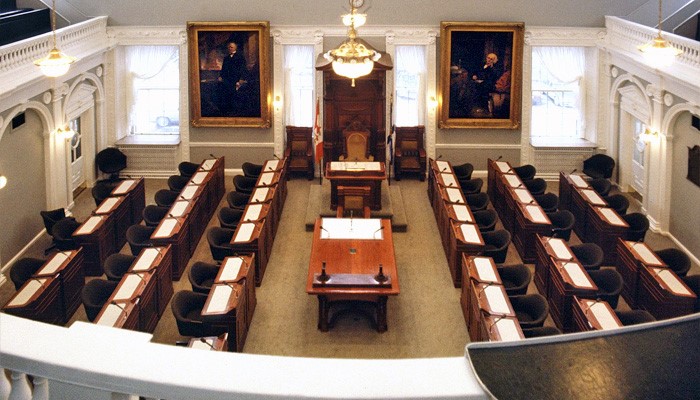
Nova Scotia long resisted the trend of fixed-date elections in Canada and stood for years as the last redoubt of the ten provinces to rely solely on section 4(1) of the Constitution Act, 1982, which sets the maximum life of a legislative assembly at five years from the date fixed for the return of writs of the previous general election. And no province agonised over fixed-date elections quite like Nova Scotia either. The House of Assembly considered several private members’ bills to implement fixed-date elections from 2007 to 2013; they all failed because they never gained the support of the government. All fixed-date election laws in Canada started out life as government bills. Stephen McNeil, Liberal Premier from October 2013 to February 2021, even went so far as to rule out imposing a fixed-date election law in Nova Scotia altogether on 8 April 2015 only two days after Wade MacLaughlan, at the time the new Liberal Premier of Prince Edward Island, ignored his province’s electoral schedule. McNeil also alluded to all the ad hockery that Saskatchewan, Manitoba, and Prince Edward Island had gone through to avoid the possibility that their provincial general elections would overlap with the federal general election in October 2015 as evidence that “fixed dates haven’t been working.”[1] All that changed on the Fifth of November 2021.
Continue reading

Posted in Fixed-Date Elections | Leave a comment

Journalists Refuse to Report on Incumbent Premiers Accurately


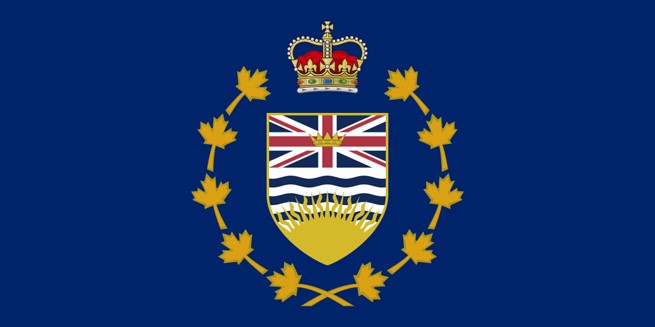
The Standard of the Lieutenant Governor of British Columbia

Journalists need to earn the trust of their viewers and readers. They could start by reporting on the basic foundations of Responsible Government in Canada correctly.

British Columbia, Saskatchewan, and New Brunswick have recently held general elections in accordance with the schedules set out in their respective fixed-date election laws. Nova Scotia will hold a snap general election in November after Premier Tim Houston decided to ignore the fixed-date elections law that he himself introduced in 2022.

On 21 October, New Brunswickers rejected the Progressive Conservatives of incumbent Premier Blaine Higgs and gave Susan Holt’s Liberals a clear majority.[1] Higgs even lost his own seat. By 23 October, the Government of New Brunswick’s website began referring to Susan Holt as the Premier-designate and announced on 29 October that the Lieutenant Governor will swear in Holt as Premier on 2 November 2024.[2] The media can at least handle transfers of power between different political parties after elections and did not need to propagate their egregious myth that premiers somehow stop being premiers during elections in the case of New Brunswick. But the close results in British Columbia and Saskatchewan betrayed their ignorance.

Continue reading

Posted in Crown (Powers and Office), Formation of Governments | Leave a comment

More Fixed-Date Election Foibles: Delaying the Scheduled Federal General Election by One Week


The Current Fixed-Date Elections Law

Before the House of Commons lies a bill to amend the fixed-date elections law in sections 56.1 and 56.2 of the Canada Elections Act. It continues in the long tradition of tinkering and ad hockery that has long characterised the fixed-date election laws across Canada, and which I have chronicled over the last decade or so.

The current sections pertaining to fixed-date elections, which have shortened the maximum life of a parliament from five years to somewhere between four and five years (depending upon the date of the dissolution of the previous parliament), mandate that general elections shall occur on the third Monday of every fourth October after the previous general election. Since Parliament adopted these sections in 2007, only the elections of 2015 and 2019 have happened as scheduled. The previous general election fell in September 2021 after the Governor General granted Prime Minister Trudeau an early dissolution to the 43rd Parliament; consequently, the schedule of the next general election has shifted to 20 October 2025. Incidentally, this also means that four years and one month, rather than four years, would pass between general elections – which is why I describe the fixed-date election law as having shortened the life of a parliament to somewhere between four and five years, rather than to precisely four years.

The current law as enacted in 2007 does, however, build in some flexibility if the scheduled polling day of the federal general election would come into “conflict with a day of cultural or religious significance or a provincial or municipal election,” in which case the Chief Electoral Officer could recommend that the Governor-in-Council choose another polling day – either the next day (the third Tuesday of the fourth October), or seven days later, the following Monday (the fourth Monday of the fourth October). But the Chief Electoral Officer must make this recommendation before 1 August in the year of the scheduled election. The Governor-in-Council, which is to say, the Governor General acting on the advice of Cabinet, would make the operative decision.

Continue reading

Posted in Fixed-Date Elections | 1 Comment

Ousting Party Leaders: From the King Doctrine to the Unenforceable Reform Act


Introduction

Justin Trudeau stood defiant on 24 October 2024 and declared four days before the deadline that he would stay on as leader of the Liberal Party and Prime Minister in defiance of about one-fifth of Liberal MPs: “We’re going to continue to have great conversations about what is the best way to take on Pierre Poilievre in the next election, but that will happen with me as leader going into the next election.” [1] The Liberals had met in caucus and devolved into grouptherapy for three hours on the 23rd; backbenchers wanted to feel heard and attempted to orchestrate a half-hearted ousting of their leader, and therefore the Prime Minister of Canada, by asking him nicely and without threatening any repercussions. Many backbenchers broke down into long-winded and faintly absurd, emotive diatribes on political television; Ken Hardie best exemplified the psychobabble when he declared, “We have to process this” before CTV News.[2] I so sorely wish that Canadian broadcasters could hire some British journalists to grill our unsuspecting politicians; I’d especially love to see Krishnan Guru-Murphy of Channel 4 take unguarded delight in skewering some of these Liberal backbenchers with his trolling mirth or Jeremy Paxman in his prime mercilessly mock the mealy-mouthed and the meek.

Ministers must maintain collective responsibility and solidarity and therefore provided only short quips in brief scrums. Francois-Philippe Champagne celebrated not merely the “great discussion” but lauded it as “the type of discussion that Canadians would be proud to see.” Sadly for us though, discussions within caucus remain confidential. Defence Minister Bill Blair similarly praised the meeting as “healthy” and “robust.” Various journalists reported that Justin Trudeau himself also became emotional; The Hill Times says that Trudeau spoke “with tears in his eyes,” and Catherine Cullen of CBC News said that Trudeau also expressed dismay over the increasingly ubiquitous “Fuck Trudeau” flags and how they affected his children who also bear that surname.[3]

Continue reading

Posted in Electing & Ousting Party Leaders, Party Discipline | 2 Comments

Dissenting Liberal MPs Fail to Thatcher Trudeau


Even after suffering the worst defeat in electoral history in 2011, the Liberals had managed to cling onto their redoubt of Toronto—St. Paul’s and their core support of urban Torontonians who would surely never abandon them. A Conservative had not won that area since 1988. So when the Liberals lost this seemingly safest of safe seats to Conservative candidate Don Stewart in a by-election on 24 June 2024, some Liberal MPs began anonymously questioning Justin Trudeau’s leadership to the press.[1] The Liberal caucus chair Brenda Shanahan then rebuffed any effort to convene in caucus during the summer of 2024 and said that the parliamentary party would not meet again until the House of Commons resumed sitting in September.[2] The Liberals continued to tail the Conservatives by about 20 points in the polls throughout the summer of 2024, but they believed that they could still shepherd their legislation through the House of Commons for another year in light of the confidence-and-supply agreement that they had struck with the New Democrats in March 2022.

Continue reading

Posted in Electing & Ousting Party Leaders, Party Discipline | 2 Comments