Doug Ford’s Gibberish on Gerrymandering: Why Ontario Needs Its Own Separate Provincial Electoral Boundaries Commission


Introduction: Readjusting Federal Electoral Boundaries

Section 51(1) of the Constitution Act, 1867 requires that the number of MPs per province be recalculated after each decennial census and, consequently, that the electoral boundaries of ridings within each province be readjusted every ten years. Parliament redrew electoral boundaries directly from the 1870s to the 1950s. But since 1964, the Electoral Boundaries Readjustment Act provides that independent Federal Electoral Boundaries Commissions, one for each province, decide where and how to readjust electoral boundaries in a non-partisan manner. Each commission is chaired by a judge and consists of two other members appointed by the Speaker of the House of Commons. The commissions release an initial proposal, hold public hearings throughout the province on that proposal, and then release a preliminary report based on what they learned from anyone who commented either for or against the proposal. MPs then study the preliminary reports and make recommendations on changing either the names or boundaries of ridings, which the commissions must consider but may (and usually do) reject in their final reports. Those final reports then become the Representation Order, a piece of secondary legislation that the Governor-in-Council promulgates under the Electoral Boundaries Readjustment Act. Those Representation Orders enter into force for a dissolution of parliament seven months later.
Continue reading

Posted in Electoral Boundaries Readjustments | 1 Comment

The Commonwealth Realms Diverge: Whether the Prime Minister Determines the Duration of the Ministry or Not


Introduction

Britons went to the polls on 4 July 2024 and ended up giving Labour a massive majority of 411 out of 650 MPs. By the next morning, outgoing Conservative Prime Minister Rishi Sunak had already tendered his resignation to His Majesty King Charles III, and the King appointed Sir Keir Starmer, leader of the Labour Party, as the next Prime Minister of the United Kingdom of Great Britain and Northern Ireland. Prime Minister Starmer then announced that the King had approved his ministerial appointments.[1] The website of Number 10 Downing Street also already includes Sir Keir’s biography and lists his press releases.[2] The British accomplish in one day what Canada takes three weeks to do! Furthermore, the House of Commons met on 9 July, with Sir Keir and Sunak having switched sides and despatch boxes. The King will open the first session of the next parliament on 17 July, a mere two weeks after the day of the election.[3] The British waste no time. In contrast, a new parliament in Canada would not meet until around eight weeks after the new prime minister assumes office, for a total of some eleven weeks after the election.

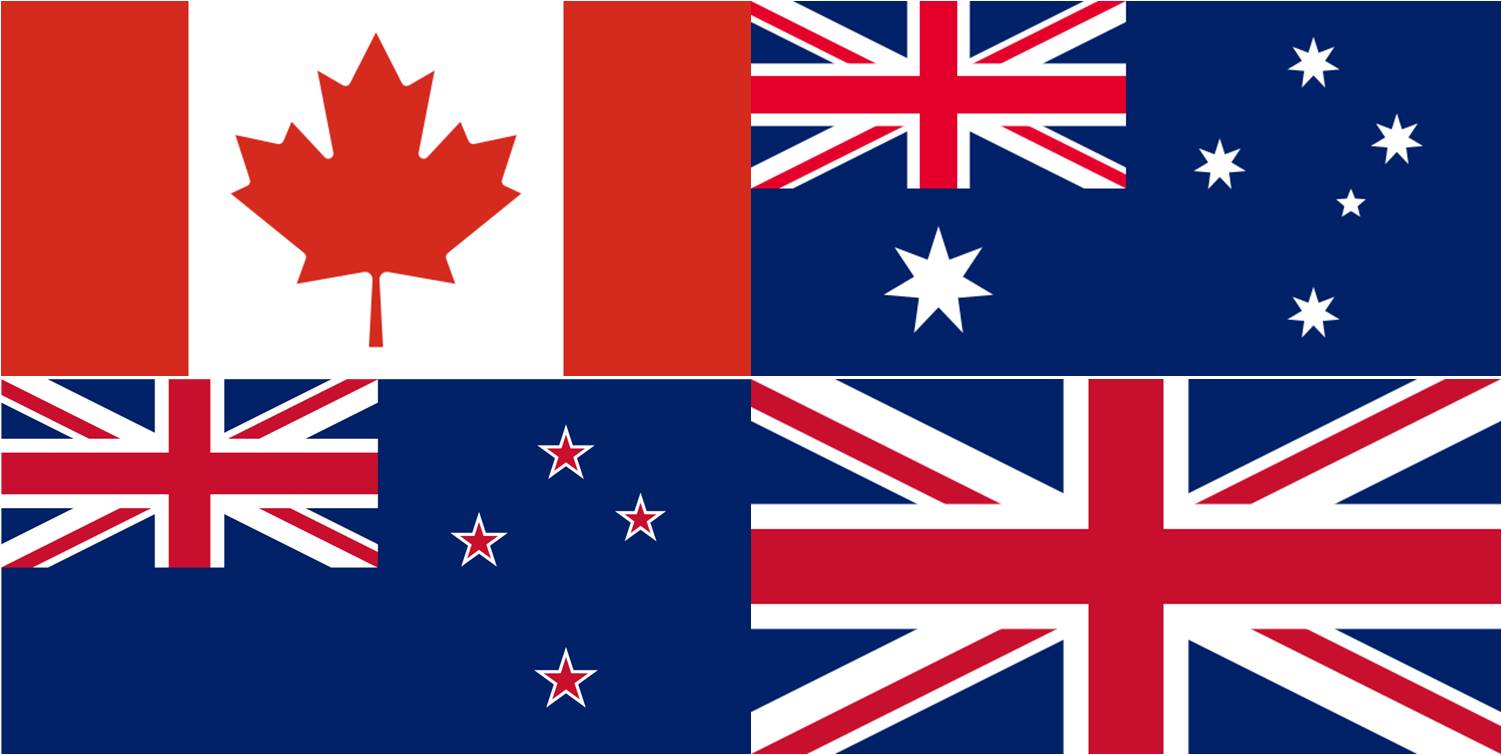
Yet despite these obvious differences, scholars of Westminster parliamentarism routinely emphasize and take comfort in the shared heritage of the Commonwealth Realms and too often gloss over – or are even perhaps ignorant of – the interesting differences that have emerged over the decades, some trivial and some major. In this piece, I have highlighted another interesting difference, this time not merely between Canada and the United Kingdom, but across the United Kingdom, Canada, Australia, and New Zealand. These four Realms which have practised self-government the longest cannot agree amongst themselves and have diverged into at least three (or four, counting the widespread view on the British method) separate standards on something as simple how to count the number of ministries which have governed them since x date.

Continue reading

Posted in Appointment of PM, Caretaker Convention & Government Formation, Commonwealth Realms, Comparative, Constitutional Conventions, Crown (Powers and Office) | Leave a comment

Replacing the Prime Minister During An Election: A Forgotten Canadian Precedent


 Amusing Historical Parallels

Voters feel exhausted after years of endless constitutional wrangling and a divisive referendum on the country`s new constitutional arrangements, and they further resent that the political class bogged itself down in this constitutional quagmire and all but ignored a recession, inflation, and high interest rates – and thus higher mortgagepayments.

A party called Reform threatens the incumbent Tories from the right with abject electoral annihilation and a political realignment, especially because the incumbent Tories ignored the faltering economy and the real material struggles that ordinary people face in favour of their petty internal squabbles and internecine warfare. The man who won the incumbent Conservatives their majority at the last general election resigned after incurring near-universal contempt amongst the electorate across the country and after his reputation as a high-roller who revelled in his wealth perhaps a bit too much worn thin; consequently, the Conservatives elected a new leader who after some initial high hopes now seems woefully, and perhaps even comically, inept and led one of the most disastrous campaigns in living memory. Furthermore, the main opposition from the parliament just dissolved has, after a decade or so out of power, reinvented itself and now presents itself as a fiscally prudent formation of the centre-left and seems like the only party capable of winning support in all regions of the country.

That description fits both Canada in 1993 and the United Kingdom in 2024. And what is more, British Conservatives over the last two years  have whispered in hushed tones amongst themselves that they could suffer the same fate as our old Progressive Conservative Party in 1993. They are well-aware of the analogy, and it terrifies them.[1]

Continue reading

Posted in Appointment of PM, Caretaker Convention & Government Formation, Commonwealth Realms, Comparative, Constitutional Conventions, Crown (Powers and Office), Electing & Ousting Party Leaders, Party Discipline | 5 Comments

My Latest Article on Federal Electoral Redistribution in the Canadian Parliamentary Review


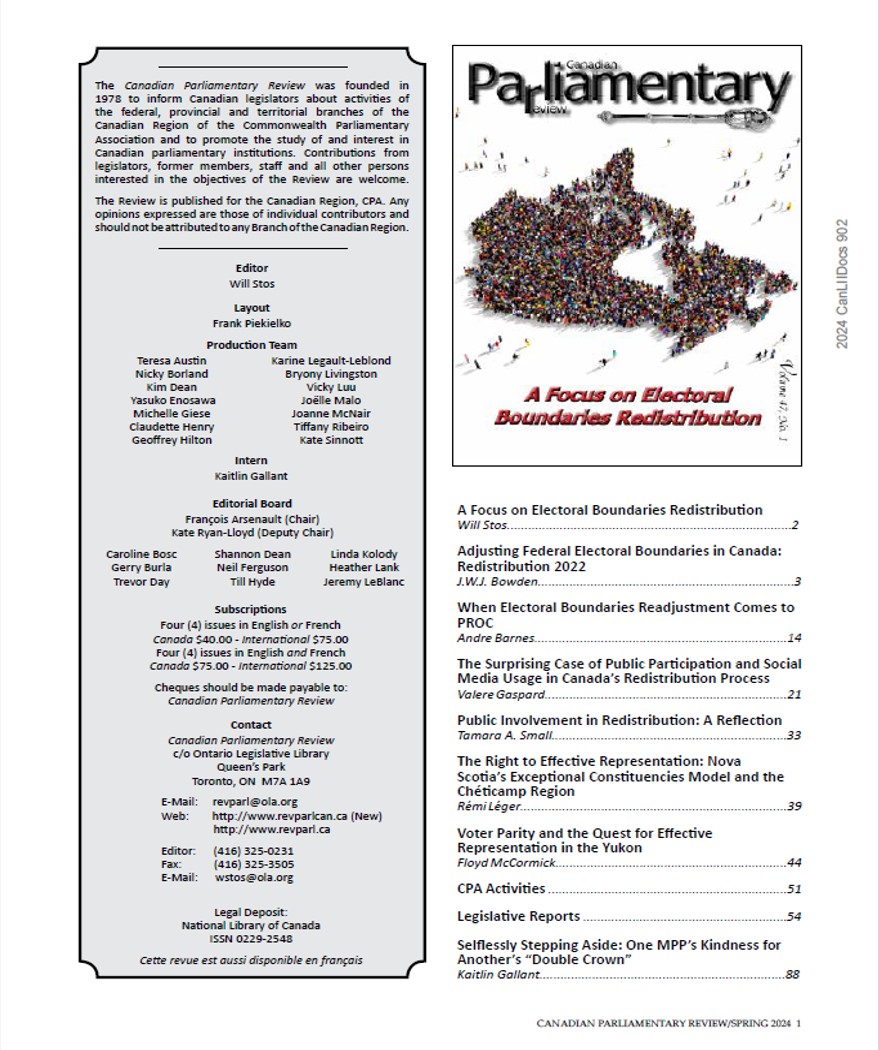
The Canadian Parliamentary Review recently published my article “Adjusting Federal Electoral Boundaries in Canada: Redistribution 2022” as part of a special issue on federal electoral redistribution based on the presentations that my colleagues and I gave to the Canadian Study of Parliament Group’s conference “Dissecting Redistribution” in April 2023. I have also adapted this project into a book analysing all the aspects of what Elections Canada calls Redistribution 2022, while this abridged article only provides a meta-narrative of the basic steps under the Electoral Boundaries Readjustment Act  from the perspective of Elections Canada.

Continue reading

Posted in Electoral Boundaries Readjustments, My Published Works | 2 Comments

Beyond the Writ: The Expansion of the Caretaker Convention in the 21st Century Published in the Saskatchewan Law Review


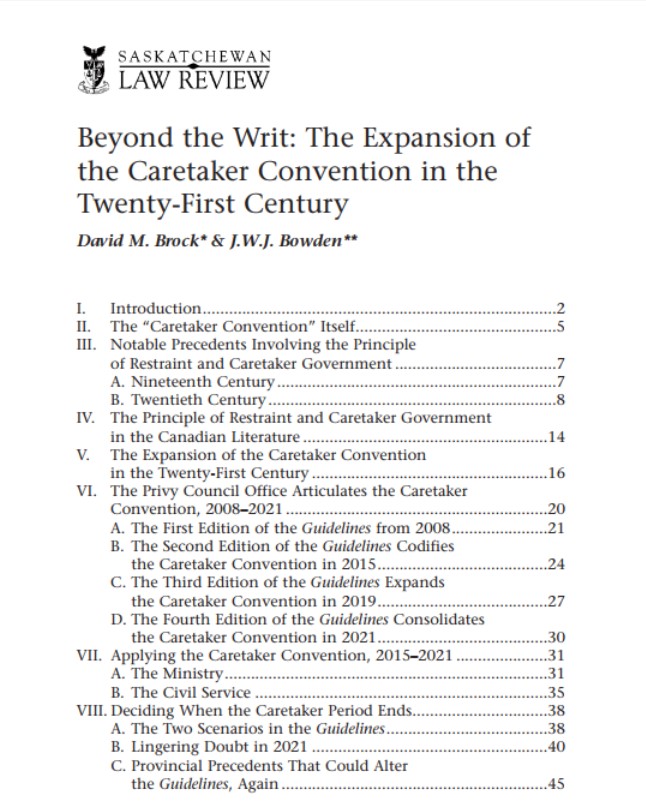
The Saskatchewan Law Review just published my and David Brock’s article “Beyond the Writ: The Expansion of the Caretaker Convention in the 21st Century,” presumably available at fine law school libraries everywhere.

Here we chronicle and try to explain why most scholars, politicians, and civil servants believed as recently as twenty years ago that the caretaker convention, or principle of restraint, only applied the post-writ and transfer of power between governments after an election but why the caretaker convention rapidly and suddenly expanded to include the writ and even the pre-writ since 2010 or so. We traced the hinge upon which this transformation turns to the federal election of 2005-2006 and the aftermath of the transfer of power between Paul Martin and Stephen Harper in January and February 2006. The trend toward expanding the caretaker convention accelerated yet further after the Privy Council Office released the second edition of the Guidelines upon the dissolution of parliament in 2015. The provincial and territorial civil services followed suit.

Similar Posts: 


Posted in Caretaker Convention & Government Formation, Constitutional Conventions, My Published Works | 1 Comment