Alpine Madness: Austria Takes The Caretaker Convention to the Extreme


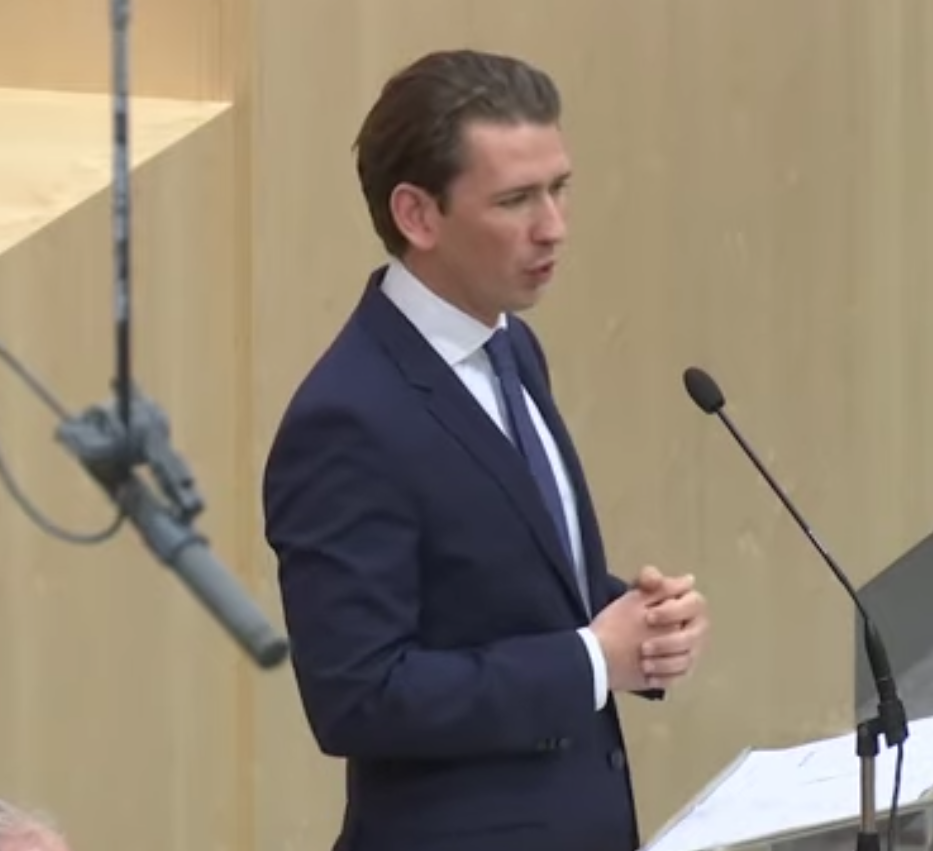
Chancellor Kurz addresses the Austrian National Council just before losing its confidence.

Introduction

A series of strange events has recently befallen Austria. It began with political scandal and the collapse of the coalition government between Sebastian Kurz’s People’s Party and Heinz-Christian Strache’s Freedom Party and ended a few weeks later with the President of Austria appointing a “technocratic provisional government” composed of judges and civil servants, who will now steer the ship of state as a caretaker cabinet until early elections in September. The details of what precipitated the coalition government’s collapse would have seemed outlandish prior to, say, 2016, but now seem both depressingly believable and yet still absurd. The final outcome of the political scandal has taken the caretaker convention to its logical extreme because of the peculiarities of Austria’s constitution and its provisions surrounding non-confidence, early dissolution, and government formation.
Continue reading

Posted in Comparative, Confirmation Voting, Constructive Non-Confidence, Government Formation in Germany & Austria | 2 Comments

No Prorogation: The Long Parliamentary Sessions in Canada and the United Kingdom


Introduction

The 42nd Parliament of Canada and the 57th Parliament of the United Kingdom have something in common: both of these current parliaments (as of 9 June 2019) are still on their first sessions. In Canada, no one but me and perhaps 20 other pedantic nerds toiling in obscurity have even noticed that the 1st session of the 42nd Parliament started on 3 December 2015 and will end upon dissolution between 1-15 September 2019. The Canada Elections Act now specifies that the writ must last between the minimum 36 days and a maximum of 50 days and schedules the day of the election as 21 October 2019. For the first time in the history of Dominion and Province of Canada (1841-present), a majority parliament will have lived out its entire life on one session alone. When this 1st session of the 42nd Parliament ends in September 2019, it will have lived for somewhere between 1,369 and 1,383 days. The 1st session of the 42nd Parliament will thus eventually surpass the record currently held by the 1st session of the 32nd Parliament, which lasted 1,325 days from 14 April 1980 to 30 November 1983. (The 32nd Parliament had a 2nd session from December 1983 to July 1984).

Continue reading

Posted in Crown (Powers and Office), Prorogation | 4 Comments

Policy Options and Electoral Reform in Quebec


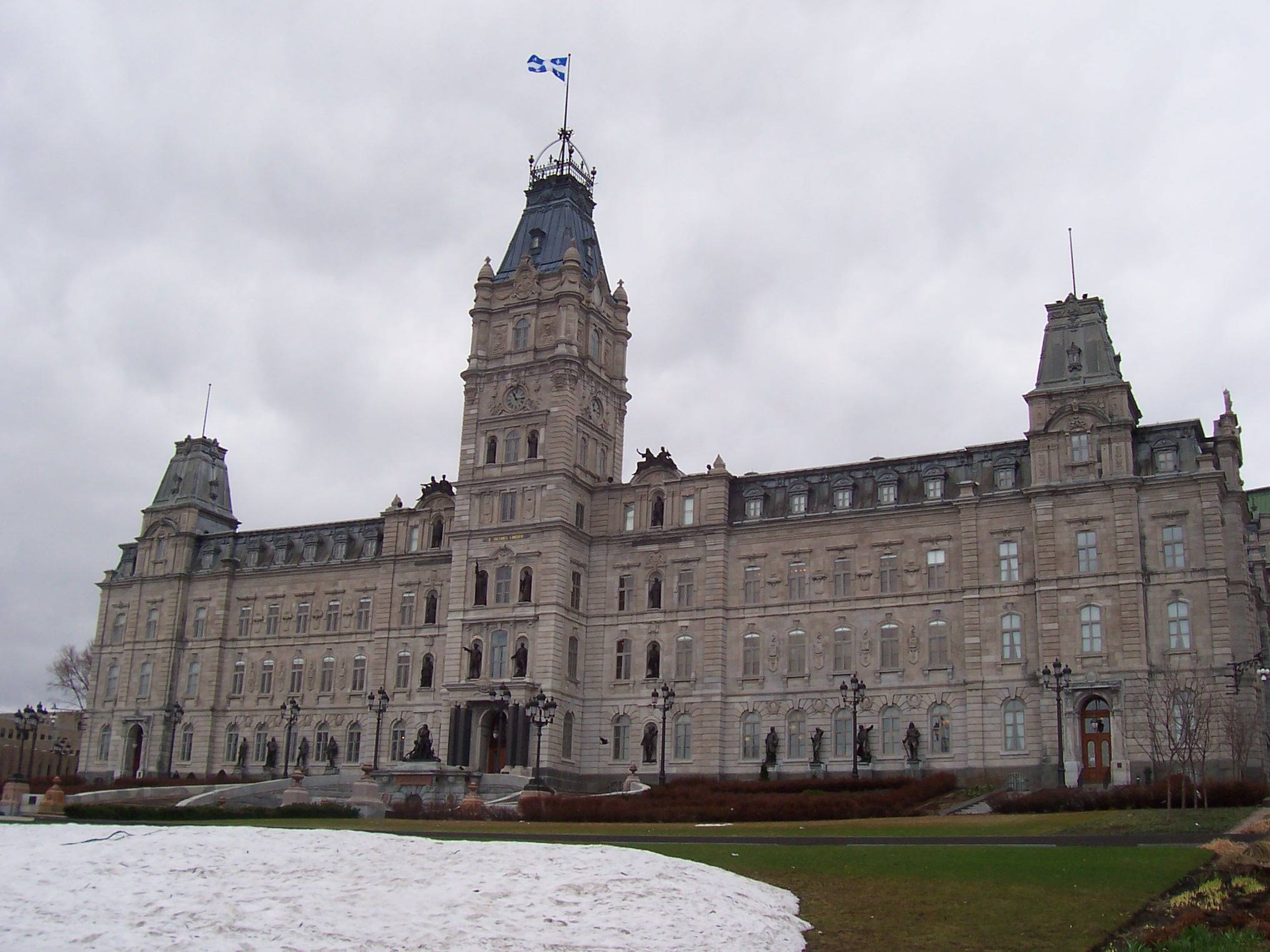
I took this photo of the building which houses Quebec’s National Assembly in May 2008, which ended an unusually snowy 2007-2008 winter season.

Some of you might be interested that Policy Options published “Quebec Poised to Adopt Proportional Election System,” an updated version of my piece on why Premier Legault is serious about switching Quebec to mixed-member proportional representation; some of you might not.

I thank Jennifer Ditchburn for having run with it!

Similar Posts:

Posted in Electoral Reform, Reform | Leave a comment

Newfoundland & Labrador Will Also Go for An Early Election in May 2019


If the Blue Ensign of Australia is the Union Flag at night, then Newfoundland and Labrador’s flag is the Union Flag in fog.

Introduction

Since January 2019, speculation that Premier Ball of Newfoundland and Labrador will opt for an early election has mounted.[1] On 29 March, Ball confirmed that he would seek early dissolution so that the election itself occurs on or before 27 June 2019.[2] CBC News covered Ball’s announcement with the headline, “It’s Almost Official, as Dwight Ball Narrows Election Window.” In fact, as I pointed out on page 61 of my thesis, this did become official on 1 April: Newfoundlanders and Labradorians will certainly now go to the polls this spring and thus join Prince Edward Islanders in the second early dissolution and provincial general election of 2019.

Continue reading

Posted in Fixed-Date Elections, Reform | Leave a comment

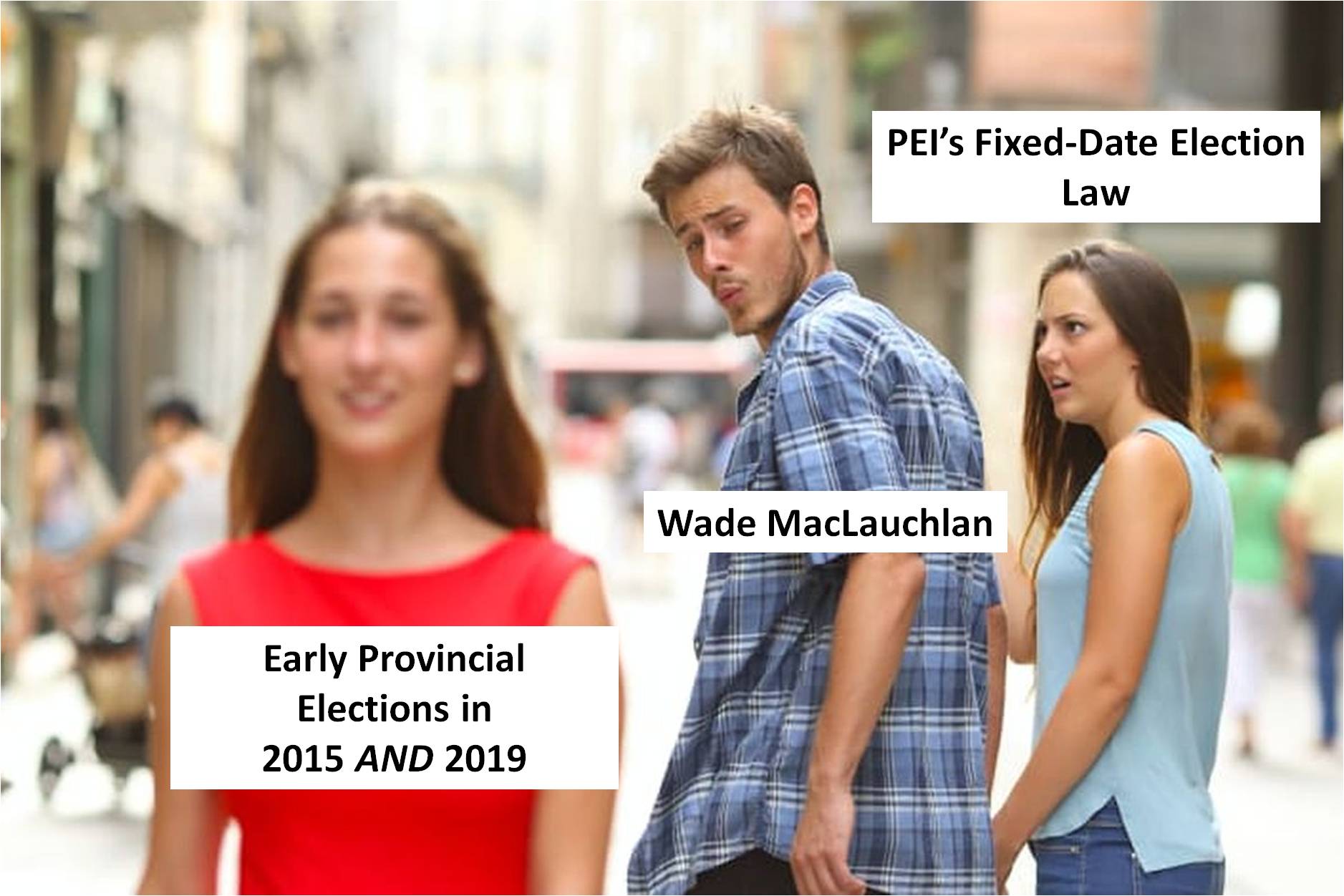
Wade MacLauchlan of PEI Has Become the First Premier to Ignore a Fixed-Date Election Law Twice


Introduction

Events have answered a question that I posed last year here on Parliamentum on 24 May 2018. I wondered, “Will Wade MacLauchlan Become the First Premier to Ignore a Fixed-Date Elections Law Twice?” Yes. Wade MacLauchlan has become the first premier in Canada to ignore a fixed-date elections law twice, once on 26 April 2015 (as I wrote contemporarily in “The Mandate Problem: Early Dissolutions and Fixed-Date Election Laws in Prince Edward Island and Alberta”) and again on 26 March 2019. I also included that prediction on page 77 of my thesis “Reining in the Crown’s Authority Over Dissolution: The Fixed-Term Parliaments Act of the United Kingdom versus Fixed-Date Election Laws in Canada” in September 2018.

Continue reading

Posted in Crown (Powers and Office), Dissolution, Fixed-Date Elections, Reform | 11 Comments