On the Doctrine of Necessity: The Division of Powers Does Not Apply During a Pandemic


Quebec imposed this unconstitutional bordercheckpoint on its side of the Portage Bridge, screening motorists entering from Ontario and turning some back. I took this photo myself on the late afternoon of 2 April 2020.

On 1 April, Quebec announced what I presumed at the time must have been an April Fool’s Joke: that it would use its provincial police, La Sûreté du Québec, and municipal police forces to set up border checkpoints with Ontario, New Brunswick, and Labrador. New Brunswick as of 25 March and Nova Scotia as of 23 March had imposed similar measures using provincial peace officers to man border checkpoints. (They wouldn’t dare try to use the RCMP contracted to conduct provincial policing in New Brunswick and Nova Scotia). However, section 92 of the Constitution Act, 1867 does not provide the provinces the authority to impose controls and checkpoints against other provinces, irrespective of whatever declarations of emergency they have made at the provincial level. Their legislatures lack the head of power to enact statutes which touch upon this competency, and their executives therefore lack the authority to enforce such a thing.

Since the provinces can only act within their strictly enumerated competencies and areas of jurisdiction under section 92, this particular authority goes to the federal order of government by default under section 91 – triply so, in this case. The authority to set up internal border checkpoints would fall to Ottawa under the Peace, Order, and Good Government (POGG) Clause, whereby non-enumerated authorities fall to the federal order of government, as well as, more precisely, under both sections 91(10), “Navigation and Shipping”, and 91(11), “Quarantine and the Establishment and Maintenance of Marine Hospitals” — with the emphasis on “Navigation” and “Quarantine” in this case. The fact that the Government of Canada has chosen not to exercise this authority does not somehow transfer it to the provinces, nor can the provinces invoke the Doctrine of Necessity to impose it. The division of powers cannot be loaned out or delegated without a constitutional amendment, such as the Constitution Act, 1940 that added “Unemployment Insurance” as item “2A” to Ottawa’s jurisdiction under section 91. Yet this pandemic has defenestrated the Constitution of Canada, and very few seem to notice or care.

Continue reading

Posted in Constitution (Written), Division of Powers, Doctrine of Necessity | 8 Comments

The Fixed-Date Election Law Forced Saskatchewan’s Upcoming Pandemic Election


Introduction

Brian Pallister’s unnecessary early election last year – done ostensibly to prevent an election from occurring during the celebrations of Manitoba’s sesquicentennial in 2020 and to avoid accusations that his government would short-circuit rules against advertising to benefit the Progressive Conservative Party during the pre-writ and writ – now looks remarkably but unintentionally prescient. Even though Manitoba might have to cancel some of these celebrations this summer, Pallister’s decision has at least spared Manitobans the prospect of a mandatory dissolution or a dissolution by efflux of time (i.e., a dissolution which occurs automatically pursuant to statute or the constitution instead of by a premier’s advice to the governor) during a pandemic and the resulting Pandemic Election in the fall of 2020. But neighbouring Saskatchewan remained on course to suffer this fate. As of 13 May 2020, Scott Moe, Premier of Saskatchewan and Leader of the Saskatchewan Party, has confirmed that the province will go through with its general election scheduled for October 2020. And the fixed-date election law is to blame.

Continue reading

Posted in Crown (Powers and Office), Dissolution, Fixed-Date Elections | 3 Comments

Electoral Reform: Quebec Will Hold a Referendum With a Clear Question


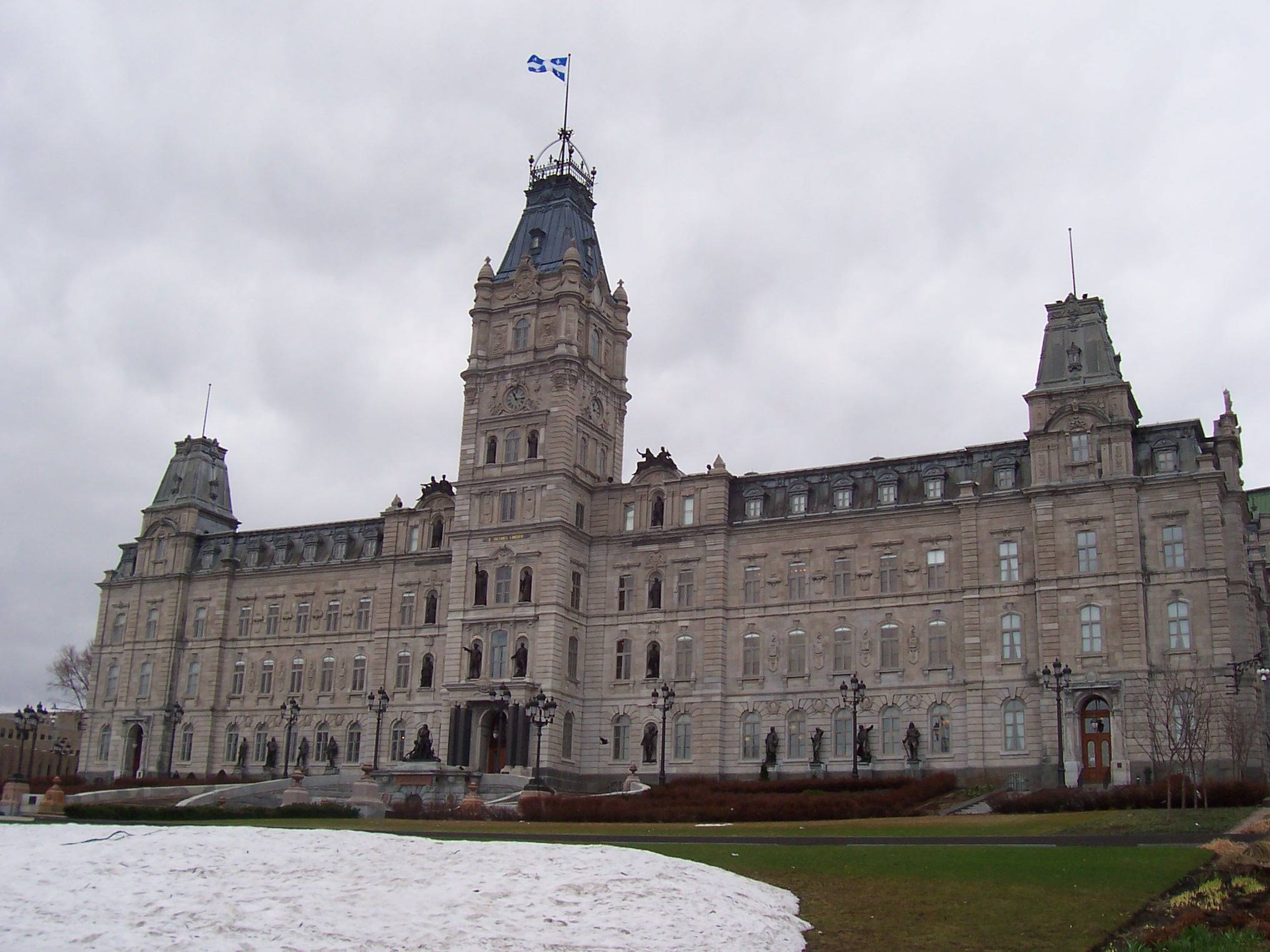
I took this photo of the building which houses Quebec’s National Assembly in May 2008, which ended an unusually snowy 2007-2008 winter season.

Last spring, I wrote about the prospect that the Legault government in Quebec would implement mixed-member proportional representation in time for the next provincial general election scheduled for 2022 in a piece for Policy Options. Recent developments answer this question in the negative – but in an interesting way. The Legault government has still taken a unique approach which distinguishes it from what governments in other provinces have done.

To recap, during the lead up to the provincial general election in 2018, Legault pledged that his party would table a bill in the National Assembly to switch to MMPR and rejected what British Columbia and Ontario did with citizens’ assemblies and referendums. Legault even promised during the provincial election campaign in 2018 that he would not “do what Trudeau did” and abandon electoral reform if his party won a parliamentary majority.[1] The Coalition pour l’avenir du Québec won a parliamentary majority in 2018, and Premier Francois Legault pledged in his Opening Speech that his government will by October 2019 introduce a bill to switch Quebec’s electoral system to MMPR for the next scheduled provincial election in 2022.

Continue reading

Posted in Electoral Reform, Reform | 7 Comments

The Constitution of the Confederate States of America Disproves the States’ Rights Narrative & Contains a Parliamentary Twist


During this lockdown and quarantine, I recently re-watched Ken Burns’s epic documentary series on the Civil War, serenaded with the dulcet, non-rhotic tones and mellifluous commentary of the late Shelby Foote. I also read several speeches and essays by one of our Fathers of Confederation, Thomas D’Arcy McGee. The Confederation Debates and much of the public discourse in British North America of the 1860s focuses on the Civil War and its potential consequences for Canada. Thomas D’Arcy McGee, to the extent that he endures in our national memory today at all, mostly features as the “Poet of Confederation” and for having earned the ignoble distinction of becoming the first of only three Canadian politicians ever to die by assassination. But we should also treat him as a serious political thinker and theoretician of federalism, constitutional monarchy, and parliamentary government.

The combination of Burns’s documentary and McGee’s writings prompted me to read for the first time the Constitution of the Confederate States of America, and it contained for me two surprises: first, that its text expressly rejects the “States’ Rights” narrative, which, in turn, has greatly contributed to the “Lost Cause” mythology; second, more innocuously – if it’s even possible to examine a secessionist polity steeped in slavery and expressly founded upon racial inequality in such a manner – its small concession (dare I say, surrender?) to parliamentary government.

Continue reading

Posted in Comparative, Parliamentarism v Presidentialism | 4 Comments

1896: Tupper & Laurier Debate the Role of Governor General and Popular vs Parliamentary Sovereignty


Governor General Lord Aberdeen

Introduction  

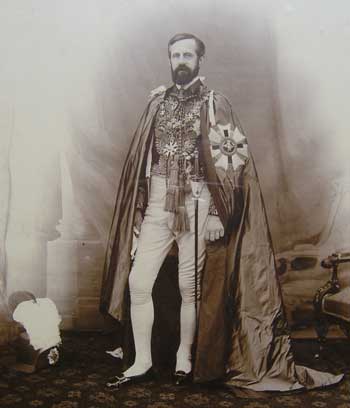
On 8 July 1896, Governor General Lord Aberdeen forced Prime Minister Sir Charles Tupper from office by refusing to promulgate his constitutional advice and sign off on Orders-in-Council to summon senators and make other appointments. Tupper sought to fill up vacancies knowing full well that the Liberals had just won a parliamentary majority for the first time since 1874 in the general election held on 23 June 1896. When Aberdeen refused to sign the Orders-in-Council, Tupper wrote back that he had no choice but to resign the premiership, because the prime minister cannot remain in office after a governor general has rejected his constitutional advice and withdrawn his confidence from him. Lord Aberdeen then appointed Sir Wilfrid Laurier as Prime Minister, and Laurier would stand astride Canadian politics like a colossus for the next fifteen years. At Tupper’s insistence and at Aberdeen’s acquiescence, their written correspondence from July 1896 became part of the public record in the Sessional Papers of the House of Commons in the 1st session of the 8th Parliament that September. Tupper and Laurier then debated the propriety of Governor General Lord Aberdeen’s actions in a fascinating exchange which revealed competing narratives of parliamentary sovereignty versus popular sovereignty, what we would now call the Caretaker Convention versus the Spoils System, and the circumstances under which the Governor General can or should reject ministerial advice.

Continue reading

Posted in Appointment of PM, Caretaker Convention & Government Formation, Confidence Convention, Constitutional Conventions, Crown (Powers and Office), Dorchester Review, Formation of Governments, History of British North America | 3 Comments