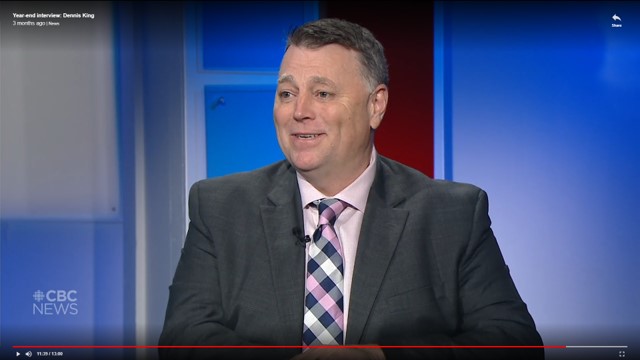
Dennis King became Premier of Prince Edward Island on 9 May 2019 as the head of the first single-party minority government in the Island’s history.[1] Little did he know then that his tenure as head of government would coincide with some the greatest calamities and disruptions in a century. He abruptly declared on 20 February 2025 that he would resign as both leader of the Progressive Conservative Party and Premier of Prince Edward Island the following day. He said in his official press release that his six years as premier “felt like a lifetime” and noted the “global pandemic, two hurricanes, cyber-attacks, trade wars, and so much more” that he weathered during his tenure; quite understandably, he sounded like he was suffering from what we used to call nervous exhaustion.[2] Less understandable, however, remains his decision not merely to announce his resignation as premier to take effect within a few weeks or months after the Progressive Conservative Party had elected a new leader but instead with near-immediate effect and on only one day’s notice, which set off a chain reaction that continues to produce strange outcomes in December 2025. Continue reading →
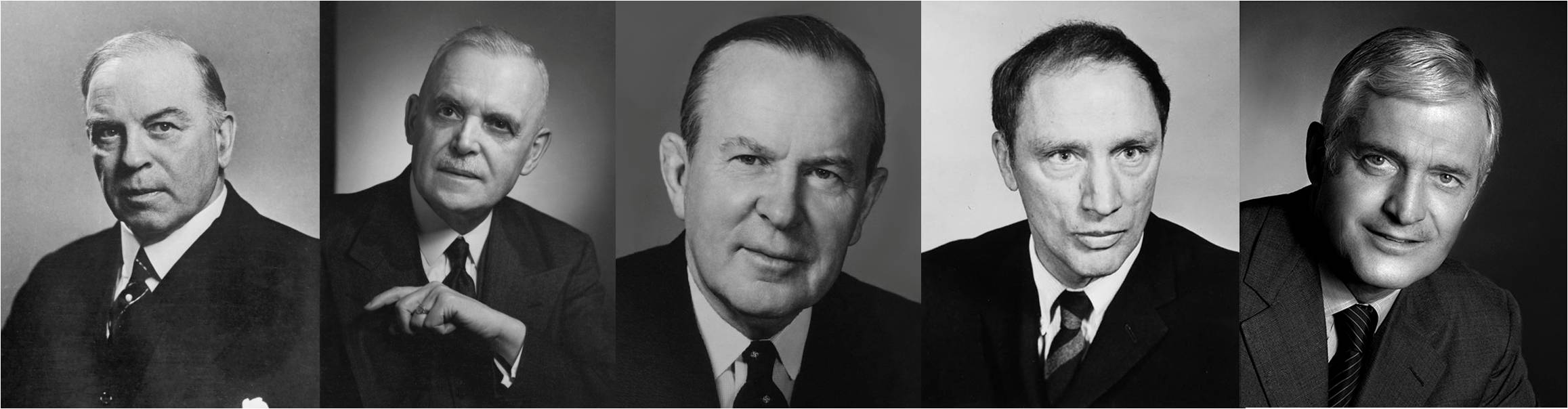
Peter C. Newman seems to have originated a famous meme of Canadian politics by quoting Jack Pickersgill, a former Clerk of the Privy Council, Liberal cabinet minister, historian, and literary executor of William Lyon Mackenzie King’s estate. In 1968, Newman quoted Pickersgill as having referred to the Liberal Party of Canada as “The Government Party.”[1] But by 2010 and 2011 in his later books, Newman quoted Pickersgill as having called the Liberals as “the natural government party” (Newman’s emphasis),[2] and Canadian politicos since at least 1991 have often referred to the Liberals by a slightly different variant, as “the natural governing party” (my emphasis).[3]
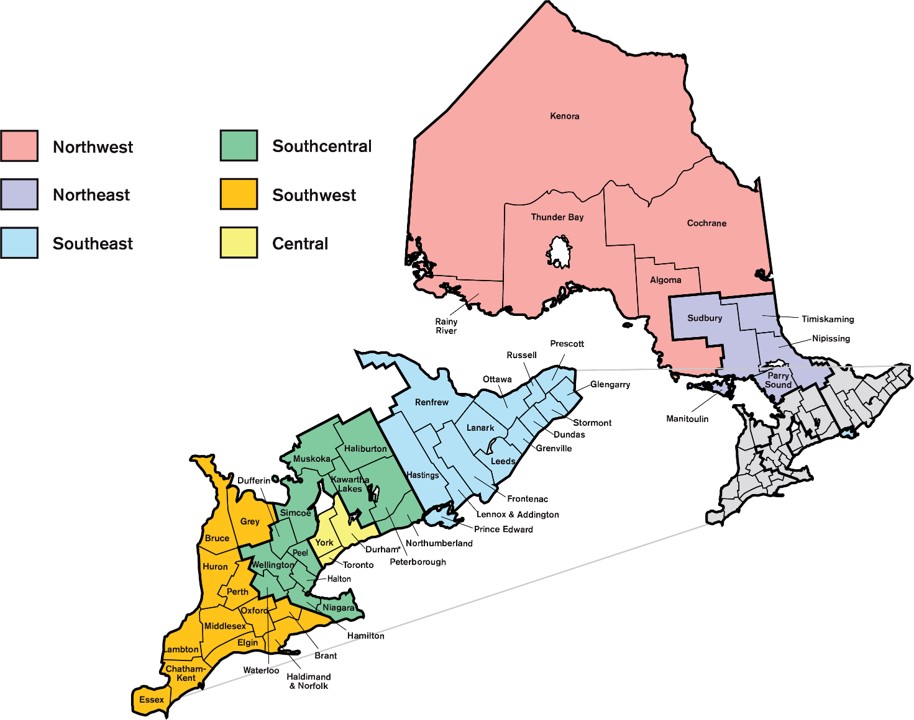
Ontario recently repealed its fixed-date election law and abolished pre-writ spending limits. Instead of putting those amendments to the Election Act in an omnibus budget implementation bill, they should have formed part of an electoral bill that would also allow Ontario to readjust the boundaries of provincial electoral districts regularly, as every other province has already done. Ideally, Ontario would simply readjust its provincial electoral boundaries by way of an independent commission every eight to ten years like every other province. But no other province boasts so many federal electoral districts as Ontario’s 122, and no provincial elected assembly has more than 125 members. Every other province is represented by significantly fewer MPs in Ottawa than MLAs (or MNAs or MHAs) in their provincial capitals: 7 vs 40 in Newfoundland & Labrador, 4 vs 27 in Prince Edward Island, 11 vs 55 in Nova Scotia, 10 vs 49 in New Brunswick, 78 vs 125 in Quebec, 14 vs 57 in Manitoba, 14 vs 61 in Saskatchewan, 37 vs 87 in Alberta, and 43 vs 93 in British Columbia. It therefore stands to reason that Ontario should take advantage of this unique convergence to save money and double up most of its federal electoral districts as its provincial electoral districts. But Northern Ontario for practical purposes does need more than nine northern ridings within its provincial assembly; thankfully, the provincial parliament alone determines the ideal number of ridings and people per elected representative irrespective of any inter-provincial or federal considerations under the province’s constitution.
Radio-Canada reported on 3 October 2025 that Wab Kinew, the Premier of Manitoba, would to see his province become bilingual “like New Brunswick.” Radio-Canada Info uploaded this video to its website and YouTube channel which contains excerpts of a longer interview that Kinew gave to Radio-Canada’s Le 6 à 9 on 2 October.[1]Radio-Canada Info published an accompanying article and took some snippets of the longer interview where Kinew said:
« Si on pourrait dire, “Oui, il y a aussi une province bilingue à l’ouest,” ben, le Canada c’est peut-être à un autre niveau dans la francophonie mondiale. » […] « Notre bilinguisme n’est pas juste une étape symbolique. »
In English, Kinew’s statement translates as follows:
“If we could say, ‘yes, there is also a bilingual province out West,’ well, Canada would perhaps be at another level in the French-speaking world.” […] “Our bilingualism is not just a symbolic step.”
The full interview on Le 6 à 9 from 2 October went for 10 minutes and 30 seconds in total; the first half covered other issues like healthcare and decorum in politics in the 2020s, but from around 6 minutes 15 seconds to 10 minutes 30 seconds, the host asked the Premier about some recent public consultations on bilingualism in Manitoba and what official bilingualism means in his estimation. Kinew mentioned that he would like Manitoba to become a member of the Organisation internationale de la francophonieas New Brunswick and Quebec are as provinces, in addition to Canada as a whole. He then said that he wanted to recognise bilingualism “in our laws, like in New Brunswick, which is truly bilingual” – which presumably means some kind of constitutional amendment, given that Manitoba’s laws are already published in both languages and given that Manitoba’s legislature enacted a law in 2016 to promote French in Manitoba. Kinew also brought up “the question of services and being capable of providing access to services in the French language so that bilingualism is not just a symbolic step;” he further described education and access to healthcare in French as “the greatest challenge” and “perhaps there is more to do there.”
When the interview asked what “becoming official bilingual, like New Brunswick in the letter of the law, would do concretely for French-speakers” and “what it would change,” Kinew replied that such a policy would install Franco-Manitobans with “pride”, improve “the quality of services delivered by the government,” and expand French-speaking Canada out West. Kinew concluded that his government could make Manitoba a member-state of the Francophonie within “a few years” but that “this larger project of becoming a bilingual province in law would be a process a bit longer than that.”
Gerrymandering means that the party in power manipulates the boundaries of electoral districts to maximize the votes of its own supporters and dilute the votes of its opponents in an attempt to stay in office as long as possible.[1] This blended word comes from the combination of Governor Eldridge Gerry of Massachusetts and salamander; the original Gerrymander refers to the serpentine shape of one infamous congressional district that the legislature established in the 1810s to preserve a Democratic-Republic voting block and which Gerry signed into law.[2] Ideally, the electoral districts within a province would each contain roughly the same number of people within a narrow variance of the average number of people per MP, and these districts would also be established without regard to political party and would instead follow the general geographic contours of the province. Since single-member districts cannot by definition overlap with one another, the most mathematically “compact”, or perfect, electoral district has only four sides. In contrast, a gerrymandered district sprawls out into the squiggly lines of a pernicious polygon that cobbles together multiple pockets of support for one political party.[3] This pattern held for the first few decades after Confederation in Canada and still holds sway in many American states today.



 James Bowden's Blog