Who Decides What the Constitution Is and Says? Quebec Modifies the Text of the Constitution Act, 1867


Introduction

Law 96 has generated controversy and opposition amongst English-speakers in Quebec and, to a lesser extent, in the rest of Canada when the Legislature of Quebec enacted it last week for its provisions on language.

But it contains one other significant innovation which most of English Canada has overlooked. Through Law 96, the Legislature of Quebec enacted a constitutional amendment under the Section 45 Amending Procedure, which allows provincial legislatures to alter their provincial constitutions, and added two new sections directly to the text of the Constitution Act, 1867 as sections 90.1 and 90.2. Section 90 falls under Part V of the Constitution Act, 1867, the section on “Provincial Constitutions.”

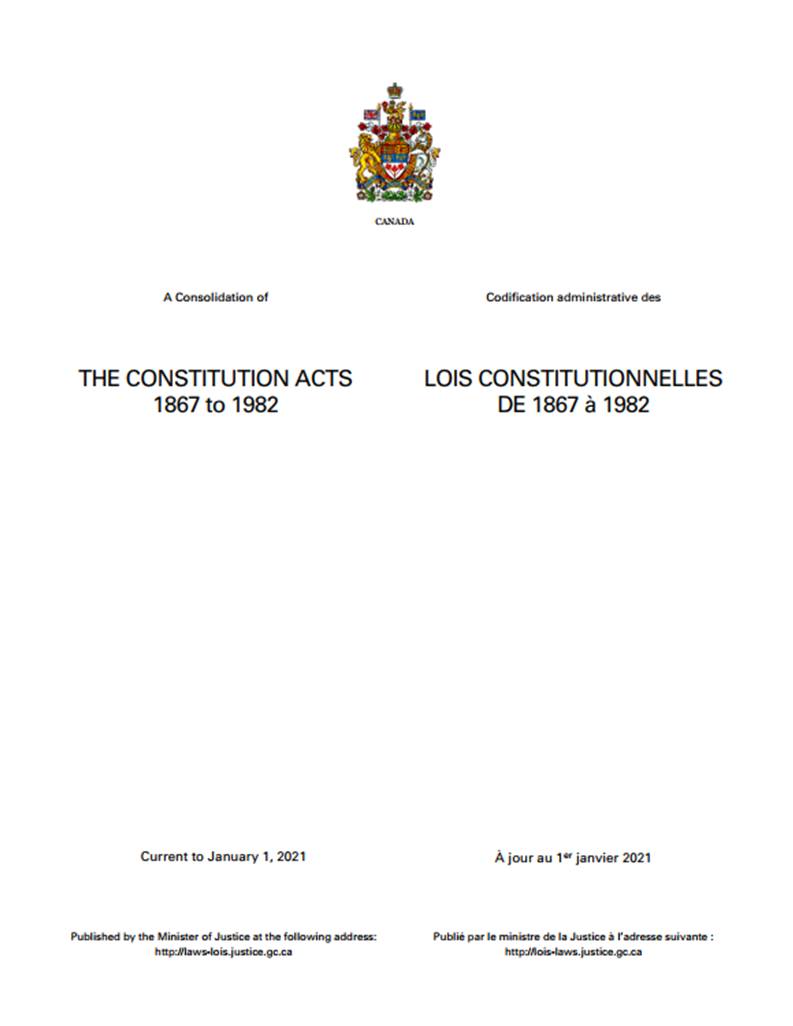
As far as I know, provinces have thus far only impliedly repealed or amended provisions in Part V of the Constitution Act, 1867 through organic statutes without necessarily invoking the Section 45 Amending Procedure by name. But Quebec’s legislature for the first time used the Section 45 Procedure to add provisions directly. Furthermore, the Government of Quebec has already updated its consolidation of the Constitution Acts, 1867-1982 to include these new provisions. The federal Department of Justice produced its most recent consolidation of the Constitution Acts, 1867-1982 in 2021. So it will be very interesting to see whether the federal Department of Justice recognises the legitimacy of these amendments when it produces its next consolidation in a few years.

We might no longer even be able to agree on what the Constitution Act, 1867 says.
Continue reading

Posted in Amending Formulas, Consolidations, Constitution (Written), Indirect Amendment | 2 Comments

The Strange Taboo Against Constitutional Amendment in Canada


Reputedly Unamendable Yet Frequently Amended

The Constitution of Canada has gained a reputation for having become unamendable and ossified since 1992 when Canadians rejected the proposed Charlottetown Accord in a country-wide referendum and brought the era mega-constitutional amendment to a grinding halt. This question consumed Canada from the early 1970s to the early 1990s and scared the generations that went through this trauma. They have ever since resigned themselves to accepting this constitutional paralysis and dare not break this uneasy truce. They often speak of amending the constitution as “Opening the Constitution” with audible capital letters yet in hushed tones, with the obvious allusion to opening Pandora’s Box and unleashing havoc hanging over any such reluctant conversation like the Sword of Damocles. This has become of the most toxic and bizarre taboo of Canadian political culture over the last thirty years, not least because it presents a false narrative which limits the concept of “constitutional amendment” — or the obscene blasphemy of “opening the constitution” — to two of the five amending procedures, as if the other three procedures and the constitutional amendments proimulgated under them didn’t exist and didn’t count for anything. This false, or at least exaggerated, narrative also stifles legitimate debate and makes Canada seem like a less serious country that can’t even pass uncontroversial housekeeping amendments.

While we have thus far fallen short of Unanimity with the failures of the Meech Lake Accord in 1990 and the Charlottetown Accord in 1992, we nevertheless amended the Constitution of Canada under General Amending Procedure once, in 1983,[1] and we have amended it many times under the three other amending procedures contained in Sections 43, 44, and 45 of the Constitution Act, 1982.

Continue reading

Posted in Amending Formulas, Constitution (Written) | 3 Comments

Democracy Watch Wishes That It Could Quit the Fixed-Date Election Law


Introduction 

Democracy Watch touts itself as “the most effective and successful national citizen advocacy group in Canada at winning systemic changes to key laws since […] 1993.”[1] But it has certainly not met with success in its quixotic crusade against the true nature of Canada’s fixed-date election laws. On the contrary, Democracy Watch, the dissolution-chasing advocacy group undaunted by a series of judicial defeats, has now suffered its sixth rout since 2009 and has come one step closer to proving the colloquial definition of insanity as trying the same thing over and over and expecting different results. Justice Russel W. Zinn’s ruling in Democracy Watch et al. v Prime Minister of Canada et al. follows closely on the heels of Democracy Watch v New Brunswick (the Attorney General), where Justice E. Thomas Christie delivered Democracy Watch another embarrassing defeat on 29 October 2021.[2] The Federal Court of Canada has upheld his own previous Conacher ruling from 2009, deferred necessarily to the decision of the Federal Court of Appeal in 2010 on the same Conacher case, and sustained the two Engels rulings by Alberta’s Court of Queen’s Bench in 2019 and Court of Appeal in 2020, as well as New Brunswick’s Court of Queen’s Bench in 2021.[3] Canadian courts have now, as of February 2022, upheld the correct interpretation of fixed-date election laws for the sixth time.

Continue reading

Posted in Crown (Powers and Office), Dissolution, Fixed-Date Elections, Watching Democracy Watch | 5 Comments

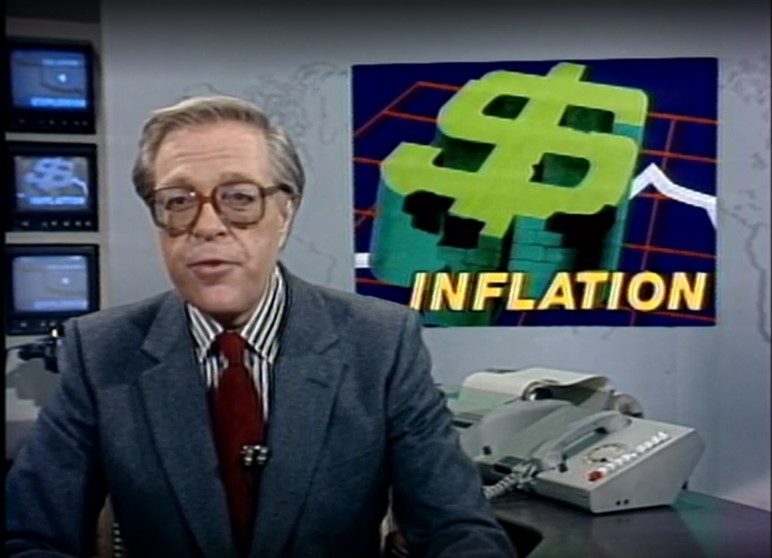
What Conservative MPs Said About Inflation and the Liberal-New Democratic Entente


“We can’t see it. But we’re all trapped inside these strange, repeating loops.” – The Matrix Resurrections  

I recently stumbled upon what some backbench Conservative MPs said on inflation and the Liberal-New Democratic Entente. They denounced the Trudeau government for its inaction and refusal to combat inflation or treat it as something serious at all.

“The cost of living rose by 1.3 per cent in one month, the highest monthly increase since […]. This is damning evidence of the results of the government’s do-nothing policy; and I place equal blame on its partner in what I call this clandestine coalition that governs Canada, the New Democratic Party. […] The patchwork of temporary relief measures will have virtually no effect on the increase in the cost of living. The Trudeau government, coalesced with and kept in power by the NDP, is providing no leadership to Canadians in the fight against inflation.”[1]

So said the Conservative MP from Frontenac—Lennox and Addington.

One of his colleagues went further.

Continue reading

Posted in Random Thoughts | Leave a comment

The Importance of Narrative in Politics: The Example of Cabinet Manuals in Canada


Sometimes the narrative surrounding an issue and the way that someone presents an issue overshadows the facts of the matter. Take, for instance, the case of the Guide for Ministers in Canada and this issue of cabinet manuals which some political scientists, notably Peter Russell, made topical in the early 2010s purely as a reaction against Stephen Harper’s early dissolution and tactical prorogation in 2008. The narrative which developed around cabinet manuals in the 2010s centered on transparency and accountability: these manuals lay out official interpretations of constitutional conventions, and they will therefore stop “abuses of power!” Here, you must, of course, ignore the fact that cabinet manuals are, by definition, produced by the very governments whom you’re accusing of abusing their authority in the first place. And you certainly must also ignore the fact that those cabinet manuals which do exist all directly contradict your interpretation of constitutional conventions and, in fact, specifically uphold the interpretation that you oppose.

Continue reading

Posted in Constitutional Conventions, Officialization of Convention | 1 Comment