
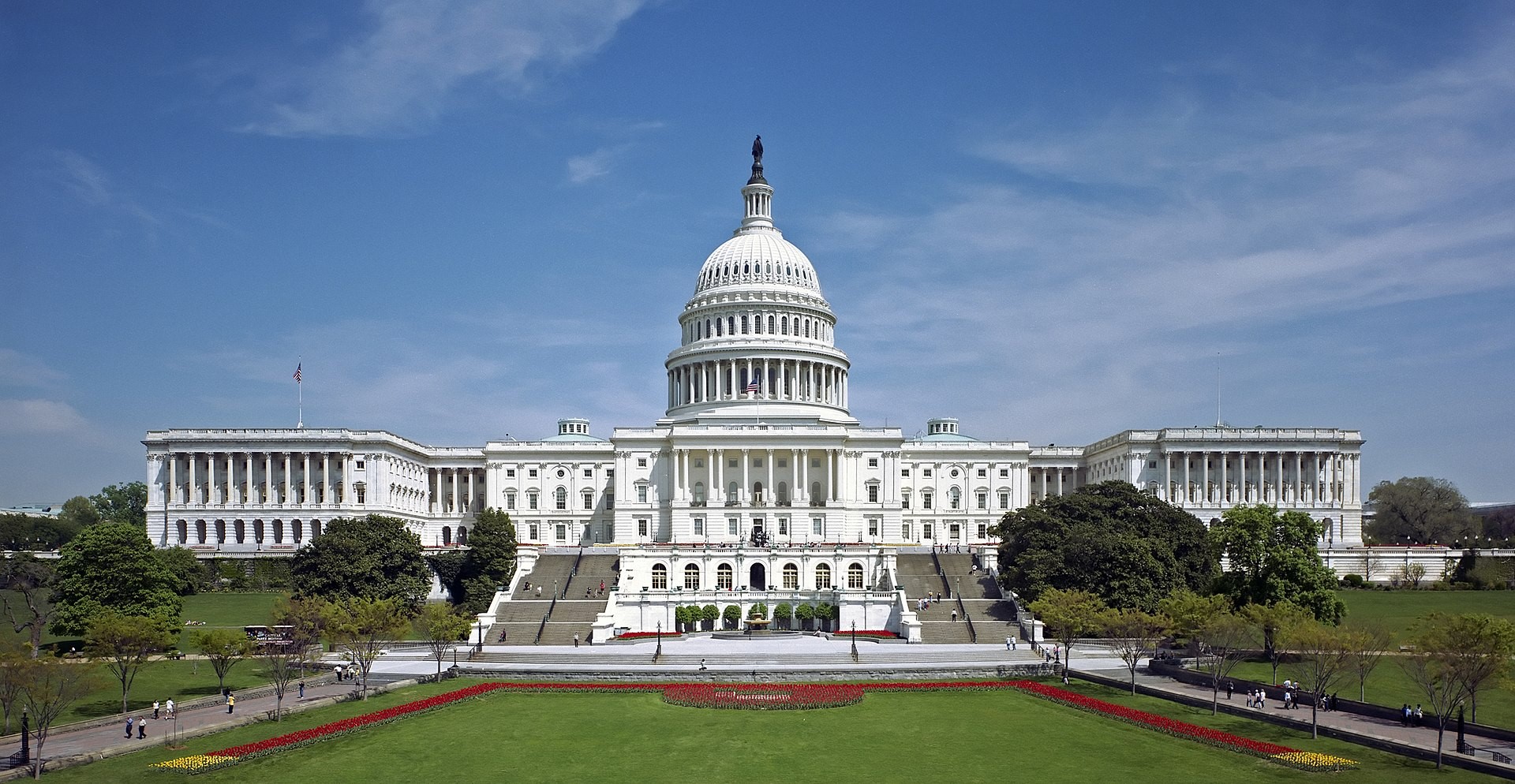
An American Connection
Over the last thirteen years, I have been pleasantly surprised to find that Parliamentum attracts a surprising number of readers from the United States, about one-quarter to one-third of the total depending on the year. I occasionally write on American topics, but mainly on British North American history and how Canada or the United Kingdom relate to the United States, and by drawing anecdotally from the five years that I spent there. I also go only as far as my limited knowledge of American political institutions permits and remain aware of all the known unknowns which face me here. From the point of view of a Commonwealth Realm like Canada, Australia, the United Kingdom, the United States does many things backwards and in defiance of what strikes us as common sense. For instance, the House of Representatives dissolves by efflux of time in January after the general election the previous November. In another strange twist, the House of Representatives also has no Standing Orders – which is to say, a set of rules which carries over by default from one Congress to the next, though subject to amendment at any time – but instead must adopt its own rules wholesale every two years.
The framers who founded the United States of America in the 1780s and wrote the Articles of Confederation in 1777 and the United States Constitution in 1787 well understood British history, parliamentary precedents, and the Common Law. John Adams in his Political Essays on the Principal Points of Controversy Between Great Britain and Her Colonies, Thomas Jefferson in his Summary View of the Rights of British America, and Alexander Hamilton, James Madison, and John Jay in the Federalist Papers all demonstrated a strong grasp of the general intellectual currents of the Enlightenment, the First British Empire, and Hanovarian Britain, in addition to an implicit fluency with the venerable tomes of the era like Sir William Blackstone’s Commentaries on the Laws of England. They designed the United States Constitution as a republican transcription of the Hanovarian Constitution of the 18th century when a stronger separation of powers between the executive and legislature pertained and before Responsible Government and collective ministerial responsibility had fully emerged by the 1830s and significantly narrowed that separation (but did not “fuse” the two).
I first noticed in 2012 that Alexander Hamilton devoted Federalist 69 to comparing the authorities of the President of the United States under Article II of the US Constitution to the royal prerogatives and authorities of the King of the United Kingdom, and that Hamilton expressly compared one clause in Article II, Section 3 to prorogation. This reference suddenly became relevant again after Donald Trump pulled a Grover Cleveland and won a non-consecutive second term earlier this month and his staff started floating the idea of invoking in early 2025 what I call the Presidential Bicameral Adjournment Clause of the US Constitution for the first time since 1787. I would like to compare prorogation in the Commonwealth Realms to the rough American equivalents of prorogation: first, the adjournment sine die and the 20th Amendment; and second, the Presidential Bicameral Adjournment Clause – so far never used. But I must admit, I have encountered some difficulty in discerning the precise effects of adjournment sine die on legislative business. Some learned American readers might need to correct any errors if I have failed to do their system justice.
Prorogation in the Commonwealth and Adjournment Sine Die in the United States
A prorogation ends a session of parliament and clears the Order Paper of all legislative business, thus killing all bills and halting the work of parliamentary committees. And a dissolution causes what Blackstone called “the civil death of a parliament”; it likewise clears all legislative business but also means that MPs cease to be MPs and instead merely become candidates in the general election. A new session of parliament, whether necessitated by a prorogation or a dissolution, begins upon the Speech from the Throne in which the Governor General outlines the ministry’s legislative priorities. The Governor General summons, prorogues, and dissolves parliament on and in accordance with the Prime Minister’s instrument of advice, which means that these authorities remain executive authority outside of the control of the House of Commons and Senate as legislative bodies. The Prime Minister can use prorogation neutrally and simply to end one and begin another session after the ministry has shepherded all its legislation through the House of Commons and Senate, or he can use prorogation tactically and with some controversy.
The House of Representatives lives for two years before undergoing an equivalent of an automatic dissolution by efflux of time on January 3rd every odd-numbered year, and the new Congress begins that same day – even though the election for this new Congress occurs two months earlier. Congress dissolves by efflux of time in accordance with the 20th Amendment of the US Constitution and not by any action of the President of the United States. In the Commonwealth Realms, by contrast, parliament must be dissolved first (whether by efflux of time or by the Crown on ministerial advice) so that a general election to elect new MPs can be held afterwards.
The “lifespan” of a Congress encompasses the two–year term for which Members of the House are elected, beginning on the constitutionally– required January 3 start date (even if the House delays its formal convening until a later date) and typically ending with sine die adjournment (although the House may still take actions through its committees until noon on January 3).[1]
The dissolution by efflux of time of one Congress certainly clears and resets all legislative business at least every two years, just as the dissolution of a parliament does in our system. Each Congress consists of a 1st session in odd-numbered years and a 2nd session in even-numbered years beginning and ending each January 3rd. But no precise equivalent of prorogation as we understand it in the Commonwealth Realms exists in the United States because the United States Constitution maintains a strict separation of executive and legislative authorities and gives the President very little control over Congress. However, adjournment sine die of the 1st session of a Congress seems to serve as the standard closest equivalent to prorogation in terms of clearing and re-setting all legislative business. Adjournment sine die (pronounced “sign a dye” despite its Latin provenance) literally means “without a day” and in practice means that Congress adjourns its session without stating precisely when Congress will next convene, which means that the next session of Congress must begin by default at noon on January 3rd under the 20th Amendment of the US Constitution.[2] On most other occasions, Congress would simply adjourn what we would call a sitting or a sitting day in the Commonwealth and resolve to meet again on x date. In other words, this concept of adjournment sine die would be as if the House of Commons and Senate of Canada could prorogue the session of parliament themselves without the Prime Minister having advised the Governor General to do so. (In my view, we could only implement that policy by amending section 38 of the Constitution Act, 1867 under the unanimous amending procedure of section 41(a) of the Constitution Act, 1982). That said the “intersession recess”, or period between when Congress adjourns sine die and January 3rd,[3] closely corresponds to our “intersession”, which is another way of referring to the time during which parliament is prorogued.
If I understand these American sources correctly, the start of the 2nd session of the same Congress should in principle act like our prorogations and therefore all clear all legislative business – but only if the House of Representatives and Senate jointly resolve that Congress be adjourned sine die. As the Congressional Research Service explains: “In the modern practice, legislative business dies only with the final sine die adjournment of the last annual session of a Congress, prior to the convening of the next annual session.”[4] But if I understand these sources correctly, Congress could decide not to adjourn sine die and therefore allow legislative business from the 1st session to carry out uninterrupted to the 2nd session, and thus, in effect, prevent their equivalent of prorogation from happening altogether.
The Precedents of the United States House of Representatives looks like a close equivalent to the British Erskine-May or the House of Representatives Practice of Australia or the House of Commons Procedure and Practice of Canada. Yet even this hefty three-volume tome does not state definitively that adjournment sine die of the 1st session of Congress clears all legislative business:
A session of Congress formally ends or expires when both Houses agree to a concurrent resolution providing for adjournment sine die (literally “without day”). An adjournment sine die takes the House into a period of adjournment until the next session, which will either occur at noon on January 3 or on a different date should Congress enact a law changing the date of convening. In the absence of a concurrent resolution providing for sine die adjournment, a session of Congress will “naturally” expire at noon on January 3, as that is the constitutionally–prescribed date on which the terms of Senators and Representatives begin. Thomas Jefferson, in his Manual of Parliamentary Practice, describes this form of termination as the “dissolution of the efflux of their time.” If the House is still in session on January 3, the Chair will typically declare the House adjourned sine die a few moments prior to noon. Alternatively, the Chair may await a motion to adjourn from the floor.[5]
Compounding my initial attempts to compare American and Commonwealth practices, Americans use “session” in two ways: sometimes in a way more akin to how we use a “sitting” ended by an adjournment of the House of Commons/Representatives in a Commonwealth Realm,[6] but then also as we use “session” to mean a period of sitting days ended by a prorogation or dissolution. However, America’s founding generation used “session” in the same way that we continue to do in the Realms today.
Thomas Jefferson wrote a Manual of Parliamentary Practice for the Use of the Senate of the United States in preparation for his own vice-presidency and presidency of the Senate. Jefferson made several allusions to prorogation and dissolution in his treatise, which that founding generation of American politicians – born British subjects, after all – would certainly have understood, even if American politicians today by and large would not and have no reason to do so. Jefferson understood the distinctions between adjournment of a house of parliament versus the prorogation and dissolution of parliament:
Parliament have three modes of separation, to wit: by adjournment, by prorogation or dissolution by the King, or by the efflux of the term for which they were elected. Prorogation or dissolution constitutes there what is called a session; provided some act was passed. […] Committees may be appointed to sit during a recess by adjournment, but not by prorogation.[7]
Jefferson also argued that Congress undergoes a dissolution by efflux of time every two years and that the 1st and 2nd annual sessions of each Congress used to correspond closely to prorogation under our system:
Congress separate in two ways only, to wit, by adjournment, or dissolution by the efflux of their time. What, then, constitutes a session with them? A dissolution certainly closes one session, and the meeting of the new Congress begins another. The Constitution authorizes the President, “on extraordinary occasions to convene both Houses, or either of them.” I. 3. If convened by the President’s proclamation, this must begin a new session, and of course determine the preceding one to have been a session. So if it meets under the clause of the Constitution which says, “the Congress shall assemble at least once in every year, and such meeting shall be on the first Monday in December, unless they shall by law appoint a different day.” I. 4. This must begin a new session; for even if the last adjournment was to this day the act of adjournment is merged in the higher authority of the Constitution, and the meeting will be under that, and not under their adjournment.[8]
The Americans seem to have adopted their modern muddled understanding of what constitutes a “session” upon adopting the 20th Amendment to their Constitution in 1933, which first set January 3rd as the start of the annual sitting, or session, of Congress.
Alexander Hamilton Compared Presidential Bicameral Adjournment to Prorogation
This original understanding of “session”, in line with our usage, probably explains why Alexander Hamilton in Federalist 69, “The Real Character of the Executive,” identified one clause in Article II, section 3 of the United States Constitution as the closest American equivalent to prorogation in terms of presidential action. He observed:
The President can only adjourn the national legislature in the single case of disagreement about the time of adjournment. The British monarch may prorogue or even dissolve the Parliament. The governor of New York may also prorogue the legislature of this State for a limited time; a power which, in certain situations, may be employed to very important purposes.
Article II, section 3 clearly draws inspiration from the authorities of the King of the United Kingdom and how he interacts with the House of Commons and House of Lords; these clasues contain strong analogies, respectively, to the King’s Speech (or Speech from the Throne in Canada), summoning a session of parliament, and proroguing a session of parliament:
He shall from time to time give to the Congress Information of the State of the Union, and recommend to their Consideration such Measures as he shall judge necessary and expedient; he may, on extraordinary Occasions, convene both Houses, or either of them, and in Case of Disagreement between them, with Respect to the Time of Adjournment, he may adjourn them to such Time as he shall think proper […].
(I can’t help but read that first clause in President Bartlet’s voice). The President of the United States “gives to the Congress Information on the State of the Union” every January in either a document (from Jefferson to Taft) or in a speech before the House of Representatives to a joint sitting of the House and Senate (since Wilson). The President has sometimes convened – and thus terminated the adjournment of – one or both houses of Congress by proclamation: John Adams convened both Houses for 15 May 1797 on 25 March, Teddy Roosevelt convened the Senate in March 1903 to ratify a treaty for building the Panama Canal, and Harry Truman convened both Houses in 1947 and again in 1948. However, no president has as yet invoked his discretionary authority to “adjourn [both Houses] to such time as he shall think proper in case of disagreement between them with respect to the time of adjournment” because the two Houses have over the centuries never disagreed with each other and thus never triggered the threshold that would allow the president to intervene. President Trump threatened to invoke the clause in April 2020 so that he could make recess appointments and bypass the Senate’s confirmation, apparently not understanding that the two Houses had, in fact, agreed on the date and duration of their adjournment.[9]
And in November 2024, Trump’s staff have floated the possibility that they would engineer a disagreement between the House of Representatives and the Senate so that Trump could adjourn both houses of Congress for at least ten days, which would, in turn, allow him to make various recess appointments of his controversial nominations and bypass the Senate’s confirmations. According to Adrian Vermeule, Professor of Law at the University of Chicago, James Madison’s opponents at the Philadelphia Convention believed that forcing the two houses to agree on adjournments would “risk that the Senate would dominate the House of Representatives.”[10] Ironically, the Republican majority in the House of Representatives under Speaker Mike Johnson would today have to engineer a disagreement with the Senate on when the houses should adjourn so that the President can undermine the Senate’s authority over confirming appointments.
Ed Whelan of The National Review outlined how Trump and Johnson would engineer this quasi-prorogation:
Step 1: The House adopts a concurrent resolution that provides for the adjournment of both the House and the Senate. (The House rules expressly state that a concurrent resolution “may provide for the adjournment of … both Houses.”)
Step 2: The Senate either adopts the concurrent resolution, in which case it adjourns (jump to Step 4), or it rejects the concurrent resolution (proceed to Step 3).
Step 3: Trump adjourns both the House and the Senate for at least ten days (and perhaps for much longer).
Step 4: Trump recess-appoints his Cabinet officers.[11]
The Framers, and indeed most American politicians within our lifetimes, could scarcely have imagined that the House of Representatives would work with the President to undermine the Senate and itself.
While presidential bicameral adjournment would not clear the legislative business of the House of Representatives and Senate like a prorogation of parliament does in a Commonwealth Realm, this procedure would nevertheless resemble a prorogation in the sense that the President may decide unilaterally for how long to keep the House and Senate adjourned, subject perhaps only to the provision in the 20th Amendment which says that Congress must sit at least once each calendar year. Similarly, an intersession here can last in theory for almost one year subject to the requirement under section 4 of the Constitution Act, 1982 that the House of Commons must hold at least one sitting each year, though in practice the financial cycle would make the maximum intersession much shorter. The presidential bicameral adjournment therefore most closely resembles a tactical prorogation because the uncertain length of the adjournment would give the president more room for unilateral manoeuvre, such as bypassing the Senate’s confirmations of his nominations to executive posts.
Similar Posts:
- Prorogation
- Tactical Prorogation by Speech from the Throne in Nova Scotia Technically Meets Statutory Requirement for a “Fall Sitting” (February 2021)
- Justin Trudeau Has Made Prorogation Great Again (October 2020)
- No Prorogation: The Long Parliamentary Sessions in the United Kingdom and Canada (June 2019)
- The Politics of Prorogation in Canada (June 2017)
- Justin Trudeau Will Make Prorogation Great Again (April 2017)
- A Caretaker Convention in the United States? (February 2016)
- Alexander Hamilton Recommended Responsible Government in 1788 (November 2012)
- 1774: Thomas Jefferson, the Rights of British Americans, and the Origins of the Commonwealth Realms (September 2011)
Notes
[1] Charles W. Johnson, John V. Sullivan, and Thomas J. Wickham, editors, “Sessions of Congress,” chapter 1 in Precedents of the United States House of Representatives, Volume I (Washington: House of Representatives, 1 December 2017), at page 4.
[2] Charles W. Johnson, John V. Sullivan, and Thomas J. Wickham, editors, “Sessions of Congress,” chapter 1 in Precedents of the United States House of Representatives, Volume I (Washington: House of Representatives, 1 December 2017)
[3] Congressional Research Service, “Sessions, Adjournments, and Recesses of Congress,” R42877, 19 July 2016, at page 10.
[4] Congressional Research Service, “Sessions, Adjournments, and Recesses of Congress,” R42877, 19 July 2016, at pages 14-15.
[5] Charles W. Johnson, John V. Sullivan, and Thomas J. Wickham, editors, “Sessions of Congress,” chapter 1 in Precedents of the United States House of Representatives, Volume I (Washington: House of Representatives, 1 December 2017), at page 6.
[6] United States House of Representatives, Office of the Historian, “List of All Sessions,” accessed 20 November 2024.
[7] Jefferson’s Manual, at page 306.
[8] Jefferson’s Manual, at page 307.
[9] Bloomberg Quicktake, “Trump Claims Untested Power to Adjourn Congress in Nominee Fight,” 16 April 2020.
[10] Adrian Vermeule, “The Constitutional Law of Congressional Procedure,” The University of Chicago Law Review 71, no. 2 (Spring 2004): 390-391.
[11] Ed Whelan, “Will Trump Pursue Bonkers Plan to Adjourn Both Houses of Congress? [REVISED],” The National Review, 13 November 2024.

 James Bowden's Blog