Justin Trudeau Denies the Divisiveness of Politics


Strange Musings on Quebec’s Secession

On Sunday, 12 February 2012, Justin Trudeau announced in a French-language interview that he would support the secession of Quebec in order to oppose and protect Quebec from the alleged right-wing policies of the Harper government. Trudeau made the following comments around the 13-minute mark:

When Quebec is not involved in the governance of this country, this country becomes more right-wing. And it’s not necessarily that Canadians don’t have the same values as Quebeckers. It’s that there’s a way of seeing social responsibility, openness toward others, a cultural pride here in Quebec, which is necessary for Canada […]. And I’ve always said that if the time comes when I believe that Canada becomes truly the Canada of Stephen Harper – we turn against abortion, against gay marriage, and return to the past in 10,000 different ways – perhaps I would muse about wanting to make Quebec a country. […] Absolutely, if I no longer knew Canada [as conforming to] my values.

[My translation].*

(As an aside, most English-language media outlets translated Trudeau’s main declaration “Peut-être je me songerais à vouloir faire le Québec un pays” as “Maybe I would think that Quebec should become a country”. But that inaccurate translation misrepresents “se songer”, which really means “to muse” or “to consider”, a far more conditional and hypothetical declaration than “to think”. This is why I don’t think that Trudeau is disloyal; he’s just too emotive and apparently incapable of articulating a rational argument).

Ignorance of Loyal Opposition and of the Government versus the State

Herein lies Justin Trudeau’s warped conception of loyal opposition. Loyal opposition means responsible political opposition toward the government’s policies but loyalty to the Crown, and therefore to the country; however, Trudeau wants Quebec to secede – not out of opposition to the Canadian State – but in direct response to the Harper government’s policies.  Normally, if one disagrees with the policies of the government of the day – they’re too right-wing, too left-wing, or whatever – then one should work toward ousting the government in the next election and replacing it with another government more in line with one’s own views.
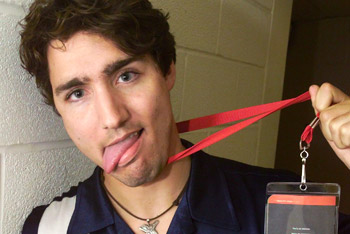
Justin Trudeau: hoisted on his own petard?

Trudeau, however, seems to suggest something else entirely different in this interview. Essentially, his assertion (because he’s not really dealing in evidentiary argumentation) rests on the premise that if Quebeckers oppose the alleged right-wing policies of the Harper government and the Conservative Party of Canada, they should consider secession as a legitimate response rather than electing a new, more left-wing government in which Quebec would receive more Cabinet representation. Alternatively, even from the standpoint of a principled secessionist, Trudeau’s argument insults the intelligence of Quebeckers: Trudeau asserts that Quebeckers should not elect to secede from the Canadian federation and become a sovereign State because they oppose the Canadian federal State, but merely because they disagree with the government of the day. Justin Trudeau confuses opposition to the government’s policies with opposition to the State itself; worse still, his remarks imply that he doesn’t even understand the crucial distinction between the government and the State. I doubt that Trudeau truly opposes the Canadian State (the country); he just vehemently opposes the Harper government and seems incapable of articulating a coherent argument to explain why. After all, why would you work toward articulating a coherent argument when good looks and a famous last name have given you everything that you need or want?

By Justin Trudeau’s logic, Alberta, and perhaps other Western provinces, should have seceded under the Second Trudeau Government (1980-1984) because they vehemently opposed that government’s policies, like the National Energy Program. In reality, of course, Westerners simply voted overwhelming for the Conservatives in 1984. And when they became dissatisfied with the Mulroney government and the Progressive Conservative Party, they turned toward the Reform Party of Preston Manning, the Canadian Alliance of Stockwell Day, and the Conservative Party of Stephen Harper. They opposed the government’s policies but remained loyal to the country. (To illustrate this principle that voters should never confuse opposition to institutions and the State with opposition to the government and its policies, many Western Canadians supported the reform of the Senate into an elected chamber in the 1980s and 1990s while their party occupied the opposition benches; however, after the Harper government took office and took control of the immense Crown prerogatives at its disposal, the clamour for an elected Senate has abated).

Trudeau Denies the Divisive Nature of Politics

Justin Trudeau issued a brief statement on 14 February 2012, in his typical hyperbolic theatrical style, and left the microphone amidst the clamour of anxious and frustrated journalists. He insisted stridently that his political opponents cannot interpret his “musings” on Quebec’s secession in response to the Harper government as disloyalty to Canada.

Trudeau asked rhetorically and asserted:

Why do millions of Quebeckers not see themselves in this government? […] Because they do not like – they do not see – the Canada that we build over decades reflected – not in the policies of this government – but in the values that this government is putting forward.

To answer Trudeau’s rhetorical question, “Quebeckers do not see themselves in this government” because they choose to elect primarily candidates representing the New Democratic Party, Her Majesty’s Loyal Opposition, rather than electing Conservatives, who formed Her Majesty’s Canadian Government. If Quebeckers had elected more Conservatives, they would enjoy a commensurately larger representation in Cabinet, and, it stands to reason, a better “reflection of their values” in Government.

Even more extraordinarily, Trudeau asserted – he most certainly did not “argue”, because arguments require evidence – that the Harper government opposes the rule of law and what he considers “the rights of the individual” and basic freedoms:

Freedom from fear, freedom from crime, freedom to love who[m] you want and to not be judged for it [i.e., “same-sex marriage”], freedom to do what you want with your body [i.e., “abortion”]. These freedoms are the very things that Stephen Harper and his government are trying to take away!

Trudeau of course declined to offer any evidence to support these hyperbolic, fantastical assertions. To allude to one of the Liberals’ favourite lines of attack against the Harper government, allow me to ask my own rhetorical question: when will Justin Trudeau support “evidence-based” argumentation? In addition, those remarks reveal that Trudeau almost certainly rejects the classical liberal definition of liberty as the absence of external constraints (also known as “negative liberty” and generally expressed as “freedom to”) and instead adopts the social democratic concept of “positive liberty” through this phrasing of “freedom from”, which implies that an activist State must guarantee certain outcomes.

Trudeau concluded his opening salvo in English by asserting that his opposition to the Harper government “has nothing to do with policy,” even though he’s “upset at the direction that this government is taking the country” — which by definition means that he disagrees with the Harper government’s policies. He also asserted that “there are millions of Canadians who don’t see, in the direction that this government is taking, a direction that is consistent with Canada.” Presumably, Trudeau meant that his opposition to the Harper government rests on “values” – the values that only the Liberal Party can apparently defend (and perhaps under his leadership). These contradictory assertions betray a fundamental misunderstanding of what constitutes policy. What Trudeau mistakenly differentiates as “policy” versus”values” are in practical governmental terms, and in fact, both examples of policies against which any serious, loyal opposition party would campaign in the next election in order to replace the government.  Trudeau clearly based his assertions on what he perceives, incorrectly, as the Harper government’s policies, in this case, repealing same-sex marriage and restricting access to abortion.

Amidst all his theatrical hyperbole, Trudeau lost sight of the argument that he tried to make: Canadians should elect a new government, a Liberal government, in order to replace the Conservatives and the Harper government’s policies with a “progressive alternative.”

Trudeau then switched into French and accused the Harper government of promoting “an anti-intellectual Canada”. I can only conclude that it is Justin Trudeau, content in making hyperbolic emotive assertions in place of rational evidentiary arguments, who promotes anti-intellectualism. In conclusion, Trudeau probably is loyal to Canada, but he seems incapable of abiding by his father’s maxim of “reason before passion” and thus submits his ignorance of Westminster parliamentarism and his virulent political activism in place of a logical argument against the Harper government’s policies (and alleged policies). For shame. His father would be sorely disappointed.

Justin Trudeau cannot even make a coherent argument why the Liberals should replace the Harper government. In that sense, he cannot even act as a responsible Leader of the Official Opposition and leader of an alternative government – let alone as Prime Minister. In any case, Canada restricts the hereditary principle to the Head of State; our Head of Government should not also head a familial dynasty.

Similar Posts:
Posted in Loyal Opposition | Tagged , , , | 5 Comments

Minister Kenney on the Crown in Canada


The Minister of Citizenship and Immigration, the indefatigable and earnest Jason Kenney, spoke to a small audience at an event organized by the Monarchist League – University of Ottawa Branch on 7 February 2012.

Minister Kenney emphasized the Crown as the progenitor of “an ancient system of ordered liberty” whose first democratic inklings stretch back to the Great Charter of King John at Runnymede in 1215. He rejected the standard republican identity politics that the Crown represents only Canadians of British origin and asserted that in his capacity as Minister of Citizenship and Immigration, he has observed that New Canadians of all backgrounds have demonstrated genuine enthusiasm and affection toward the Crown. Kenney cited Kevin MacLeod’s Crown of Maples and the new guide on citizenship as part of this “responsibility to correct.” He took particular pride in the new guide on citizenship and its role in promoting civic literacy.

With a clever play on words, Minister Kenney argued that “we have a responsibility to correct” historical misconceptions on the Crown in Canada. To that end, he sees the Diamond Jubilee as “a teaching opportunity” that will underscore “the organic development” of the Crown. This year also marks the 200th anniversary of the War of 1812, and as part of the celebrations, modern Army regiments that can trace their origins back to battles in the War of 1812 will now qualify for historic recognition and honours that the British and Americans have long since accorded their regiments involved in that war. Minister Kenney lauded the restoration of the Royal designation to the Air Force and Navy; with respect to the other Royal command of summer 2011, he suggested that the omission of the Queen’s portrait at our embassy in Paris prompted the public reminder that all Canadian embassies and consulates must display the portrait of the Queen of Canada. While Kenney portrayed these decisions as non-partisan acknowledgements of the Crown’s primacy, the Conservatives run the risk of politicizing the Crown if they do not tread more carefully, and they must resist the tempetation to turn the Crown into a wedge issue.

Minister Kenney also paid homage to the historic and official name of this country, the Dominion of Canada. Contrary to republican belief, the use of “Dominion” to describe a polity originated here. “The Dominion of Canada” had lapsed into obsolescence by the 1960s on most government and parliamentary letterheads in favour of the more pedestrian “Canada”. The media would likely portray an effort to reassert the long-form “Dominion of Canada” as a monarchical retrogression; however, contrary to republican belief, the use of “Dominion” to describe a polity originated here, and British colonial officials subsequently applied it to the other self-governing colonies in the 19th century. Australia calls itself officially “The Commonwealth of Australia” without monarchical pretension.  Perhaps if the Conservatives win the next election in 2015, Canada could officially restore its old name in honour of our sesquicentennial in 2017. I know of at least one Minister of the Crown who would support such a restoration.

Posted in Conferences and Speeches | 8 Comments

The Evolution of the Principle of Restraint (Caretaker Convention) in Canada


Once again, the Manual of Official Procedure of the Government of Canada has proven indispensible as an historical resource! The Appendices contains the “Order in Council cancelling Appointments made on Macdonald’s Resignation (1873)”. I have uploaded this excerpt as a separate PDF in the Canadian documents section.

The Principle of Restraint (The Caretaker Convention)

The Manual of Official Procedure of the Government of Canada of 1968 and the Guidelines on the Conduct of Ministers, Secretaries of State, Exempt Staff and Public Servants During An Election of 2008 discussthe Principle of Restraint (sometimes called the “caretaker convention”): how the government ought to restrain itself during the writ period and, if necessary, until the appointment of the new government. This principle recognizes that the government restrains itself to making decisions only on necessary and urgent matters during an election and during the short period after the election until the next government takes office. This convention on the restraint of government business exists because when parliament is not in session, the people’s representatives cannot hold the government to account on its expenditures.[1] The Manual puts the onus on the government to restrain itself, recognizing that parliament cannot do so, but acknowledges that some former Canadian prime ministers exercised less restraint than others.[2]

1. […] The extent of these restraints varies according to the situation and to the disposition of the Government to recognize them.
2. The possibility of restraint only arises if the continuation of confidence in the Government is called into question. A defeat in the House preceding dissolution or a defeat at the polls would be the usual causes of restraint.
3. The restraint has been recognized as applying to important policy decisions and appointments of permanence and importance. Urgent and routine matters necessary for the conduct of government are not affected.[3]

In 2008, the Privy Council Office established the Guidelines on the Conduct of Ministers, Secretaries of State, Exempt Staff and Public Servants During An Election, defining this principle more forcefully:

[D]uring an election, a government should restrict itself – in matters of policy, expenditure and appointments – to activity that is: a) routine, or b) non-controversial, or c) urgent and in the public interest, or d) reversible by a new government without undue cost or disruption, or e) agreed to by the Opposition (in those cases where consultation is appropriate).[4]

The principle of restraint exists in the absence of any formalized, legal limitations on the government’s power during the writ period. When Parliament is not in session, the House of Commons cannot fulfill its core function of holding the government to account for its expenditures, so the government constrains itself by a self-imposed convention. The government limits itself to the routine and the necessary in order to adhere as closely as possible to the principle of responsible government.

Mackenzie Advised Dufferin to Cancel Macdonald’s Post-Resignation Appointments

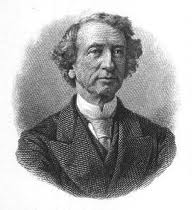
Prime MInister Sir John A. Macdonald

In order to postpone an inevitable vote of non-confidence in his Ministry over the Pacific Scandal, Prime Minister John A. Macdonald advised Governor General Lord Dufferin to prorogue the 1st session of the 2nd Parliament for August 13th, 1873. Unlike the 40th Parliament in January 2009, the 2nd Parliament carried out the full extent of its authority; when the intersession ended on October 23rd, 1873, the opposition Liberals as well as some backbench Conservatives voted to censure Macdonald.[5] He resigned on behalf of his Ministry, and the Leader of Her Majesty’s Loyal Opposition Alexander Mackenzie became The Dominion of Canada’s second Prime Minister on November 7th, 1873. Prime Minister Mackenzie then advised Lord Dufferin to prorogue the same day, and he advised that the 2nd Parliament be dissolved on December 1st, 1873. His Liberals handily won the next election.

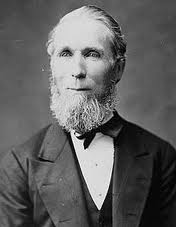
Prime Minister Mackenzie

The Order-in-Council P.C. 1595 indicates that the outgoing Macdonald Ministry advised several appointments on or October 27th, though a caretaker government should undoubtedly have exercised restraint and avoided all but the most necessary appointments (as P.C. 1595 says, “The mere filling of some offices when the vacancy would be prejudicial to public interests could not be objectionable”). This Order-in-Council from 1873 affirms the same principles that the Manual stated in 1968, which the Government again officialized in the Guidelines of 2008. The best practices of responsible government had therefore already established themselves in the mid-19th century. P.C. 1595 states even more forcefully than either of the more recent documents that the Ministry should avoid the “abuse” of this power of appointment through “an improper exercise of it” whenever the Ministry’s command of the confidence of the House has fallen into doubt. This concern seems misplaced, because the House had already withdrawn its confidence by October 27th; the period of October 23rd to November 7th saw a classic caretaker government that remained in office only because the Governor General had not yet appointed the new government as per the House’s wishes. The outgoing Ministry should exercise restraint because “a new Administration might […] be subjected to very serious inconvenience.”

The incoming Mackenzie Ministry advised the cancellation of these appoints on November 13th, 1873, four days after its investiture. Lord Dufferin, true to his liberal Whiggish character and understanding of his constitutional role of non-partisanship, proved as dutiful a servant to Prime Minister Mackenzie as he had to Prime Minister Macdonald. I consider Lord Dufferin one of our most important Governors General precisely because of his commitment to responsible government, Canadian autonomy, and the replication of English precedents – including the transfer of Royal prerogative to the Crown-in-Council prerogative. Lord Dufferin explained his concordance with Prime Minister Mackenzie’s advice:

According to English precedent – by which the opinion of the Governor General would naturally be guided – an outgoing Administration has a right to “fill up vacancies”, even after they have tendered their resignation to the Crown. […] But it is equally evident that the exercise of this right of filling vacancies should be used with moderation and discretion and within the limits described.

Governor General Lord Dufferin: Protector of Responsible Government

Lord Dufferin well understood that under responsible government, the Prime Minister should exercise restraint in the advice that he tenders to the Governor General; however, the Governor General must still act in accordance with that advice, and the Prime Minister must take responsibility before the House of Commons and before the electorate for having issued bad or unscrupulous instructions. The Governor General should therefore intervene and exercise the “reserve powers” only under the most exceptional circumstances – when responsible government otherwise threatens to collapse – because the Office of the Governor General must remain neutral and transcend partisan politics. If he so intervenes too eagerly, he may unwittingly become the cause of constitutional collapse rather than the guarantor of constitutional stability.


[1] Canada. Privy Council Office, Manual of Official Procedure of the Government of Canada, Henry F. Davis and André Millar.(Ottawa, Government of Canada, 1968): 89.
[2]
Ibid., 90.
[3]
Ibid., 89.
[4]
Canada. Privy Council Office, Guidelines on the Conduct of Ministers, Secretaries of State, Exempt Staff and Public Servants During An Election. (Ottawa: Her Majesty the Queen in Right of Canada, 2008): 1.
[5]
Nicholas A. MacDonald and James W.J. Bowden, “No Discretion: On Prorogation and the Governor General,” Canadian Parliamentary Review 34, no 1 (2011): 7-16.

Related Posts:

Posted in Caretaker Convention & Government Formation, Crown (Powers and Office), Governor's Discretion, Officialization of Convention, Responsible Government | Tagged , , , , , , , | Leave a comment

The State of the Union Address and Loyal Opposition in the United States


The State of the Union Is The Equivalent of the Sovereign’s State Opening of Parliament

“[The President of the United States] shall from time to time give the Congress Information of the State of the Union, and recommend to their Consideration such Measures as he shall judge necessary and expedient […]”. President Washington “set the precedent” and ultimately established a convention that “from time to time” means annually.[1] I invoke the idea of “conventions” in the United States deliberately, because even written constitutional regimes fill in the gaps with customs and traditions that slowly become part of the overall constitutional system. British constitutional scholar Sir W. Ivor Jennings observed this tendency in the United States: “Thus a whole host of conventions has grown up around and upon the Constitution of the United States, regulating […] the method of electing the President, […] the composition and operation of his Cabinet, his relations with Congress, and so on.”[2]

Parenthetically, the wording of the American Constitution above shows that what became the State of the Union clearly drew inspiration from the British Sovereign’s annual State Opening of Parliament, or what we call in Canada the Speech from the Throne, in which the Sovereign or the Sovereign’s representative reads before a joint sitting of parliament the government’s policy priorities for the upcoming session. Contrary to the implication of Gerhard Peters’ description, the Sovereign or the Sovereign’s representative reads the speech that the government prepares, and thereby carries out the government’s advice rather than his or her own personal discretionary authority.

Loyal Opposition in the United States Derives From the “Balanced Constitution” and Representative Government of 18th-Century Westminster Parliamentarism (1689-1830)

By another well-established convention, the party not in the White House issues the “opposition response” to the President’s State of the Union Address. The avuncular Republican Governor of Indiana, Mitch Daniels, delivered the Republican Party’s response in 2012.  One of my American friends had seen my endless stream of Facebook statuses on loyal opposition in the Westminster system and brought to my attention that Governor Daniels invoked the phrase “loyal opposition” several times in the Republican response. I found Governor Daniels’ articulation of the American concept of loyal opposition intriguing and altogether different from the modern Westminster model of loyal opposition.

Governor Daniels has made the following comments on loyal opposition, in his response to the State of the Union. (I derived from the text of his speech, but which you can see for yourself in the embedded videos below).

The status of ‘loyal opposition’ imposes on those out of power some serious responsibilities: to show respect for the Presidency and its occupant, to express agreement where it exists. […]
An opposition that would earn its way back to leadership must offer not just criticism of failures that anyone can see, but a positive and credible plan to make life better, particularly for those aspiring to make a better life for themselves.  Republicans accept this duty, gratefully.[…]
As a loyal opposition, who put patriotism and national success ahead of party or ideology or any self-interest, we say that anyone who will join us in the cause of growth and solvency is our ally, and our friend.  We will speak the language of unity.  Let us rebuild our finances, and the safety net, and reopen the door to the stairway upward; any other disagreements we may have can wait.

In 2009, Governor Mitch Daniels responded to the Democrats’ legislation on cap-and-trade and expressed his opposition in a gubernatorial message:

The role of the loyal opposition is important in our democracy. It imposes a duty to wish for the nation’s success, to express not just disagreements, but agreements where they exist, and to leave partisanship at the water’s edge.

Based on Governor Daniels’ messages, we can derive the following roles of loyal opposition in the American system and then compare them to the role of loyal opposition in Westminster parliaments:

  1. The loyal opposition, “important for democracy”, institutionalizes political dissent;
  2. The loyal opposition is “responsible”: the party or parties in opposition operate exclusively within the constitutional framework, and they “respect the Presidency and its occupant”;
  3. The loyal opposition presents itself as an alternative government by “earning its way back to leadership”;
  4. The loyal opposition “expresses agreement where it exists”, and “leaves partisanship at the water’s edge”;
  5. The loyal opposition puts the country first and must subordinate “party, ideology, and self-interest” to its “duty to wish for the nation’s success”; and
  6. The loyal opposition must therefore expresses disagreement and opposition to the government’s policies where it exists.

In Westminster systems, loyal opposition refers to a responsible party that abides by the constitution and presents itself as an alternative government; the loyal opposition opposes the government’s policies but is always loyal to the Crown and therefore to the country. In the Presidential-Congressional system, the President is both head of state and head of government, paradoxically both a unifying and divisive figure. Modern Westminster parliamentarism and responsible government have long since done away with such ambiguities: under our system, the Sovereign is the head of state, but he or she acts upon and in accordance with (except in exceptional circumstances) the advice of the Prime Minister, the head of government, and the Cabinet. Responsible government therefore implements a separation of powers more advantageous than the division between the executive and the legislature; this supreme advantage of parliamentarism allows the Prime Minister and his Cabinet to bear the brunt of all criticism and allows the Sovereign to rise above politics and become a true unifying national figure. I therefore disagree with Governor Daniels: loyal opposition in the United States requires that the opposition respect the Presidency (the office) but not necessarily the President (the man), though this distinction is probably difficult to maintain in practice.

Loyal opposition in Westminster systems is inherently partisan, unlike in Governor Daniels’ formulation of loyal opposition in the United States. The separation of the Head of State from the Head of Government allows the loyal opposition in Westminster systems to unleash an onslaught of criticism toward the government without raising the question of their loyalty to the country, because the Sovereign only implements the bad advice of the government. Thus in Westminster systems, partisan loyal opposition still puts the country first.

In short, loyal opposition in the United States resembles the more restrained loyal opposition that occurred under the Balanced Constitution and the era of Representative Government (1689-1832) in Westminster parliamentarism. Under this Balanced Constitution, a kind of transition between the Royal Supremacy and Responsible Government, the Prime Minister essentially acted as an agent of the Sovereign and had to retain his confidence rather than the confidence of the House of Commons. The full separation of the Sovereign from the Prime Minister had not yet evolved when the British American colonists rebelled in the 1770s, so the American system became a republican adaption of the Balanced Constitution: three co-equal branches of governments and two levels of government in a federal system would restrain power and contain personal ambition in order to prevent tyranny. British historian R.M. Punnett refers to the checks and balances of the American system – the Senate on the House, the Presidency on the Congress as a whole, etc. – and the federal division of powers as “institutional opposition.”[3] As such, American bipartisanship might have resulted from the absence of Westminster-style loyal opposition.

Affirmation of Loyalty in the American System: Allegiance to the Constitution

But how do we measure loyalty? All parliamentarians must swear or affirm the Parliamentary Oath of Allegiance to the Sovereign in order to demonstrate their personal loyalty and commitment to act within the constitution, which in turns forms the basis of the loyal opposition’s collective loyalty and responsibility. The Oath of Allegiance also recognizes that the lower chamber and the upper chamber, along with the Crown, form the three parts of the sovereign Crown-in-Parliament.

Governor Daniels articulated a reasonable summary of loyal opposition in the United States, similar to the loyal opposition of the Balanced Constitution and the era of representative government in Westminster parliamentarism. I would argue that a more concise formulation of the principle of loyal opposition in the American system would be, “opposition to the policies of the President but loyalty to the Constitution, and therefore to the country.” In republics, the people are both the political and legal sovereign, but the oath of allegiance in a republic can recognize either the constitution or the people. The United States tends more toward the former. While the famous preamble of their Constitution vests sovereignty in “We the People”, their Constitution also contains an oath or affirmation of office of the Presidency that serves as a model for other commissions of office under the Constitution or statutory law: “I do solemnly swear (or affirm) that I will faithfully execute the Office of President of the United States, and will to the best of my Ability, preserve, protect and defend the Constitution of the United States.” The Constitution of the United States is the equivalent of the Crown in Westminster systems as the supreme course of legal authority and legitimacy. Loyalty to the Constitution therefore enshrines loyalty to and the paramountcy of the rule of law – the most important legal principle in any constitutional system, republican or monarchical. In contrast, loyalty to “the people” or to “the nation” (as in the Republic of Ireland) upholds an undiluted form of democracy that can easily led to the tyranny of the majority; the American Constitution contains a clear rational meaning, but “the people” or “the nation” evoke a fickle romanticism of ambiguous definition and ever-changing ephemeral emotion. Sometimes “the general will” of the people may contradict the rule of law and the rational values of the Enlightenment that the American Constitution codified, or it may become confused, such as when “the people” choose to elect a Tea Party House, a Democratic Senate, and a Democratic President.

I can only conclude that the American political system would benefit for a widespread discussion on what constitutes “loyal opposition” within the confines of a presidential-congressional system, as well as a clear formulation of loyal opposition (such as the aforementioned definition that I offerred), though perhaps what Punnett called “institutional opposition” invariably over-rides “loyal opposition.” I am reminded again by a scene in The West Wing. Leo McGarry in “The Leadership Breakfast” recounts an anecdote from his youth:

There was a freshman Democrat who came to Congress 50 years ago. He turned to a senior Democrat and said, “Where are the Republicans? I want to meet the enemy.”
The senior Democrat said, “The Republicans aren’t the enemy. They’re the opposition. The Senate is the enemy.”
Those days are over.

Based on the current conflict between the House and the Senate, I’m not so sure!


[1] Gerhard Peters, “State of the Union Addresses and Messages,” The American Presidency Project. http://www.presidency.ucsb.edu/sou.php#axzz1knCTLzhg [Accessed 27 January 2012].
[2]
Sir W. Ivor Jennings, The Law and the Constitution (London: University of London Press, Ltd., 1943): 82.
[3]
R.M. Punnett, Front-Bench Opposition: The Role of the Leader of the Opposition, the Shadow Cabinet and Shadow Government in British Politics (London: Heinemann, 1973):22.

Similar Posts:

Posted in Loyal Opposition, Parliamentarism v Presidentialism, Separation of Powers | Tagged , , , , , , , , | 4 Comments

David Starkey’s Historical Documentaries on the Monarchy


For an excellent history of the monarchy in the United Kingdom, I highly recommend David Starkey’s series Monarchy, which he adapted from his latest book Crown & Country – The Kings and Queens of England: A History. He devotes a series to each major monarchy or dynasty (as in Royal House, like the Tudors, the Stuarts, and the Hanoverians) and narrates this history of this institution in his characteristic acerbic wit and wry historian’s sense of irony. At the risk of WordPress and SOPA shutting down Parliamentum, I’ll embed the main videos here.

The Middle Stuarts covers the Restoration to Glorious Revolution, Charles II and James II (1660-1689). History remembers the regicide of Louis XVI but forgets that England underwent similar political turmoil over 150 years before, but ultimately ended its republican experiment upon the Restoration of the Stuarts. The Parliamentarians had defeated the Royalists and committed the ultimate act of treason by executing Charles I in 1649. Oliver Cromwell became Lord Protector of the new republican Commonwealth. However, the republic had fallen apart after Cromwell’s death and by 1660, Parliament invited Charles II, living in exile since the regicide, to return to England and become King. This series deals with the fallout and aftermath of the Cromwellian Protectorate and the uneasy truce that developed between Parliament and the Crown under Charles II and his brother James II. This ended in 1688 when Parliament invited William of Orange to become King and deemed James II to have abdicated the throne.

The Last Stuarts deals with perhaps the most consequential monarchs in English and British history, for King William III and Queen Anne (1689-1714) laid the foundation of the United Kingdom as “the first modern State”, in Starkey’s estimation, and constitutional monarchy. Parliament cemented the Glorious Revolution of 1688 through the passage of the Bill of Rights, 1689, which codified Parliament’s powers and authorities (such as parliamentary privilege and Members’ freedom of speech) and its constitutional limitations upon the Sovereign’s exercise of Crown prerogative. Only Parliament could pass supply and appropriate funds for standing armies in peacetime. And most crucially, Parliament asserted its right to determine the line of succession. Under William III, Parliament extracted other concessions from the Sovereign and established the Civil List and the principle that Parliament determined the Sovereign’s income and allowances (apart from the Crown estates). Under Queen Anne, Parliament again changed the line of succession through the Act of Settlement, 1701; and the personal union of the Crowns of Scotland and England became the political union known as the United Kingdom of Great Britain through the Act of Union, 1707.

The House of Hanover covers George I to William IV, 1714-1837. This series covers the period of what many scholars such as Paul Benoit and Thomas Hockin have called the “Balanced Constitution”, or representative government, of Westminster parliamentarism. David Starkey demonstrates how the Hanoverians not only secured the Protestant succession, but also ensured the entrenchment of constitutional monarchy. As I’ve mentioned in other posts, Cabinet government began to take shape under George I, and the confidence convention under George II and George III. However, Starkey also covers the deficiencies of the monarchy: George III and Lord North lost the American colonies to a Whiggish revolution — and, as some of you may not know, George III drafted his letter of abdication upon the loss at Yorktown in 1781. Under the pragmatic William IV, responsible government began to take hold in the transition between governments in 1830 and the great Whig triumph of the Great Reform Bill of 1832, which saw Britain’s first significant expansion of the franchise and paved the way for the Second Great Reform Bill of 1868.

The Royal House of Windsor deals with the monarchy from Edward VII to the present Queen Elizabeth II. Starkey recounts that Edward VII revivified the ancient traditions of the monarchy and rejected “the republican simplicity” that had marked Victoria’s reign and her distaste for pomp and circumstance: this revival included the restoration of the grandeur of the State Opening of Parliament, royal weddings as public spectacles, and the first use of the Imperial Crown of St. Edward the Confessor at a coronation since 1689 with William and Mary. In fact, many of the ceremonies that we today associate as ancient tradition of the monarchy date to Edward VII’s monarchical revival of only about one century ago, though the roots of these ceremonies certainly stretch back several centuries. The State Opening of Parliament refers to the British equivalent to what we would call in Canada the Speech from the Throne, which marks the start of the new session of parliament. The “State” aspect in the United Kingdom refers to the formality of the affair: The Queen and Prince Philip take the state landau to Parliament, and Her Majesty wears the full State dress and the Imperial Crown.

Similar Post:

Posted in Articles and Books, Reviews | Tagged , , , , , , , , | 2 Comments