The Prime Minister of Ontario Was Also a Member of Provincial Parliament


Introduction

Ontario has paradoxically always held itself as superior to the other provinces yet also as the quintessential representation of Canada itself: Ontarians are the most likely of all Canadians to refer to and think of themselves as Canadian only, as opposed to Canadian first and provincial demonym second, or in terms of their provincial identity alone. But for what Ontarians lack in provincial nationalism and identity, they make up for in pretentious, federal-sounding titles ironically shorn of secessionist sentiment. The pomp alone remains, signifying the arrogance that lies beneath.

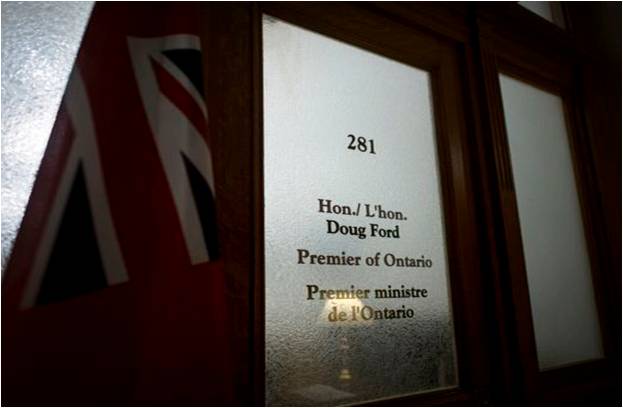
Ontario has established the approach of layering fancy, national- or federal-sounding titles onto its provincial political institutions informally on top of the pedestrian formal names for these same institutions as set out in provincial legislation. And this informal layering of fancy titles designed to impart unearned prestige flow from informal means, like resolutions of the Legislative Assembly or simple executive decree. These informal practices have proven most enduring, and this is why Members elected to the Legislative Assembly of Ontario are called “Members of Provincial Parliament” (MPPs) instead of as Members of the Legislative Assembly (MLAs) like in eight of the ten other provinces. Some Premiers of Ontario also insisted that they be addressed and referred to as the “Prime Minister of Ontario,” too, well after the two styles had stopped being regarded as interchangeable elsewhere in Canada.
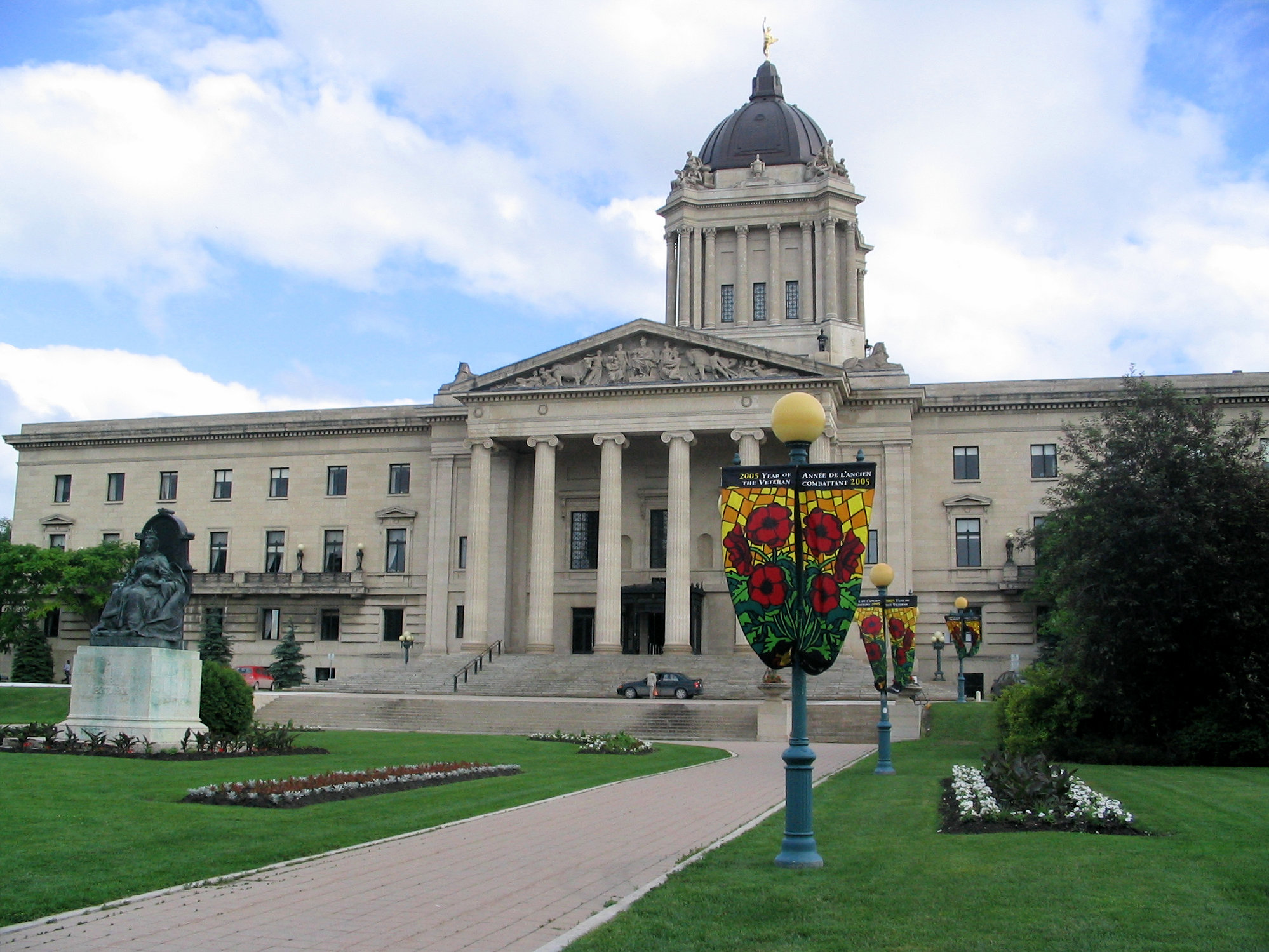
Continue reading

Posted in Crown (Powers and Office), Prime Minister's Powers | 1 Comment

Prince Edward Island’s First Successful Minority Government


MacLauchlan’s Early Dissolution Gambit Fails

Premier Wade MacLauchlan on 26 March 2019 advised Lieutenant-Governor Antoinette Perry to dissolve the 65th General Assembly of Prince Edward Island and issue writs of election for polling day on 23 April 2019.[1] Prince Edward Island’s fixed-date election legislation had originally scheduled the next provincial election for October 2019, but since that would have coincided with the scheduled federal election, the law would have postponed the provincial election to April 2020 and thus pushed the 65th Assembly perilously close to its absolute maximum lifespan of five years (4 May 2015 to 4 May 2020), as prescribed in section 4(1) of the Constitution Act, 1982. With a writ of 28 days, MacLauchlan would have had to advise the Lieutenant Governor to dissolve the 65th General Assembly on Monday, 23 March 2020 so that the general election could have been held on Monday, 20 April 2020. This 65th General Assembly would certainly have become the longest-lived elected assembly under a fixed-date election law if MacLauchlan had allowed it to run out the clock for another year.

MacLauchlan dismissed criticism of his second early election, saying: “It’s been four years. We had a mandate and fulfilled it. This is an opportunity to ask Islanders for their confidence to build on that record.”[2] But MacLauchlan’s gambit failed. On 23 April 2019, Prince Edward Islanders elected the first minority legislature in their province’s long history of Responsible Government since 1851: in an assembly consisting of 27 MLAs, the Progressive Conservatives won 12 seats; the Greens, 8; the Liberals, 6 on polling day,[3] and the Progressive Conservatives won an additional seat in a by-election on 15 July for a total of 13.[4] The Greens became the Official Opposition for the first time anywhere in Canada[5]; the Liberals came in third, and Wade MacLauchlan even lost his own seat.[6] MacLauchlan confirmed the following morning, on 24 April, that he would resign as premier.[7]

Not since the 19th century have voters elected a minority legislature, and never before 2019 had a single-party minority government in Prince Edward Island succeeded in winning the confidence of the legislative assembly on an Address-in-Reply and budget.[8]

Continue reading

Posted in Caretaker Convention & Government Formation, Crown (Powers and Office), Fixed-Date Elections, Formation of Governments, Reform | 4 Comments

Manitoba’s Early Election Expands the Caretaker Convention


Introduction 

Brian Pallister, Premier of Manitoba after leading the Progressive Conservatives to a parliamentary majority and 53.1% of the popular vote and 40 of 57 seats in April 2016, has decided to ignore Manitoba’s fixed-date election law in the most convoluted – or, perhaps, creative – way up until now. In the six instances where premiers had opted for snap elections instead of waiting for the polling day scheduled under fixed-date election legislation from 2014 to 2019, they had announced plans for an early election very shortly (on the order of a few days at most) before advising the Lieutenant Governor to dissolve the legislature and issue the writs of election.

On 19 June, Premier Pallister announced that a general election would take place on 10 September 2019, fully 13 months earlier that the polling day scheduled for October 2020. But because Manitoba’s Election Act specifies that the writ for an unscheduled election must last between 28 and 34 days, the Premier did not advise Lieutenant Governor Filmon in person to dissolve the 41st Legislature and issue the writs of election until 12 August 2019. This unprecedented decision resulted in a de facto election campaign of nearly 90 days despite the de jure writ of 29 days.[1] Pallister had stoked speculation about this early election since December 2018 and tried to make it all more palatable by voluntarily binding his government to the 90-day pre-election prohibition on all but necessary and routine government advertising which under the Election Financing Act currently only applies to the Government of Manitoba in the 90 days preceding a scheduled general election. In so doing, Pallister has also set a precedent for broadening the scope of the Caretaker Convention to at least 4 months.

In this post, I will review the history of Manitoba’s fixed-date election law and its current laws regulating the duration of the writ and pre-election advertising, delve more into how recent legislation and Pallister’s actions will, in practice, expand the scope of the Caretaker Convention, and conclude with an explanation why Pallister took this bizarre staggered approach to announcing an election two months before the dissolution and issuing of writs actually took place.

Continue reading

Posted in Caretaker Convention & Government Formation, Dissolution, Fixed-Date Elections | Leave a comment

New Brunswick’s Lieutenant Governor Has Died In Office


Jocelyne Roy-Vienneau, the Lieutenant Governor of New Brunswick, has just died of cancer after having revealed the diagnosis in the fall of 2018 around the time of the last change of government from Gallant to Higgs. CBC News reports that the province’s Protocol Office will make more announcements in the coming days. Canada has lost two Lieutenant Governors to cancer in as many months, after W. Thomas Molloy, the Lieutenant Governor of Saskatchewan, died in office on 2 July.

Continue reading

Posted in Crown (Powers and Office), Lieutenant Governors, Succession (Sovereign) | 3 Comments

“There’s Nothing Strategic About This”: How Dwight Ball’s “New Government” Distorted the Caretaker Convention


By James Bowden & Lyle Skinner[1]


Table of Contents

Introduction: An Early Election Leads to a Hung Parliament

The Caretaker Convention in Canada and Newfoundland & Labrador

Summoning the New House of Assembly, Electing the Speaker, and Tabling the Budget

Historical Precedents: Not Electing a Speaker and Not Passing the Address-in-Reply

Conclusion: Ball Distorted the Principles of Government Formation For Nothing

Abstract

We use the provincial general election in Newfoundland and Labrador in 2019 as a case study in the Caretaker Convention, the authority of the Lieutenant Governor in forming governments, and how incumbent governments can remain in office and test the confidence of a minority parliament. We review how incumbent Premier Dwight Ball took the unusual step of advising the Lieutenant Governor to re-appoint him to the office that he already occupied in an apparent attempt to liberate his incumbent government from the constraints of Newfoundland & Labrador’s new official guidelines on the Caretaker Convention over one week before obtaining the confidence of the new House of Assembly in which no party held a majority. We also examine the unique history of Newfoundland’s House of Assembly and similar historical precedents. We conclude by comparing the Canadian method of appointing premiers used in other provinces to the novel Ball Method and to the system of confirmation voting used in other jurisdictions, demonstrating that the Ball Method provides the least accountability of the three.

Continue reading

Posted in Appointment of PM, Caretaker Convention & Government Formation, Comparative, Confirmation Voting, Constitutional Conventions, Constructive Non-Confidence, Crown (Powers and Office), Officialization of Convention, Succession (Prime Minister) | 1 Comment