Dissolution By Demise of the Crown in Canada


Three Ways of Dissolving Parliament

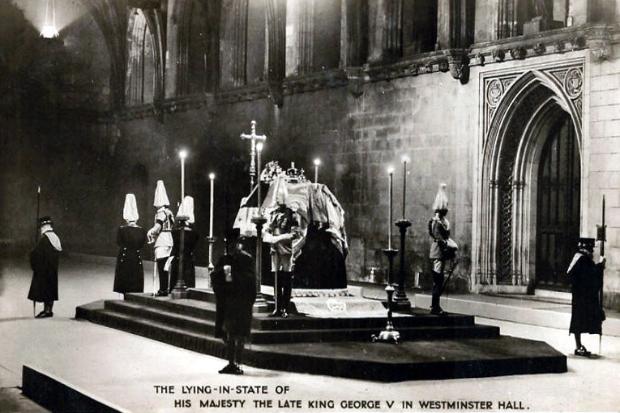
In his famous treatise Commentaries on the Laws of England, Blackstone identified that dissolution can occur through one of three ways:

“1. By the king’s will […];
2. By a demise of the crown […];
3. By length of time.”[1]

Under Responsible Government, where Ministers of the Crown take responsibility for all acts of the Crown and the Crown acts on ministerial advice, dissolution by “the king’s will” now means dissolution by the prime minister’s or premier’s will. All dissolutions of the Parliament of Canada since 1867 have occurred under this method, and based on what I’ve seen in the last ten years of researching this field, the premiers have effected all dissolutions of the provincial legislatures since 1867 as well. (But if someone can find a contrary example, please do let me know – because that would prove most interesting). The first minister advises the governor to issue a proclamation dissolving the legislature, the cabinet advises the governor-in-council to issue writs of election, and the first minister advises the governor to issue a proclamation summoning the next legislature for despatch of business. This method of dissolution requires a series of proclamations and decisions from ministers of the Crown.

But the other two methods of dissolution happen automatically.
Continue reading

Posted in By Demise of the Crown, Dissolution, History of British North America | 5 Comments

An Unlawfully Long Writ Rewards the Incumbent and Will Be Allowed to Stand


Elections Newfoundland & Labrador announced the results of the ill-begotten election on Saturday at 1030 Eastern Daylight Time. The Liberals have won a bare majority of 22 out of 40 seats in the House of Assembly, where the Furey government will face a decapitated and floundering opposition. Both the leaders of the Progressive Conservative and New Democratic Parties, Ches Crosbie and Alison Coffin, lost their seats.[1] The rumps of these parliamentary parties will have to select new leaders from their remaining MHAs.

Continue reading
Posted in Crown (Powers and Office), Dissolution, Fixed-Date Elections, Reform | 2 Comments

The Over-Zealous Caretakers of Newfoundland and Labrador in 2021


The Caretaker Array in Star Trek Voyager

Newfoundland and Labrador’s Caretaker Guidelines from 2019

A few weeks ago, I received a report from one of my readers that some departments of the government of Newfoundland and Labrador have decided not to answer questions from journalists on the grounds that the Caretaker Convention prevents them from doing so. That is false. In fact, the Executive Council Office of Newfoundland and Labrador created some guidelines on the caretaker convention under the previous ministry of Dwight Ball in 2019 entitled Guidelines on the Conduct of Public Servants During An Election Period. They say the opposite of what these civil servants have claimed:

Continue reading
Posted in Caretaker Convention & Government Formation, Constitutional Conventions | 1 Comment

Gerontocracy in the United States vs the Rise of Generation X in Canada


Since the fall of 2019, I have read a series of articles in mid-brow American news magazines lamenting that a crop of aging politicians born in the 1940s, these Soixante-Huitards and the tailend of the Silent Generation, maintain their deathgrip on American politics.[1] These include Derek Thompon’s “Why Do Such Elderly People Run America?” in The Atlantic, Ian Prasad Philbrick’s “Why Does America Have Old Leaders?” in The New York Times, and, most recently, Eve Peyser’s “Gerontocracy Is Hurting Democracy” in New York Magazine.[2]

I stumbled upon the first of these articles lamenting America’s gerontocracy in 2019 around the same time when I was researching for my post “This Election Has Not Been About Serious Issues: The Very Unserious Issue of Dual Citizenship”, in which I noted that only three prime ministers since Confederation (Kim Campbell, Stephen Harper, and Justin Trudeau) were, in fact, born as Canadian citizens instead of as British subjects. At the time another thought occurred to me: aside from Kim Campbell’s irrelevantly short tenure as prime minister for a few months in 1993, Canada has never had a proper Soixante-Huitard Boomer, born between 1946 and 1953 or so, as prime minster; mercifully, we now never will. For whatever reason, federal Canadian politics largely skipped over this cohort who established themselves as activist generation in the United States in favour of a plethora of long-serving politicians of the Silent Generation born in the 1930s, with Joe Clark, John Turner, Brian Mulroney, Jean Chretien, and Paul Martin in 24 Sussex for all but five years between 1979 and 2006.

Continue reading

Posted in Comparative, Parliamentarism v Presidentialism | 2 Comments

Picking Up the Shards of the Office of Governor General: A New Advisory Committee Created


Continue reading

Posted in Crown (Powers and Office), Governor General | 2 Comments